Fire safety & public-building compliance
EN 13501-1 fire classification: what B-s1,d0 really means.
An acoustic panel fixed to the wall or ceiling of a public space is never just a decorative object. It is a regulated finish. The European standard EN 13501-1 rates its reaction to fire on three axes: its contribution to the fire, the smoke it releases, the flaming droplets it can produce. For a public-access building, the right level reads B-s1,d0. Here is what those codes hide, why they matter and what ACOUSTELIO provides to prove them.
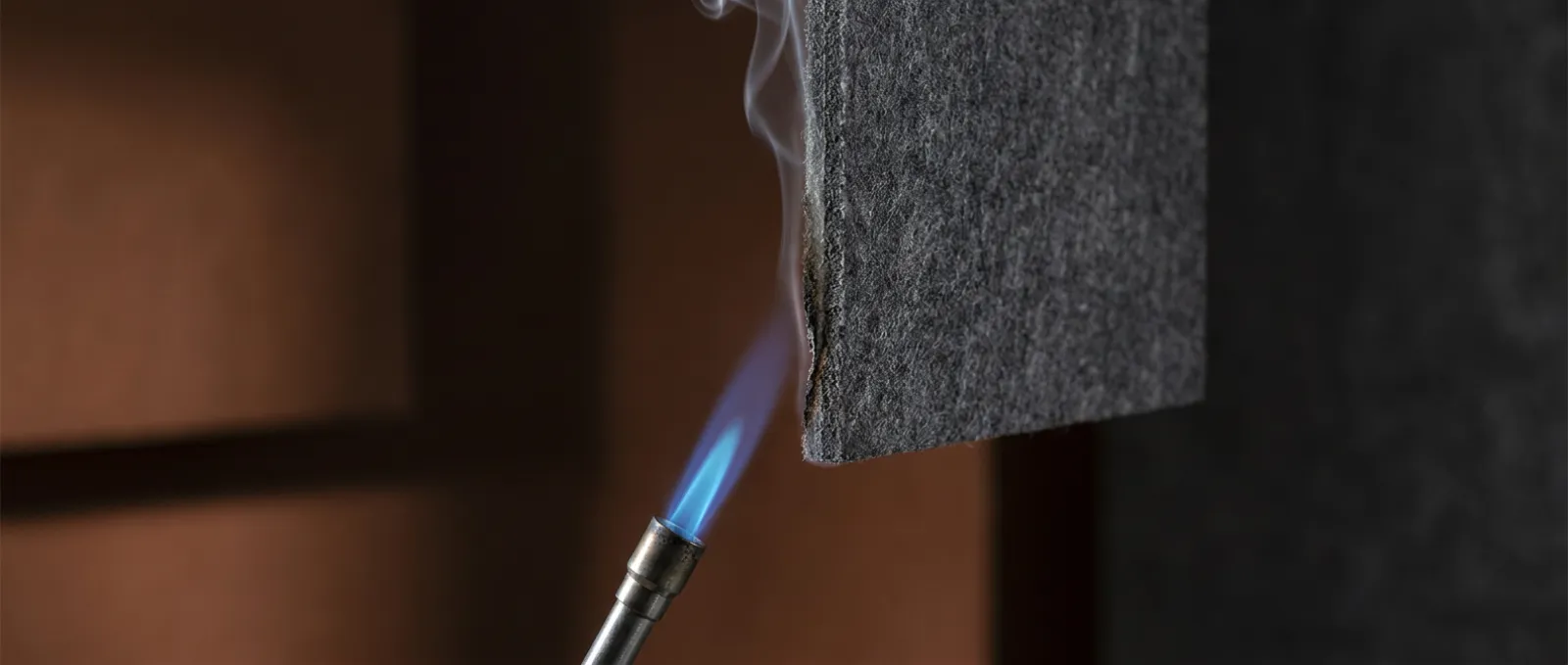
The principle
Reaction to fire: what is it exactly?
Reaction to fire measures one simple thing: when a fire starts in a room, how much the material covering the walls and ceiling will help it grow. A highly flammable finish turns an ignition into a blaze in a few minutes. A well-rated finish barely feeds the flame and leaves time to evacuate.
In Europe, this measurement is framed by the harmonised EN 13501-1 standard. It replaces the old national classifications with a common language, the euroclasses. Every construction material meant to stay exposed goes through a battery of laboratory tests, then receives a rating. That rating is not a single letter: it is a combination of three distinct pieces of information, because a fire does not kill in just one way.
One point often confused, which we clear up right away: reaction to fire says nothing about how a wall stands up to flames. For that you need fire resistance, a different standard. We come back to it below, because this confusion wastes time for many project owners.
The euroclasses
From A1 to F: the scale of contribution to fire.
The first letter of the classification places the material on a seven-level scale, from non-combustible mineral to untested product.
A1 and A2
Non-combustible or nearly so. Stone, metal, plaster, mineral wool. They add nothing to the fire. This is the top of the scale.
B
Very limited contribution to fire. The material does not spread the fire significantly. This is the level targeted for our panels in public buildings.
C and D
Moderate then notable contribution. Accepted in certain rooms depending on the risk, but often insufficient for the circulation routes of a public space.
E and F
Flammable. E passes a minimal test, F groups the unclassified or failed products. To rule out as soon as a public is present.
Keep in mind. The letter alone is not enough. A material rated B can perfectly well release a lot of smoke or spit flaming droplets. That is why the standard adds two mandatory suffixes, the s and the d, detailed just after.
The s criterion
s1, s2, s3: smoke, the silent killer.
In a fire, smoke often kills before the flames. It masks the exits, disorients, and asphyxiates within a few breaths. So EN 13501-1 rates separately the amount of smoke a material produces as it burns, with three levels marked s for smoke.
The s1 corresponds to very low emission, near-zero opacity. The s2 allows medium production. The s3 imposes no limit, so potentially dense smoke. The difference is concrete: in a hotel corridor filled with s3, you can no longer see the emergency exit a metre away. In s1, the air stays readable longer, which changes everything for evacuation.
This is why we never settle for a panel rated B without looking at the smoke suffix. A B-s3 does not play in the same league as a B-s1, even if the letter is identical.
The d criterion
d0, d1, d2: flaming droplets and debris.
The last suffix, marked d for droplets, measures whether the material releases burning droplets or debris during combustion. The risk is insidious: a flaming particle that falls to the floor can ignite a new source far from the fire's start, and spread the fire along the very path of evacuation.
The d0 guarantees that no flaming droplet or debris detaches. The d1 tolerates droplets that go out quickly. The d2 imposes no limit, so possible and lasting falls of burning material. Above the heads of the occupants of a restaurant dining room or in a staircase, d0 is not a detail, it is a first-order safety feature.
By combining the three codes, B-s1,d0 therefore describes a material that barely feeds the fire, produces almost no smoke and releases no flaming droplets. It is this complete combination that we target, not just one of its parts.
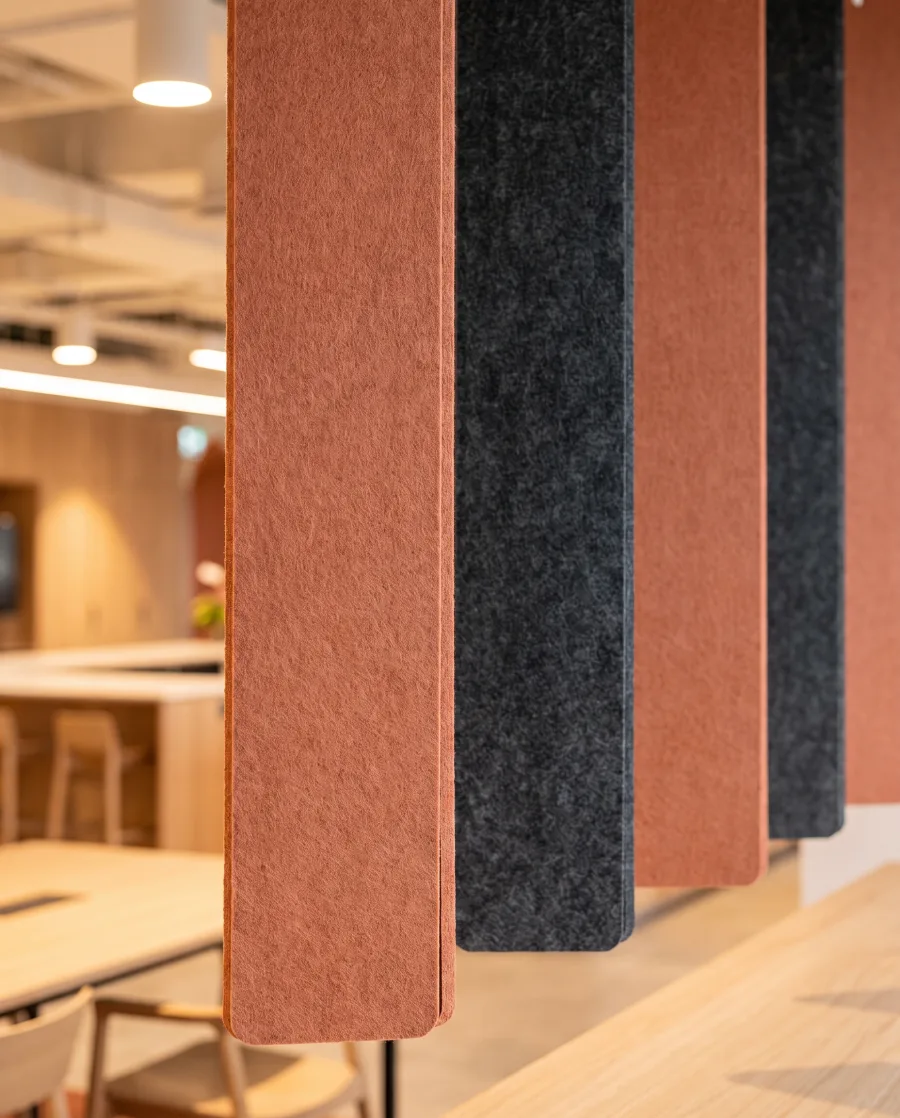
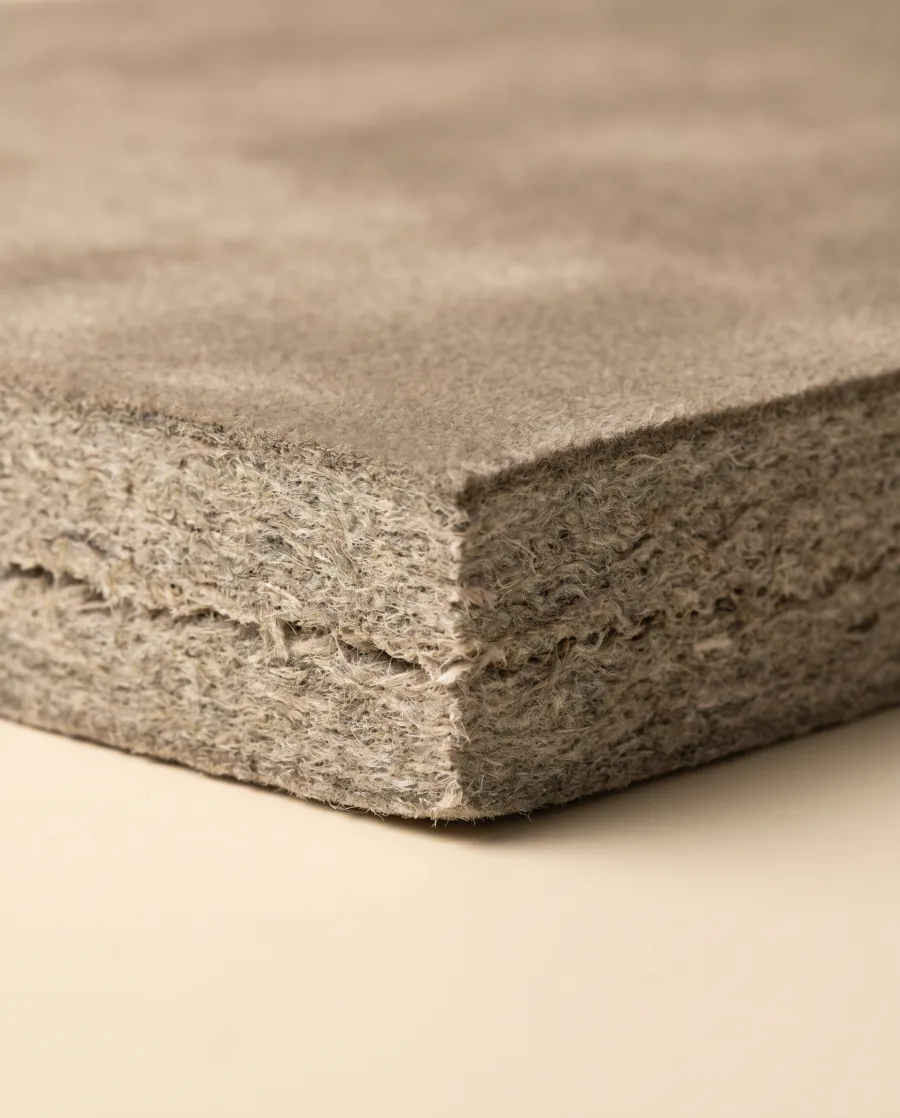

Quick read
Which euroclass for which use?
A summary reference to place each level. The exact requirement depends on the type of building and the panel's location.
A public-building project, a doubt about compliance?
We check the requirement that applies to your premises before producing, and attach the classification test report to the quote.
Request my free quoteDo not confuse
Reaction to fire is not fire resistance.
It is the most frequent confusion, and it wastes a huge amount of time. Two standards, two different questions. Reaction to fire, EN 13501-1, asks: does this material help the fire start and grow? It applies to exposed finishes, so to an acoustic panel. The answer is a euroclass, like B-s1,d0.
Fire resistance, EN 13501-2, asks something else entirely: how long does this construction element keep its function against fire? Here we talk about walls, doors, floors, and the rating is expressed in minutes with the criteria R (load-bearing capacity), E (integrity against flames) and I (thermal insulation). A two-hour fire-rated partition is noted, for example, EI 120.
Practical consequence: you never ask for an EI 60 on a wall-mounted acoustic panel. It would make no sense. What you ask of it is good reaction to fire, proven by its classification. Confusing the two means risking asking for a document that does not exist for this type of product.
On the ground
Restaurant, office, hotel: what it involves.
Restaurant. The dining room and entrance receive the public, often with ceilings and walls finished for acoustics and atmosphere. An unclassified finish can be refused by a fire safety commission, even once installed. With a B-s1,d0 panel and its report, the inspection passes without reservation on this point.
Hotel. The corridors, staircases and common areas are strategic circulation routes for evacuation. That is precisely where s1 smoke and the absence of d0 droplets take on their full meaning: keeping the air visible and the floor safe long enough to get out of the rooms.
Office open to the public. As soon as a head office, a client space or a lobby receives visitors, it often shifts under public-building rules. Sound comfort remains the goal, but it must coexist with fire compliance. Both are handled in the same panel, without choosing between one and the other.
Our commitment
What ACOUSTELIO provides to prove the classification.
Upfront check
We confirm the requirement that applies to your premises before starting production.
Classified production
Fire-rated PET felt, inks and process that preserve the reaction to fire.
Classification report
The EN 13501-1 test report comes with every order, an enforceable document.
File ready
Everything is ready for your inspection body or your fire safety commission.
Certified measurements
The exact figures, measured in the lab.
Absorption measured by SGS in a reverberation room (ISO 354, type E mounting with a 200 mm air cavity). Test reports are supplied with every quote.
Fire Europe: B-s1,d0
EN 13501-1:2018 (SBI EN 13823 + EN ISO 11925-2 tests): low contribution to fire, s1 smoke, no flaming droplets. Valid for walls, ceilings and free-standing partitions.
Fire USA: Class A
ASTM E84-2024: flame spread index 5 (Class A is 0 to 25), smoke developed index 300. The level required for interior walls and ceilings.
Indoor air: A+
VOC emissions tested to ISO 16000: formaldehyde and TVOC not detected on day 7. French A+ label (decree 2011-321), certificate valid until 04/2029.
Recycled PET, certified
Felt made from recycled PET bottles, spun then heat-pressed. Production audited to FSC and GRS (Global Recycled Standard), tested by SGS, Intertek and TÜV.
Frequently asked questions
Fire classification: your questions.
What does the B-s1,d0 classification mean?
What is the difference between reaction to fire and fire resistance?
Why do public buildings require at least B-s1,d0?
In practical terms, what does it change for a restaurant or a hotel?
How good are the s2, s3, d1 and d2 criteria?
Do you provide a classification document with the order?
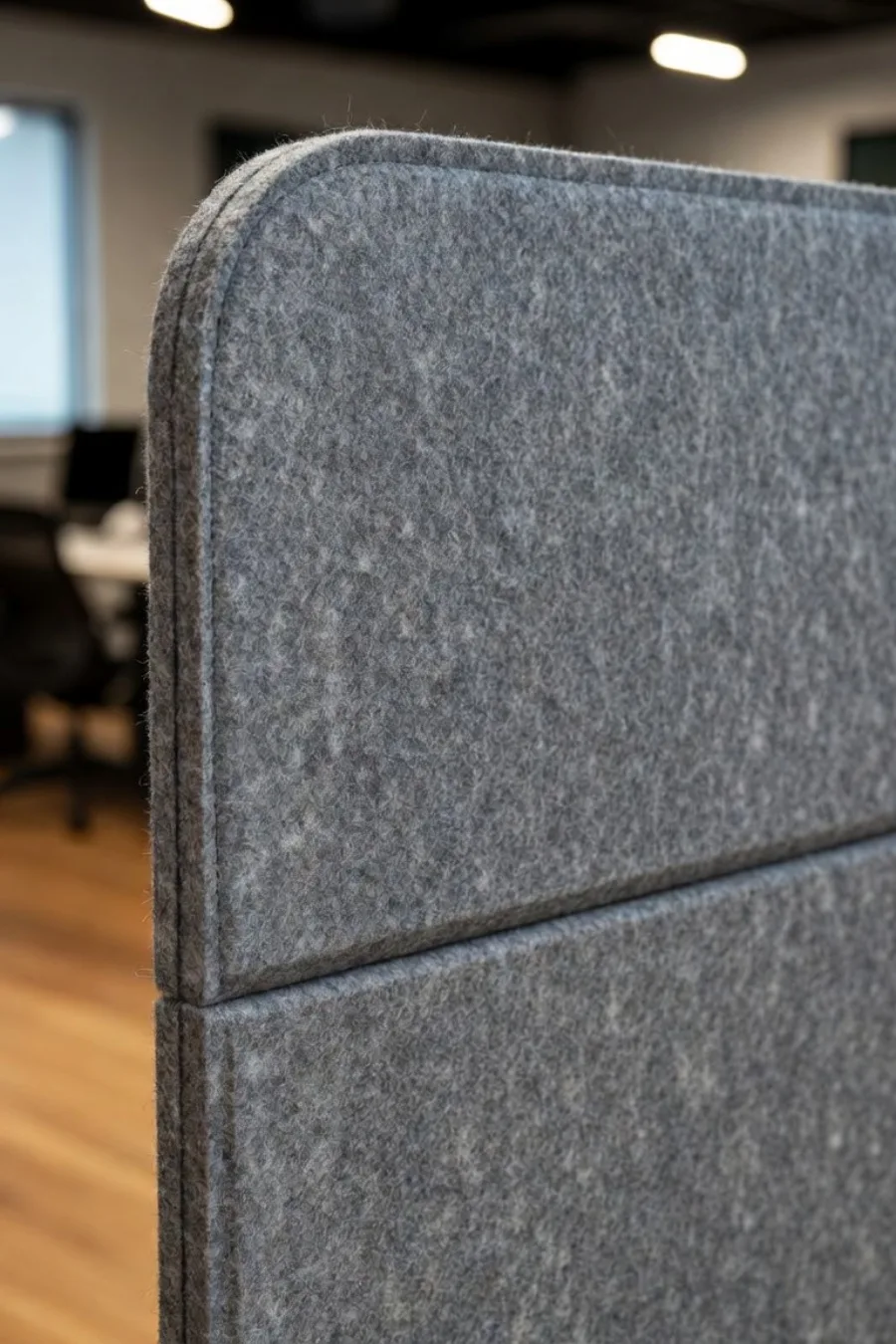
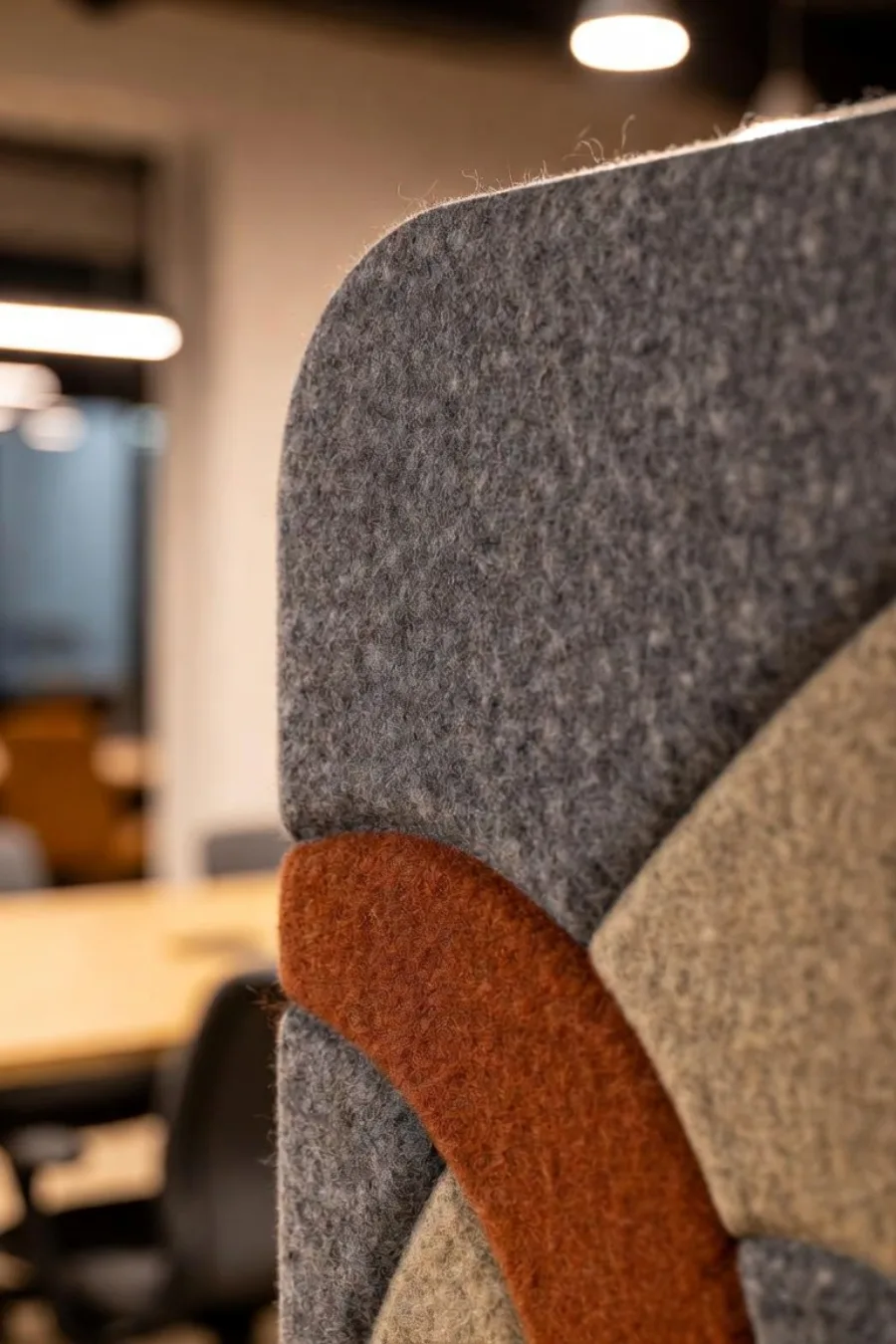
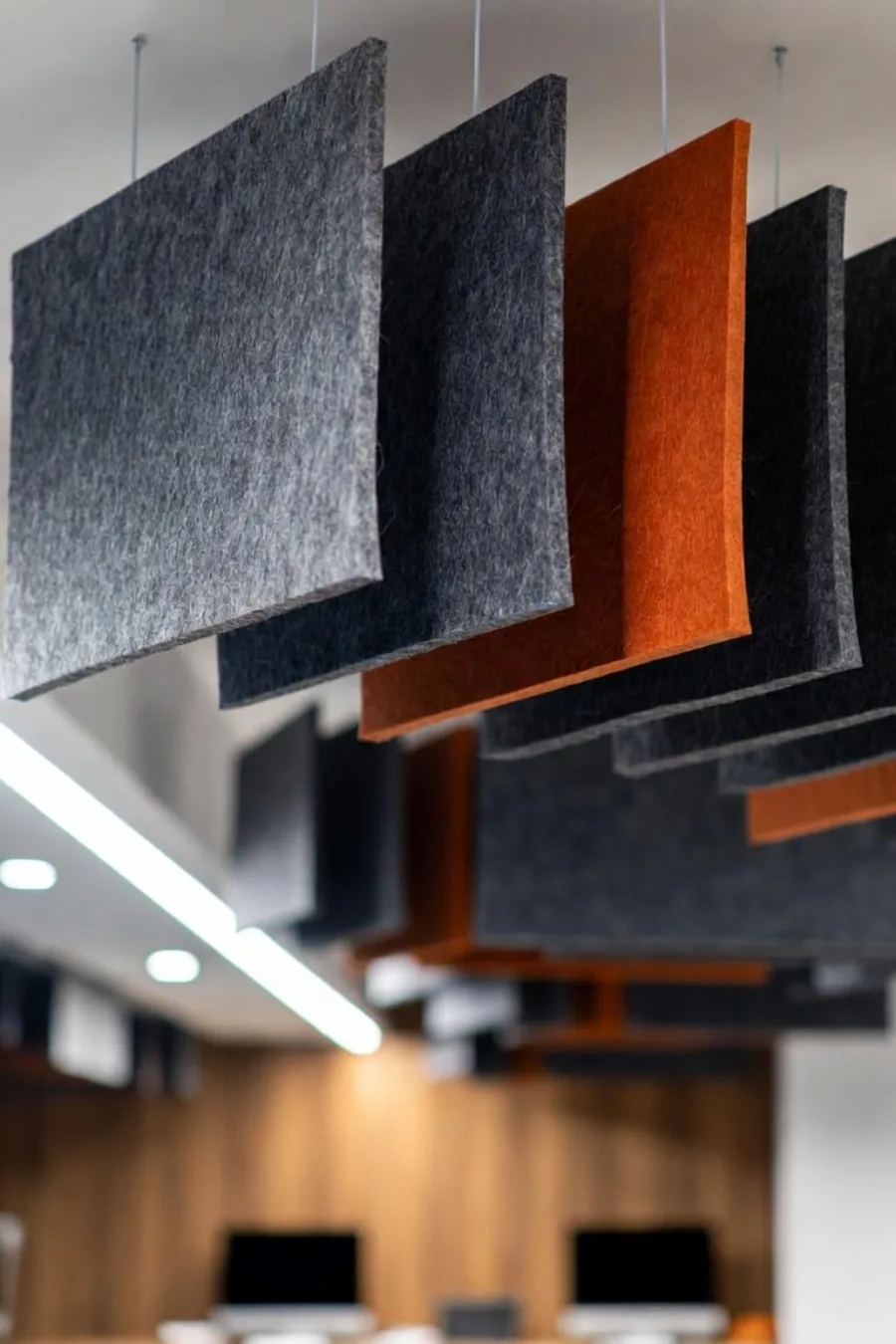
A panel that resonates beautifully but burns fast has no place in a public space. Safety comes first, and it is proven with a classification test report, not with a promise.
The principle we apply to every order destined for a public-access building.
Put compliance on the right side from the quote.
Describe your project and your premises: we check the applicable fire requirement and attach the classification test report to your quote within 48 h.
Request my free quote