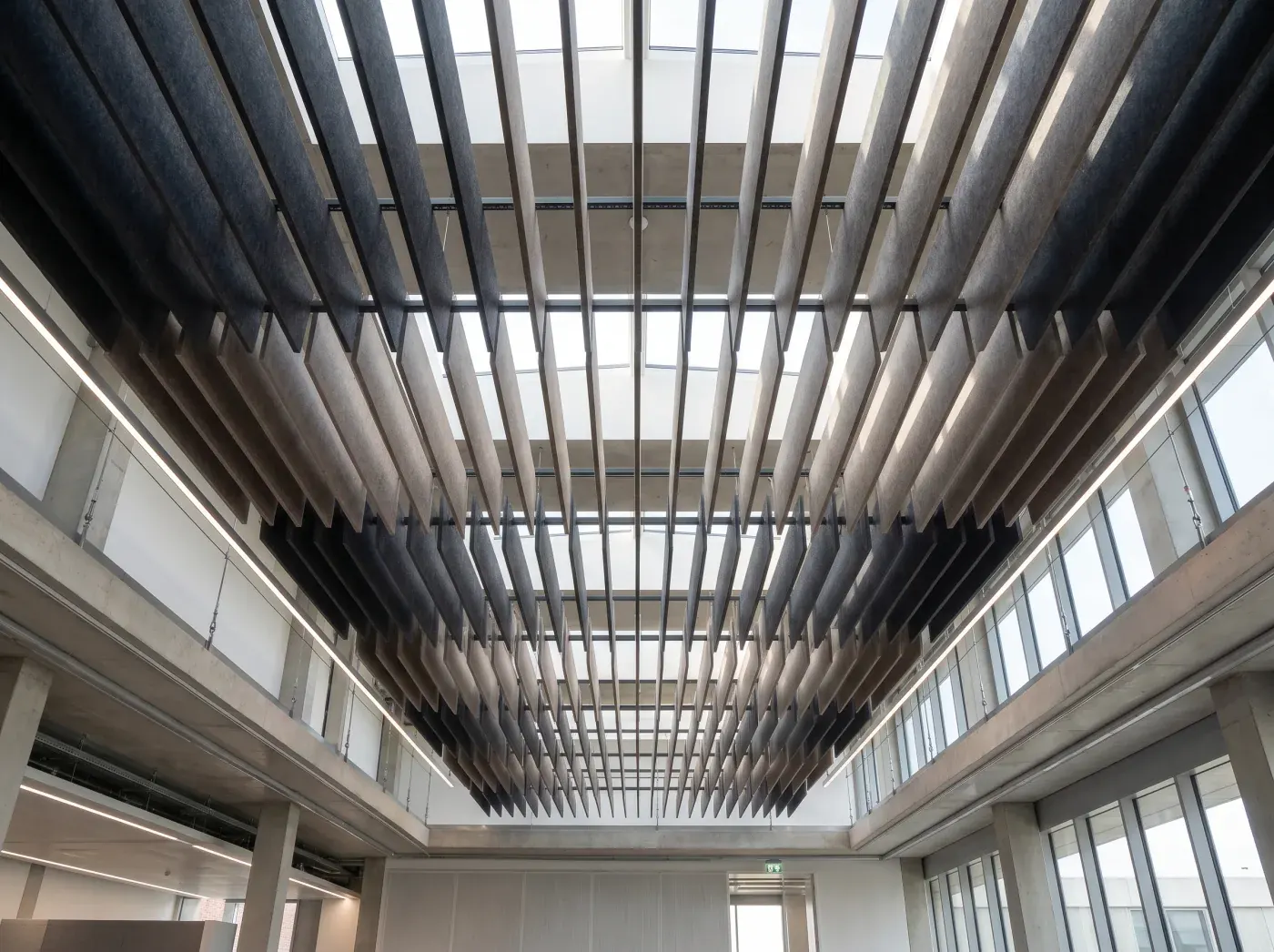
Ceiling & baffles
The largest surface: the most powerful lever on the whole volume of the room.
See ceiling & baffles →Restaurant & bar solution
A room that echoes tires customers out, cuts meals short and drags online reviews down. The culprit is not the music, it is reverberation. Well-placed acoustic panels absorb the echo, bring the din down and let people talk across the table again without raising their voice. ACOUSTELIO designs these made-to-measure panels for restaurants and bars, printable in your image and fire-certified for public buildings.
The problem
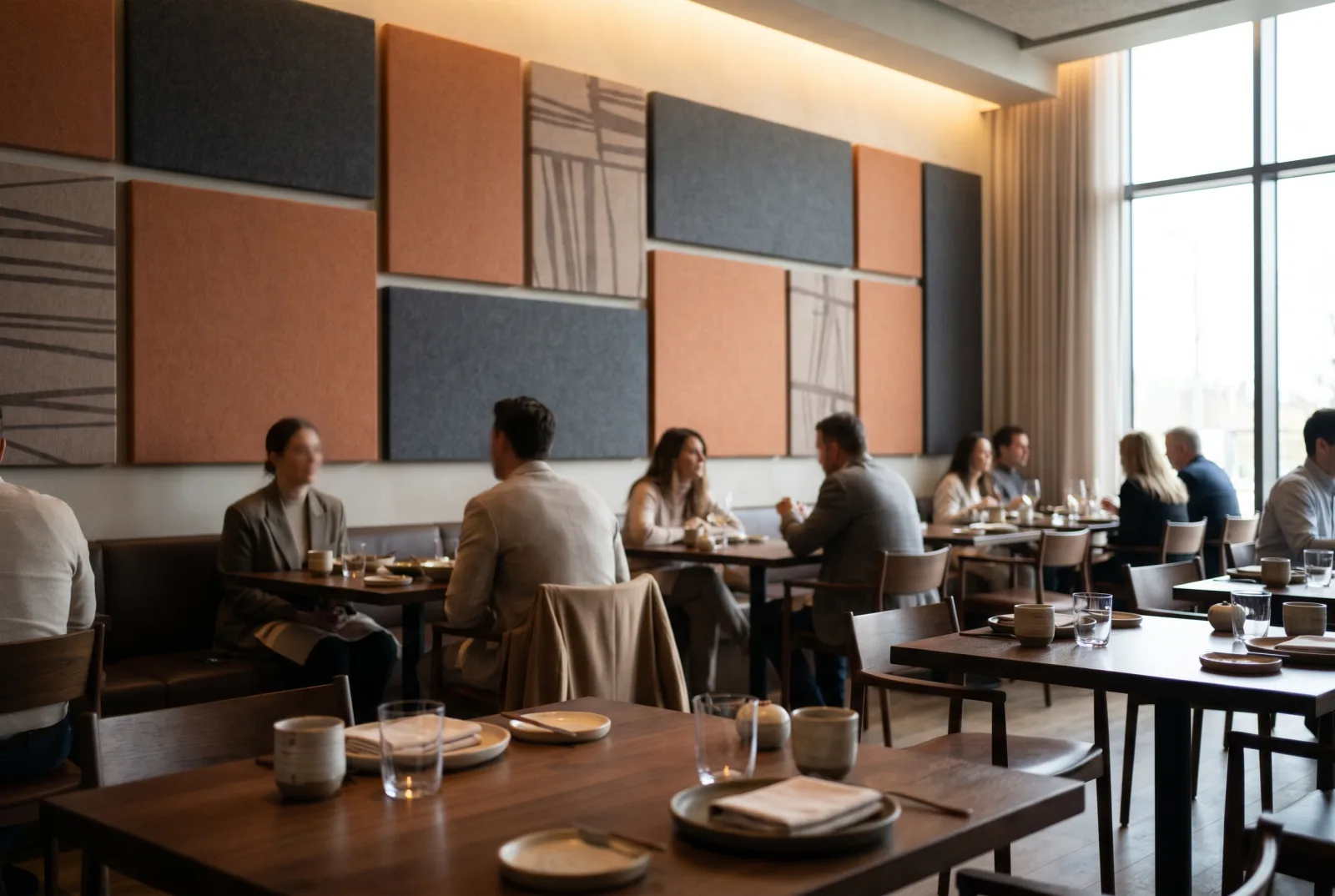
Look at the surfaces of a modern dining room. Glass, tiling, polished concrete, large hardwood tables. All of them bounce sound back instead of absorbing it. As guests arrive, conversations stack up and reverberation sets in. Sound no longer escapes, it accumulates.
Then comes the famous cocktail-party effect. To cover the background noise, every table raises its voice. So the next table does the same. And the level climbs, step by step. A packed brasserie often tops 75 dB(A), the equivalent of a busy street. At that point, you no longer dine, you politely shout.
Staff suffer too: forcing your voice all day means fatigue and mistaken orders. The right answer is not to soundproof the room but to treat it, by absorbing the reflections inside the volume itself.
What's at stake
Let's be blunt: noise costs money. It ranks among the top complaints in restaurant reviews, just after service and the food on the plate. And a Google review today is one more customer, or one fewer. A room that is too loud shortens meals and drives away business diners and regulars alike.
Conversely, a comfortable room keeps people in. They stay, they order a dessert, a coffee, a last drink. The average spend rises, feedback improves, word of mouth does the rest. For a venue that bets on experience, acoustics are not a technical detail, they are part of the product.
On performance, our panels absorb up to 85% of incident noise (NRC 0,85) and cut reverberation in half in many rooms. These are measured values, not slogans, documented in the technical sheet on the guarantees page.
The method
To avoid treating blind, we start from a simple indicator: the reverberation time, or RT. It is how long a sound takes to fade once the source stops. In a bare, hard room it stretches out and everything blurs together. A comfortable room usually sits around 0.6 to 0.9 second. Many restaurants that feel "too loud" run well over a second.
There is no standard as strict as the one for offices in hospitality, but this benchmark remains the best guide. We use it to calculate how much absorbing area to install, based on your room's volume and the materials present. The idea is not to deaden the room, just to bring back a lively atmosphere where people can hear each other.
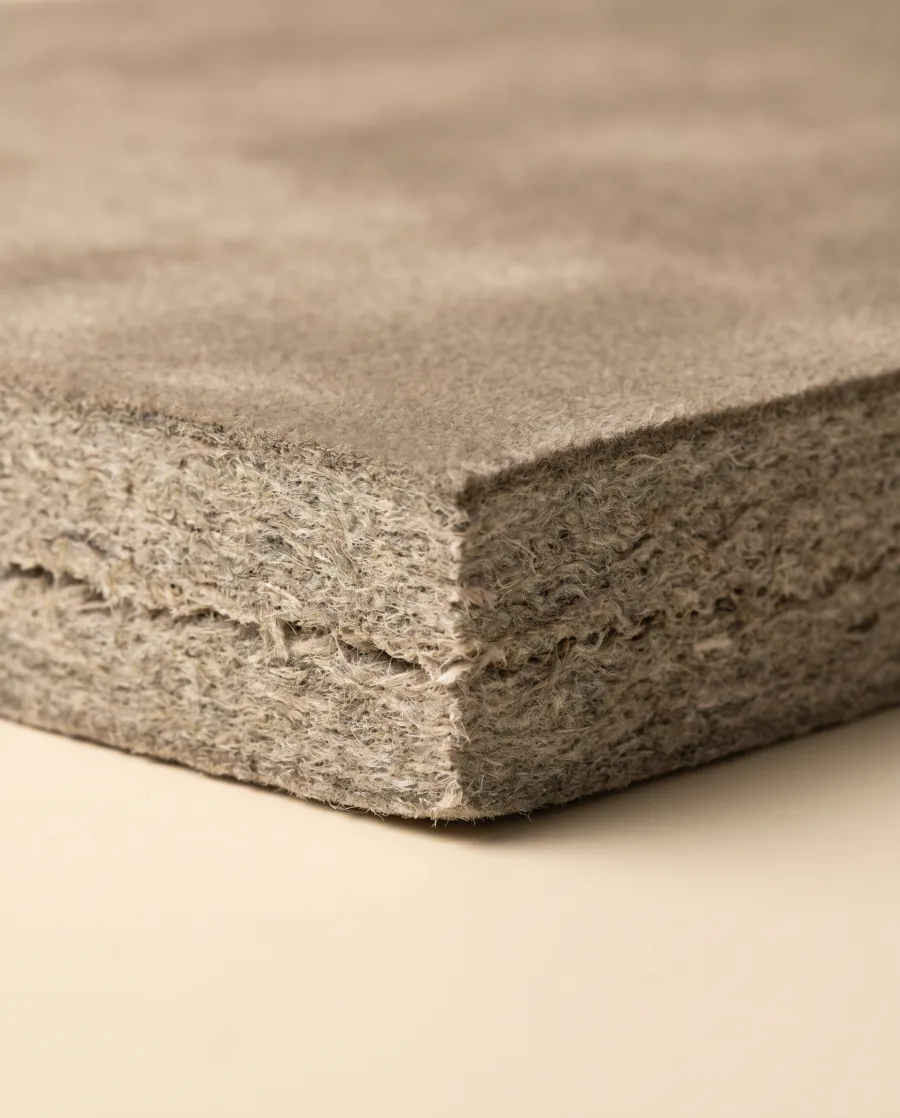
A technical point that matters: PET felt works mainly on voice frequencies, between 250 and 4000 Hz. That is exactly the range responsible for the din. So we size the thickness and layout for that precise target, rather than applying one single recipe to every room, whatever its size or use.
Our solutions
We combine ceiling, walls and printing to suit your venue and its atmosphere.
The largest surface: the most powerful lever on the whole volume of the room.
See ceiling & baffles →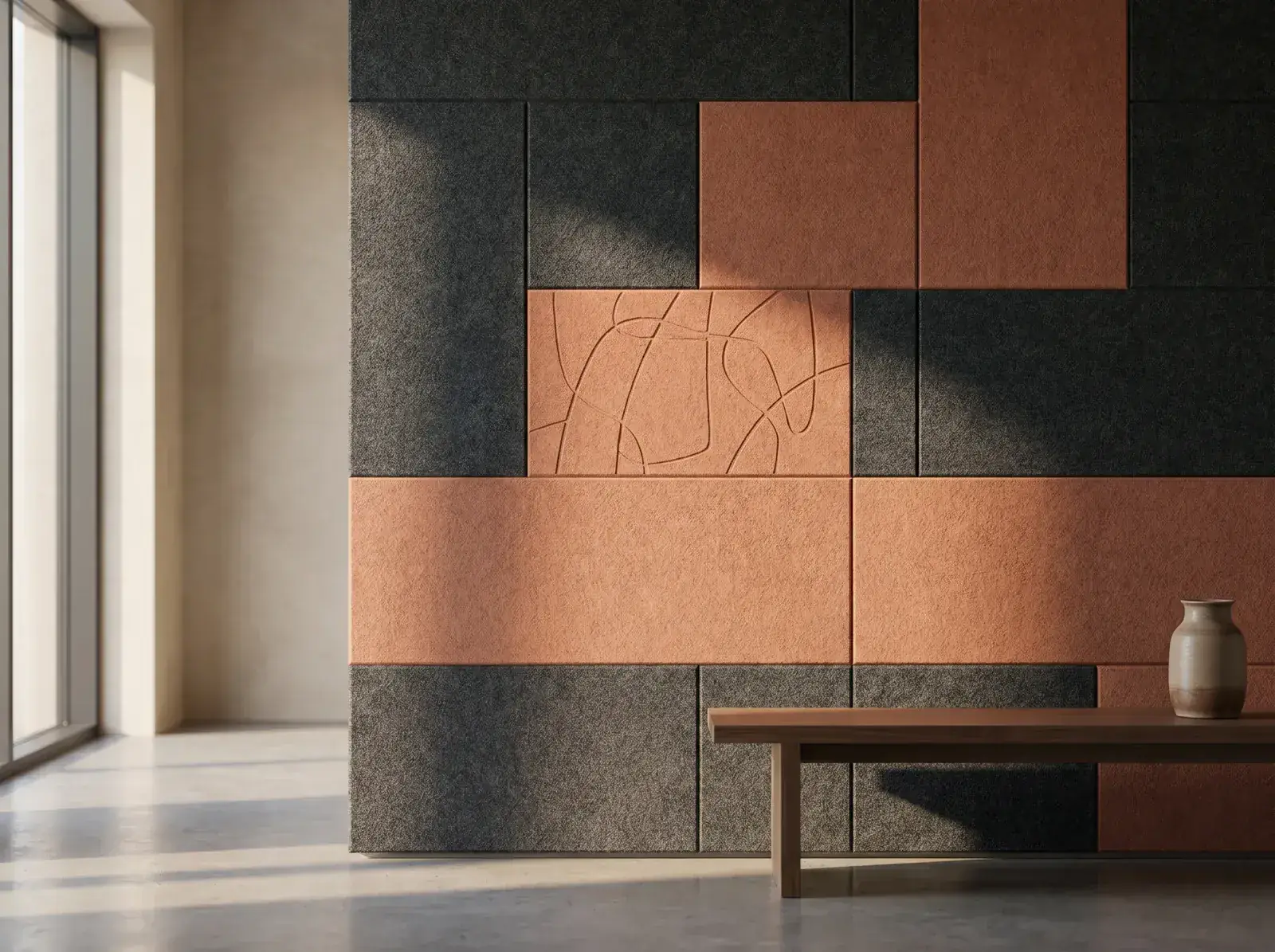
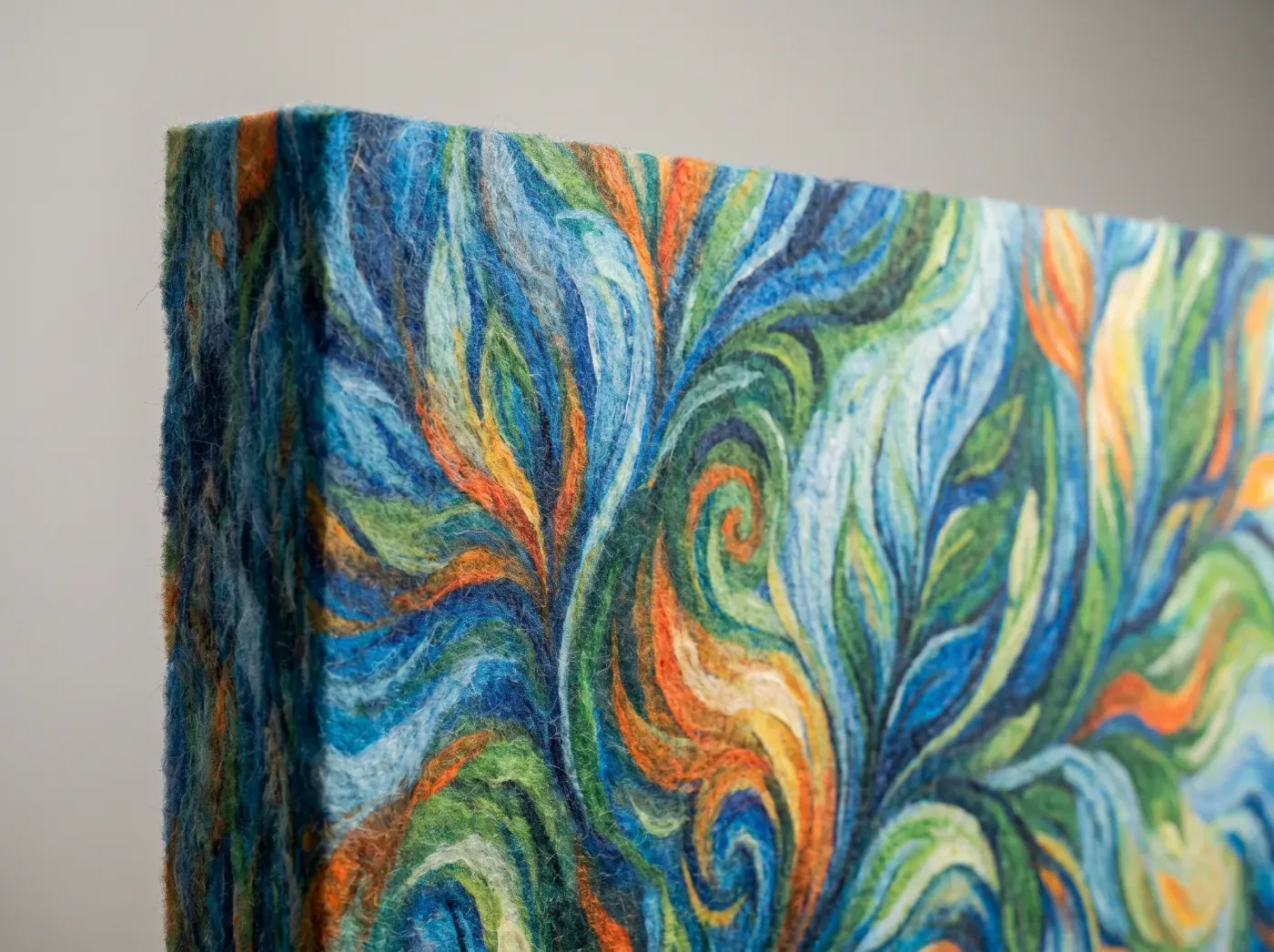
Your identity, your menu, a mural: the panel becomes decor.
Discover made-to-measure →The guide
A lively bistro and a fine-dining room do not aim for the same atmosphere. We adapt.
Brasserie and bistro. Dense volume, quick turnover, plenty of hard surfaces. This is where the cocktail-party effect hits hardest. We load the ceiling with baffles and add absorbent walls behind the banquettes. Goal: keep the energy of the place without the racket.
Fine dining. Here, relative quiet is part of the experience. We treat discreetly, often on the ceiling and with wall panels built into the decor, for a hushed room where conversation stays intimate from one table to the next.
Wine bar, cocktail bar. Standing atmosphere, music, voices rising. We aim for balance: enough absorption to hear an order, but not so much that it kills the mood. The ceiling and a few well-placed wall surfaces are enough.
Company canteen, cafeteria, fast food. Large volumes, sometimes high ceilings, service concentrated into a short window. Ceiling baffles are almost always the best answer to absorb a highly reverberant peak in footfall.
And what about the music? A room that echoes pushes you to turn the volume up to cover the din, which restarts the spiral and tires everyone out. By absorbing reverberation, you get the opposite effect: the music stays clear and present at a lower volume, and voices carry over it without fighting it. You take back control of the sound rather than putting up with it. Many restaurateurs notice afterwards that they turn the music down a notch, and yet the room feels more alive. The right acoustic treatment does not kill a venue's energy, it makes it bearable across a full service.
What you can do on top of the panels. A few simple moves reinforce the treatment: curtains or thick textiles over the windows, tablecloths on bare tables, felt pads under chairs that scrape the tiling, upholstered banquettes rather than raw wooden benches. In a high-ceilinged room, the most effective duo remains screens suspended from the ceiling combined with walls lined with panels. Let's be honest: these extras improve comfort, but none replaces the absorbing area calculated for your volume. A tablecloth softens the clatter of crockery, not the reverberation of a 60-cover dining room.
The ACOUSTELIO difference
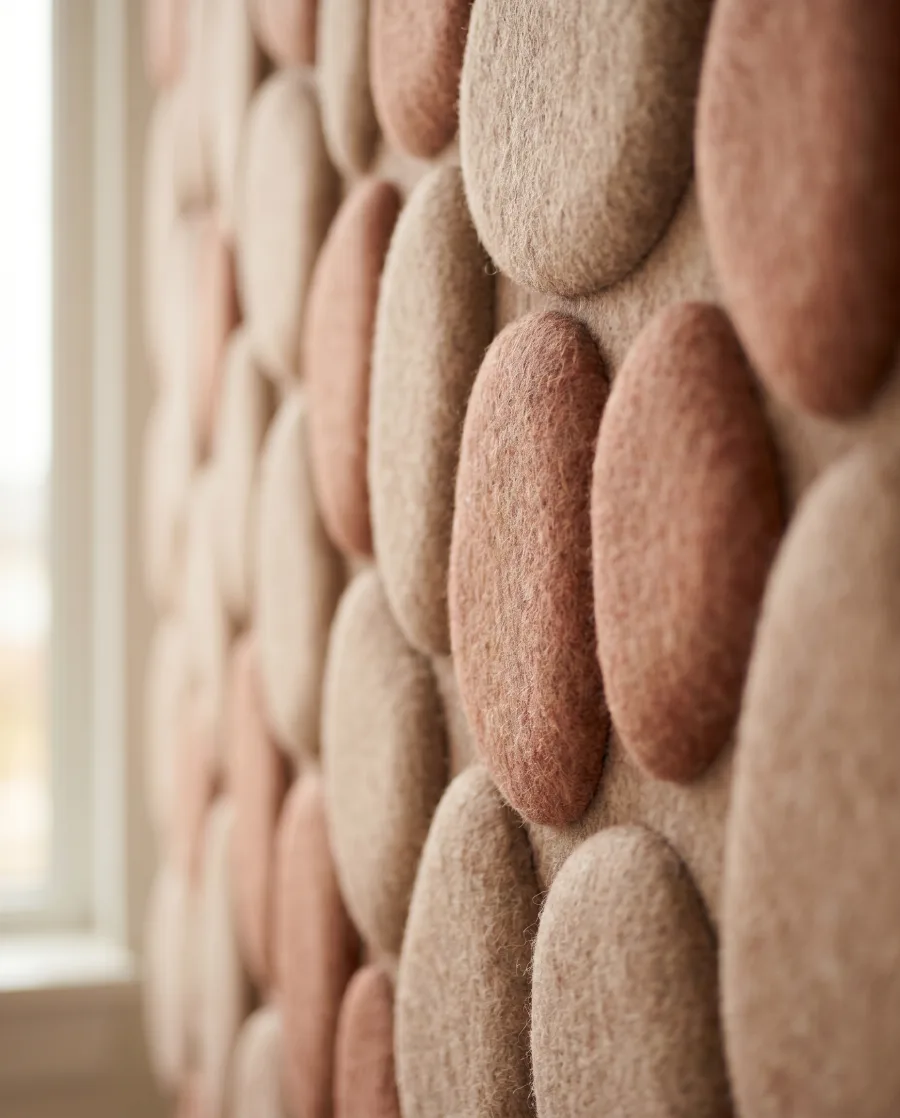
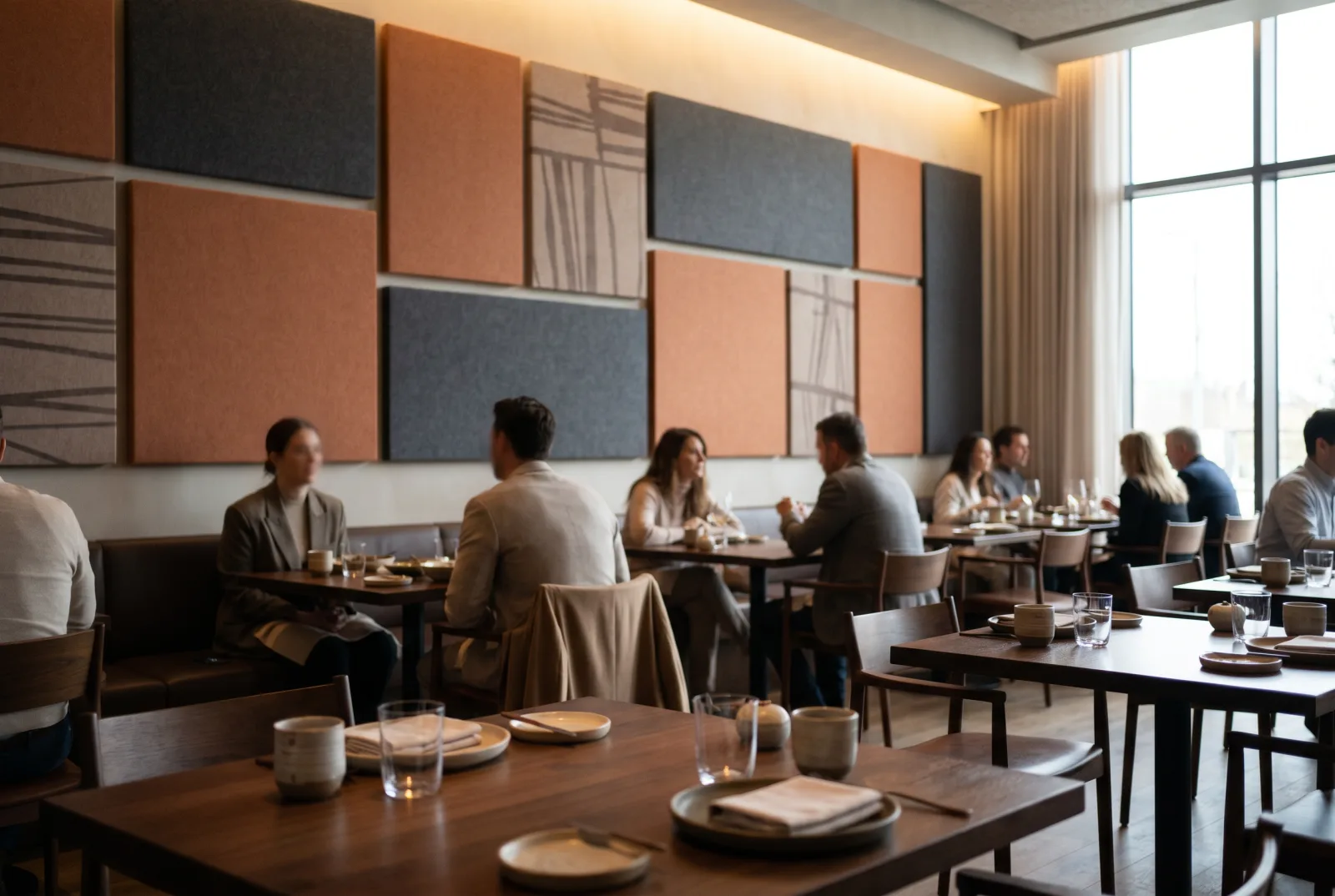
Many acoustic solutions impose neutral tiles that break the decor. We do the opposite. The panels print in your colours, your visuals, your world, without losing any absorption. The room gains in comfort and in character, in a single move. No one guesses that this beautiful wall is also working for the quiet.
Perfect for restaurants, bars and brasseries that care about their image. See some projects.
The budget
Let's talk numbers, no beating around the bush. The budget depends on the format, finishes and printing: every project is priced precisely in a free, no-obligation quote. A project's budget depends mainly on the absorbing area to install, so on the volume of the room and the comfort you aim for.
To give an order of magnitude: a small room or an echoey corner is often treated for a few hundred euros, a large brasserie for a few thousand. Set against the gain in reviews and loyalty, the return on investment is quick. We price a layout that targets a specific acoustic goal, not a pile of panels by the square metre.
The quote is free, detailed and arrives within 48 h. Delivery is DDP, duties and taxes included: the price quoted is the price paid, with no surprise on arrival. And if you are unsure about the scope, nothing forces you to treat everything at once: you can start with the noisiest zone, gauge the feel in the room, then complete on the next reorder. That is often the calmest way forward for a restaurant that is already running.
The collections
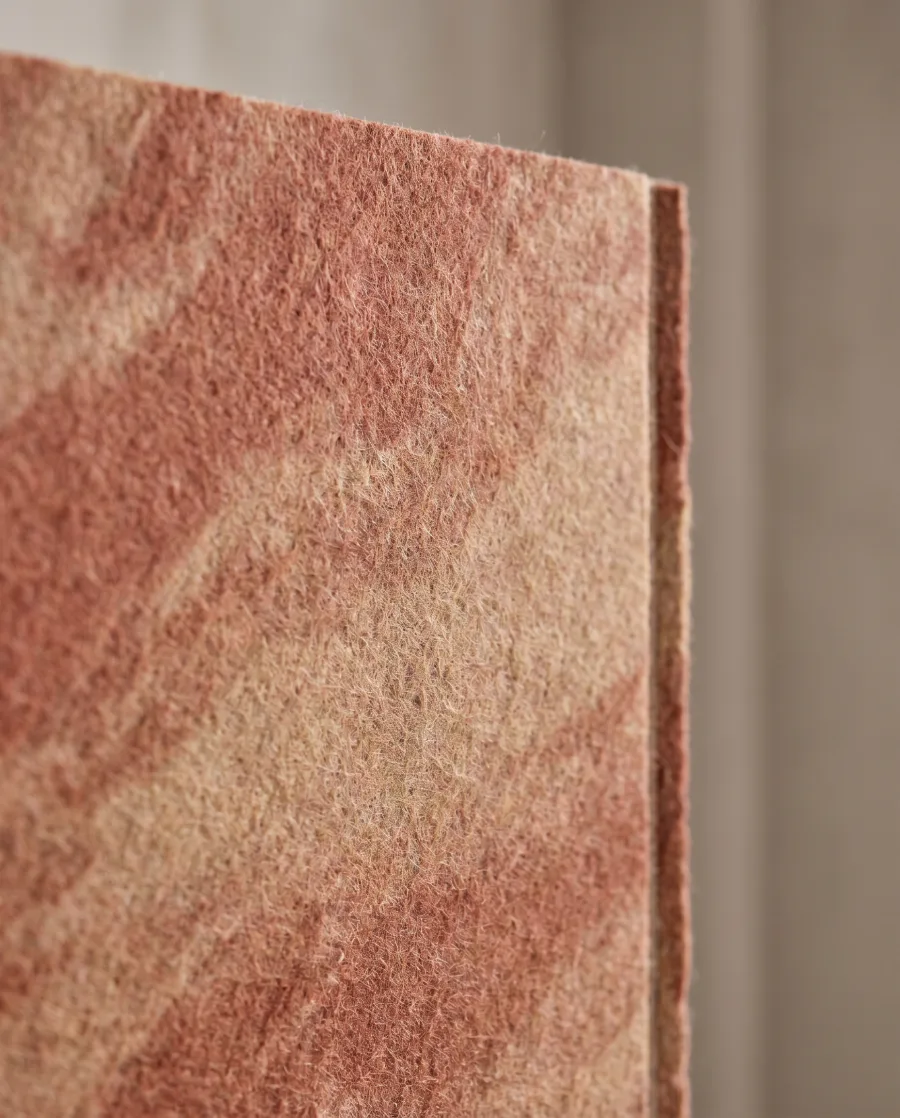
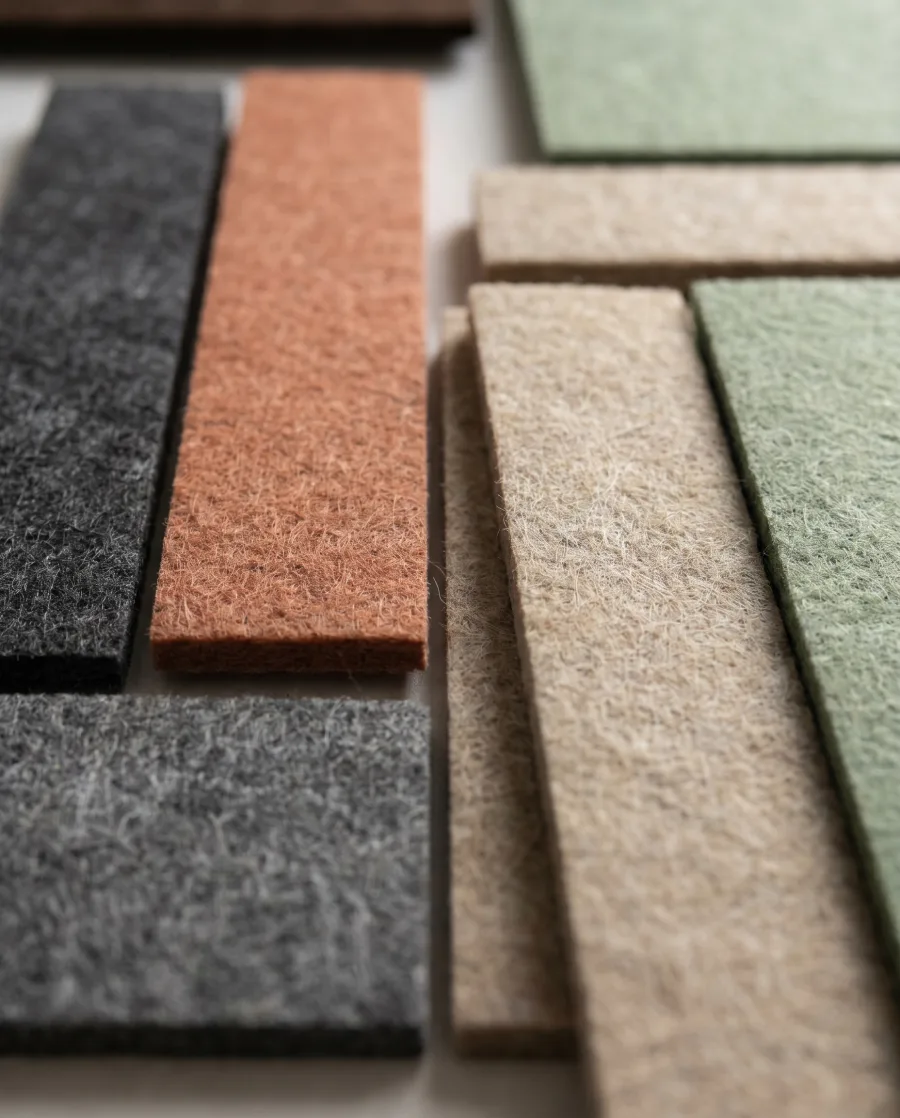
Every photo shows a real product from our collections. Everything comes in 55 felt colours, 9 or 12 mm thick, and can be printed with your artwork.
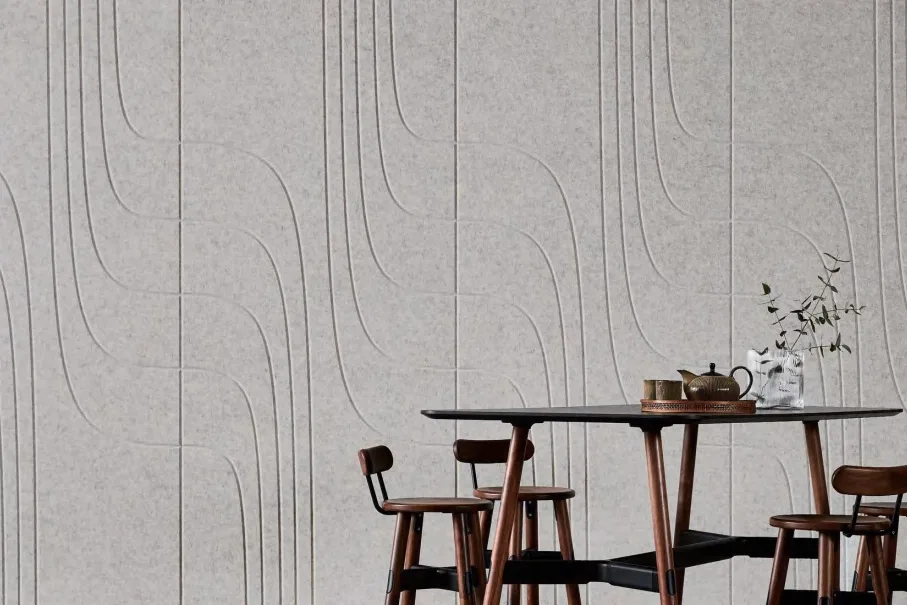
15+ patterns · 1200 × 2800 mm
Carved wall panels: lines, chevrons, arches and weaves, in large 1200 × 2800 mm formats.
Explore the collection →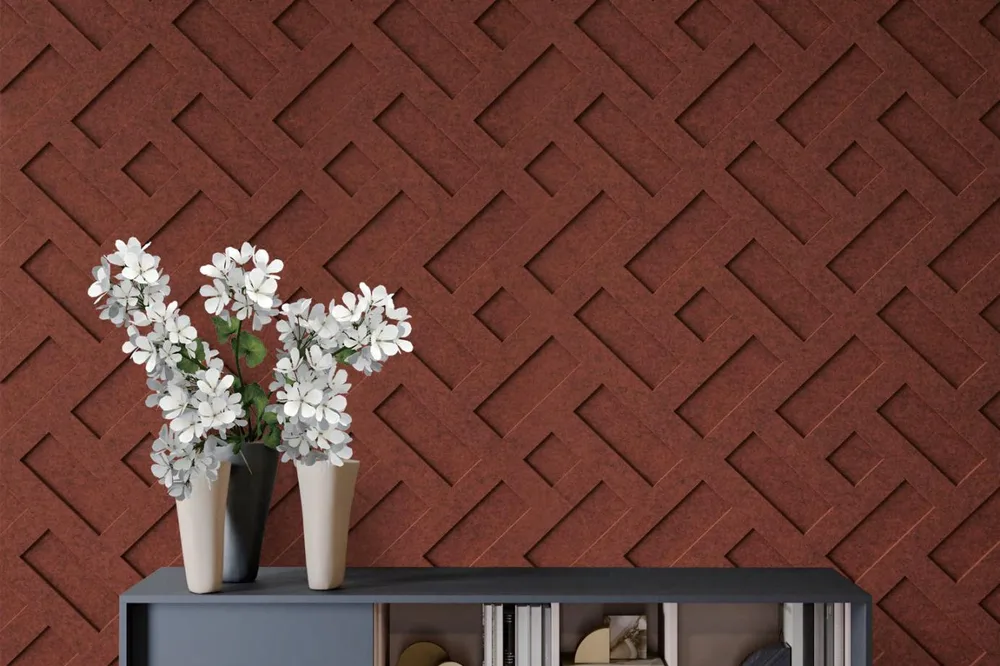
9 textures · ref. EM-001 to EM-009
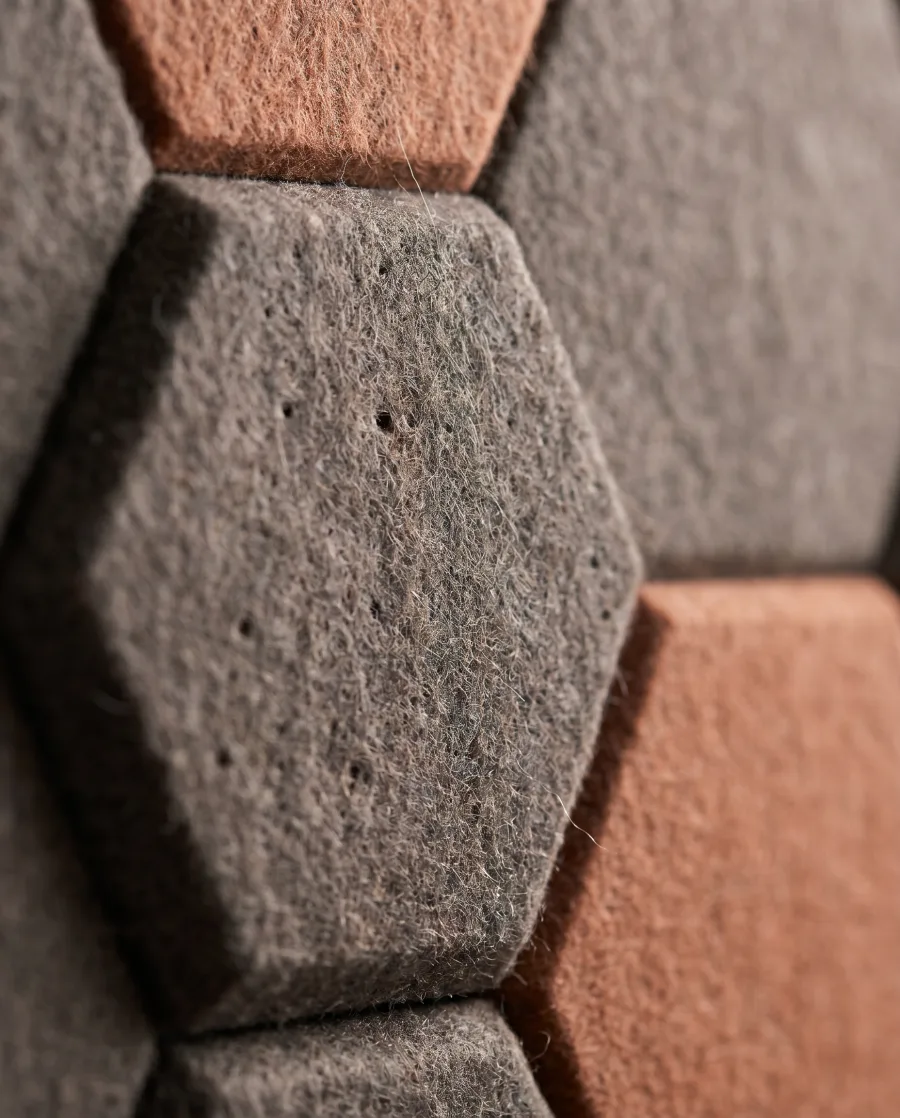
Nine embossed textures (scales, waves, weave) that catch the light and give the wall real depth.
Explore the collection →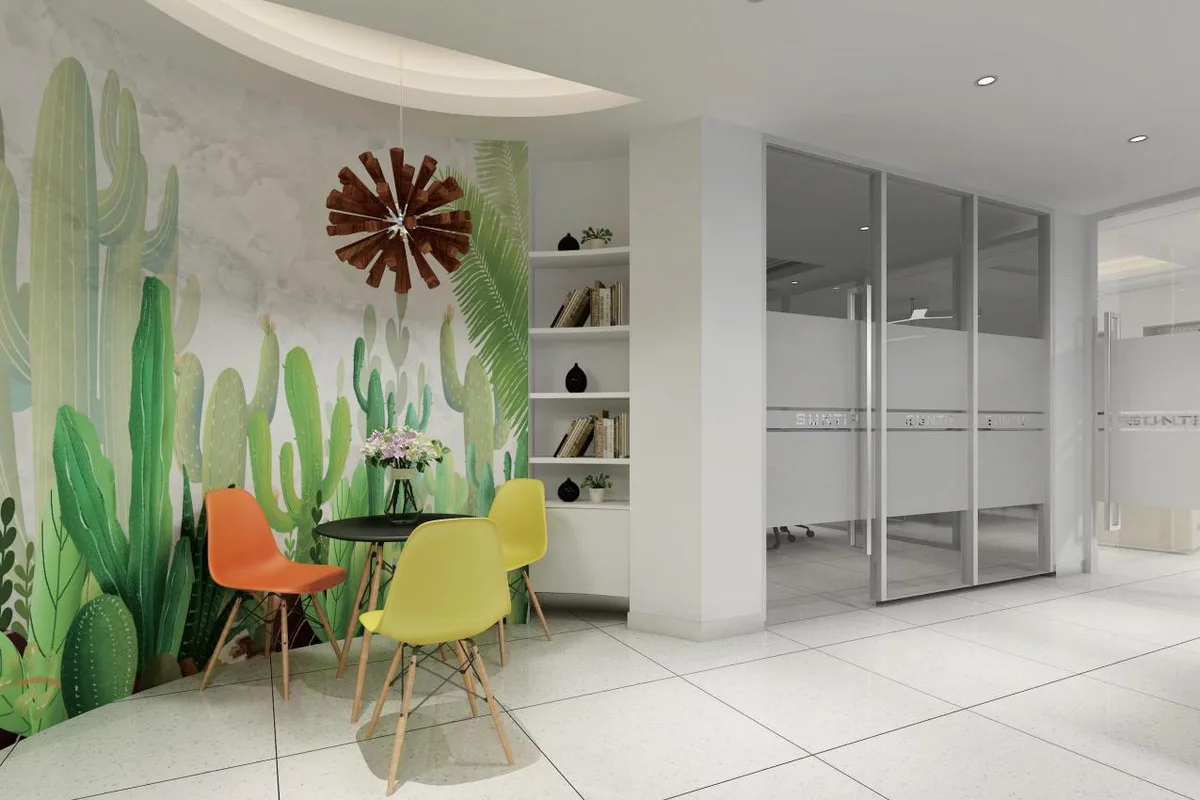
HD printing · any artwork
Our speciality: your artwork (mural, photo, pattern, logo) printed in high definition on the felt.
Explore the collection →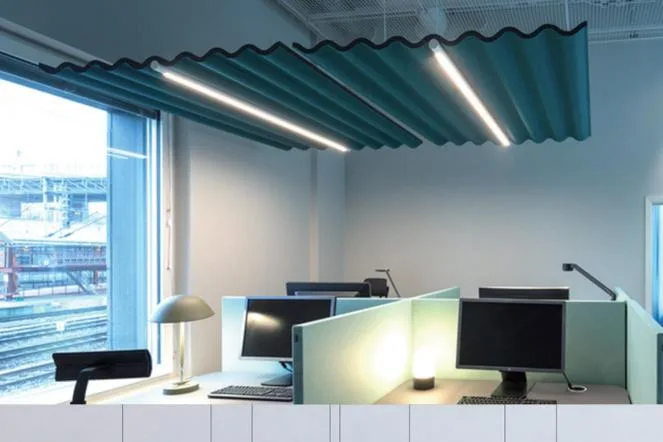
Baffles, grids, islands · ref. CE
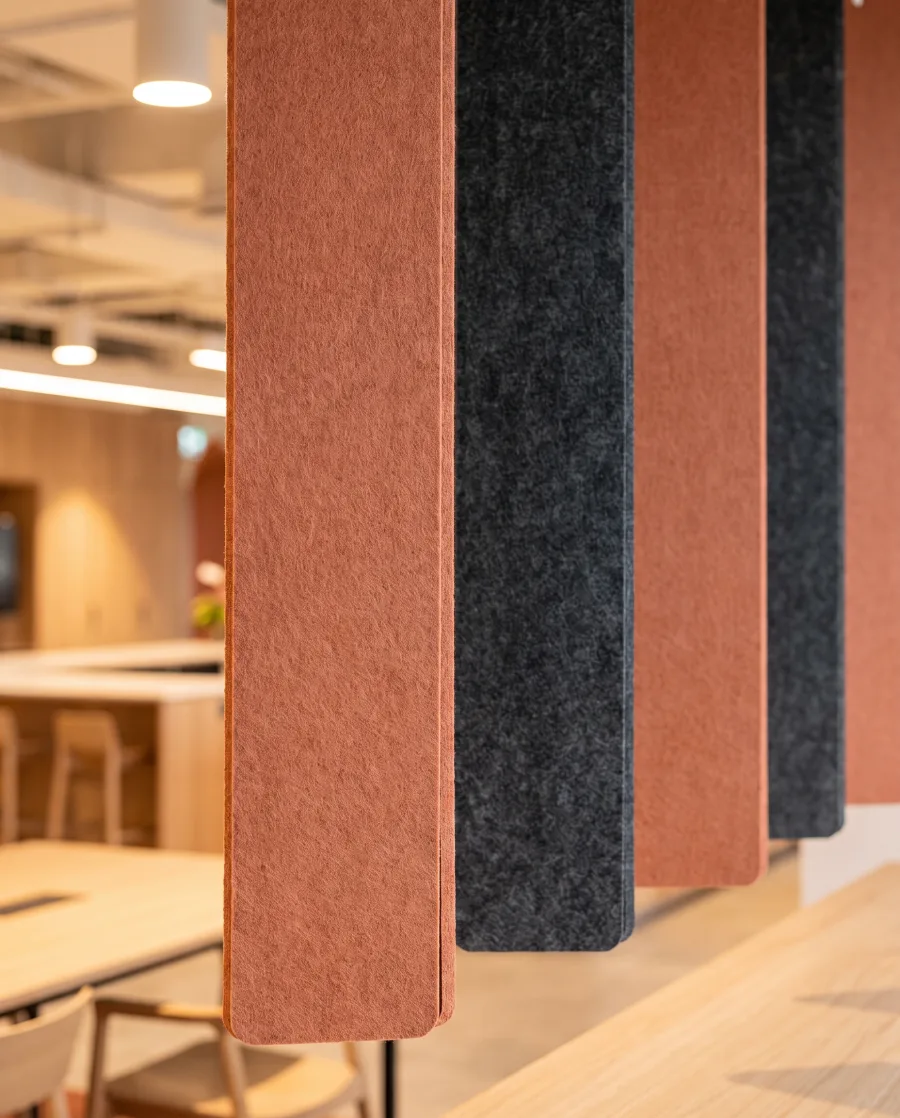
Vertical baffles, grids, waves and suspended rafts (CE-001 to CE-014) to treat the ceiling.
Explore the collection →How it works
Volume, hard surfaces, target atmosphere: we assess your venue.
Plan, approved printed visual, clear quote within 48 h.
Made-to-measure, fire-classified and documented for absorption.
Delivered DDP, installed outside service, within 10 to 15 days.
Send your floor plan or a few photos, quote within 48 h.
Request my free quoteFrequently asked questions
Send us your floor plan or a few photos, and we come back with a priced layout and a quote within 48 h.
Request my free quote