Printed panels
HD printing · any artwork
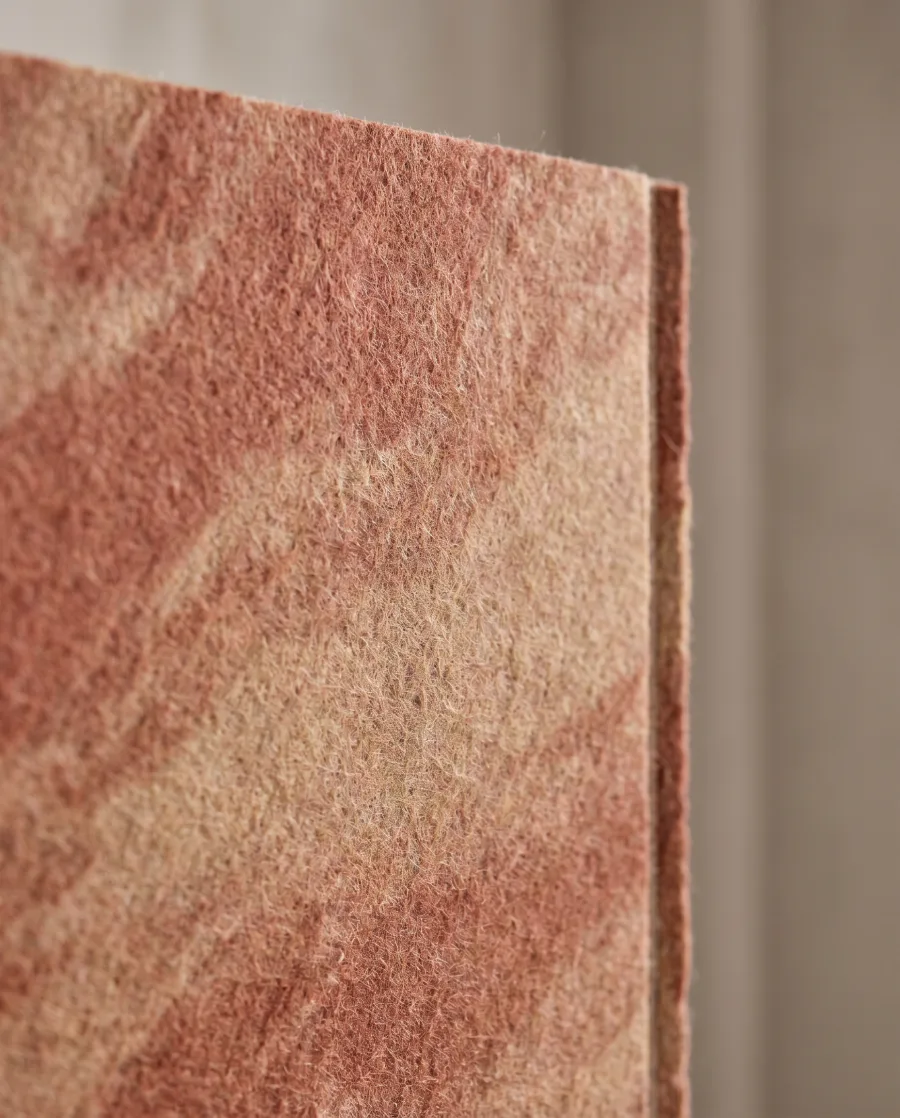
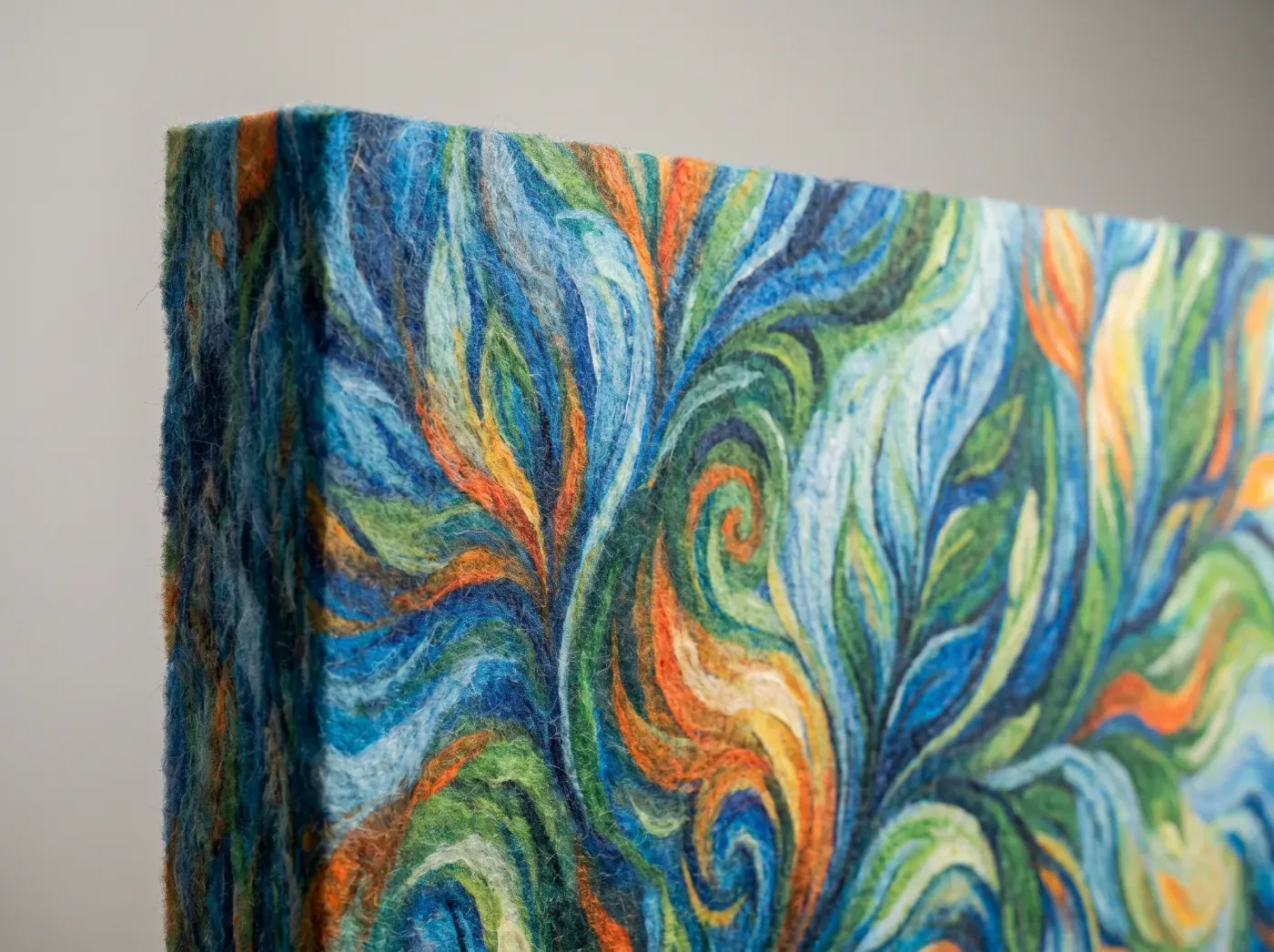
Our speciality: your artwork (mural, photo, pattern, logo) printed in high definition on the felt.
Explore the collection →Office & open-plan solution
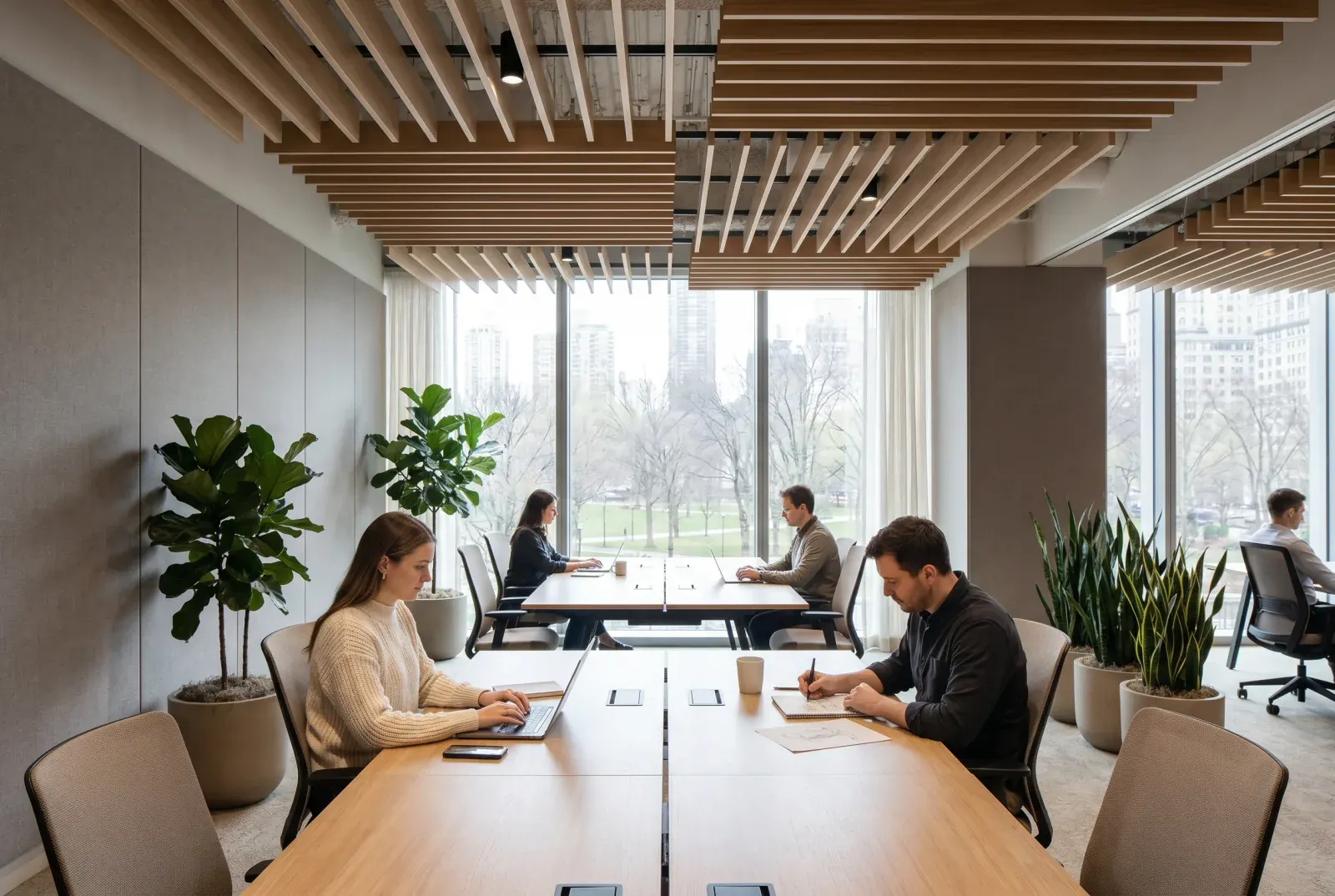
In an open-plan office, noise is the leading cause of lost focus. Not raw volume: the voices you understand despite yourself. Well-placed acoustic panels absorb reverberation, bring the background sound level down and make speech intelligible when needed, discreet the rest of the time. ACOUSTELIO designs these made-to-measure panels for your offices, printable in your colours and fire-certified for public buildings.

The problem
An open floor stacks up sound sources. Conversations, calls, keyboards, ringtones, the coffee machine. Each is bearable on its own. Together, and bounced back by hard surfaces like glass, concrete or a smooth floor, they add up and linger. Sound does not escape, it goes round in circles. That is reverberation.
Add a vicious circle well known to acousticians: the Lombard effect. In noise, you spontaneously raise your voice to be heard. So your neighbour raises theirs. And the level climbs, step after step. An open-plan office easily goes from 55 to 65 dB(A) at its peak, and every 10 dB roughly doubles the sense of loudness.
The real cost is not the noise itself, it is the attention it steals. You understand the sentence next to you, so your brain listens to it. You lose focus, catch up, wear yourself out. The good news: this phenomenon can be treated precisely, and without heavy works. That is exactly what acoustic treatment is for.
What's at stake
Reducing reverberation is not a wellness luxury. It is a direct lever on performance. Fewer distractions, clearer exchanges, less auditory fatigue at the end of the day. Video-call meetings finally become intelligible, which matters when half the participants are remote. And for the employer brand, a quiet floor sends a simple signal to teams and visitors alike: here, we respect concentration. With hybrid work, the office has to justify the commute: a space where you can hear and focus becomes a retention argument, not a comfort detail.
On the numbers, our panels absorb up to 85% of incident noise (NRC 0,85) and cut reverberation in half in many configurations. These are lab-measured values, not marketing promises. The detail is in the technical sheet supplied with every order, found on the guarantees page.
What it costs you
Four concrete effects of a poorly treated open-plan office, which acoustic treatment reverses.
You understand the conversation next to you, so you listen despite yourself. Reckon on around twenty minutes to get back into your task after each interruption.
Forcing your voice and filtering the din all day is exhausting. By late afternoon, teams' energy and mood clearly suffer.
In person or on video, a room that echoes makes the speaker hard to follow. You repeat, you talk over each other, you lose the thread and waste time.
A noisy floor is felt the moment a visitor or candidate arrives. Quiet, by contrast, signals the care given to the work and the people.
The collections
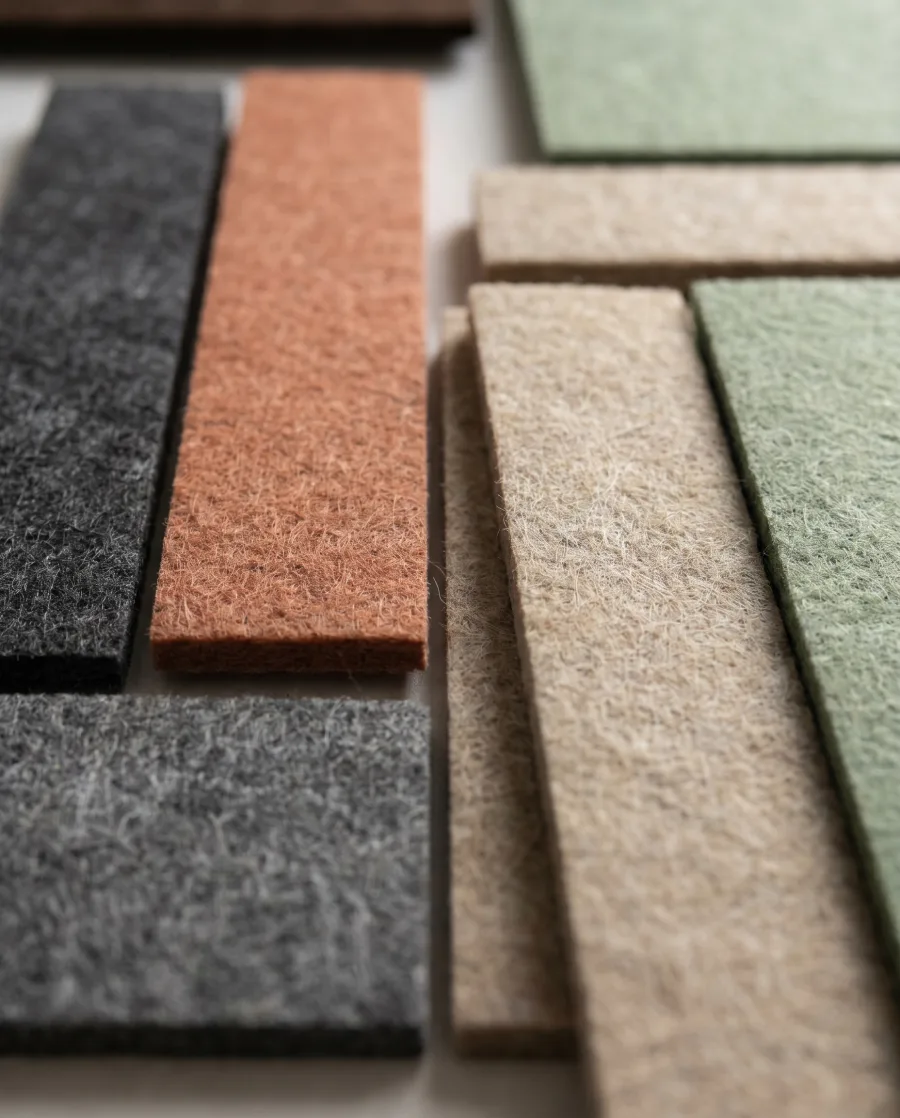
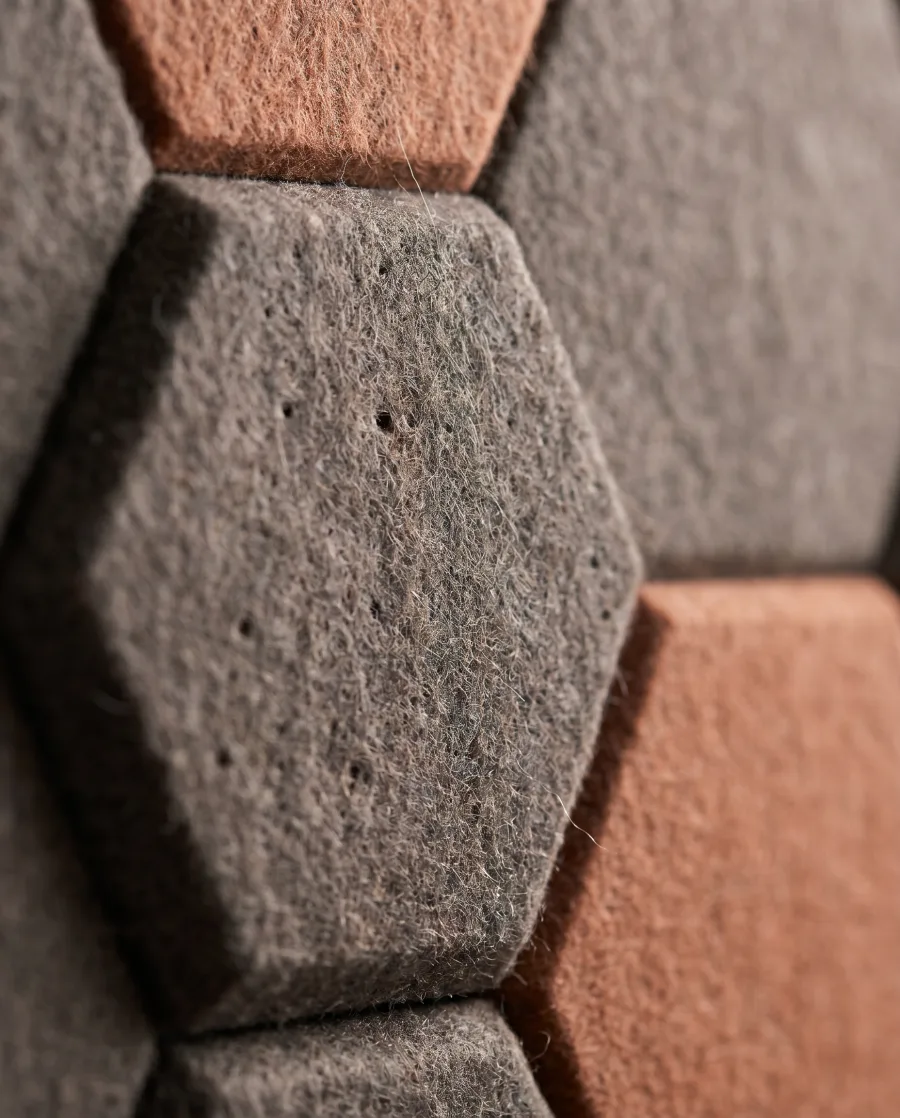
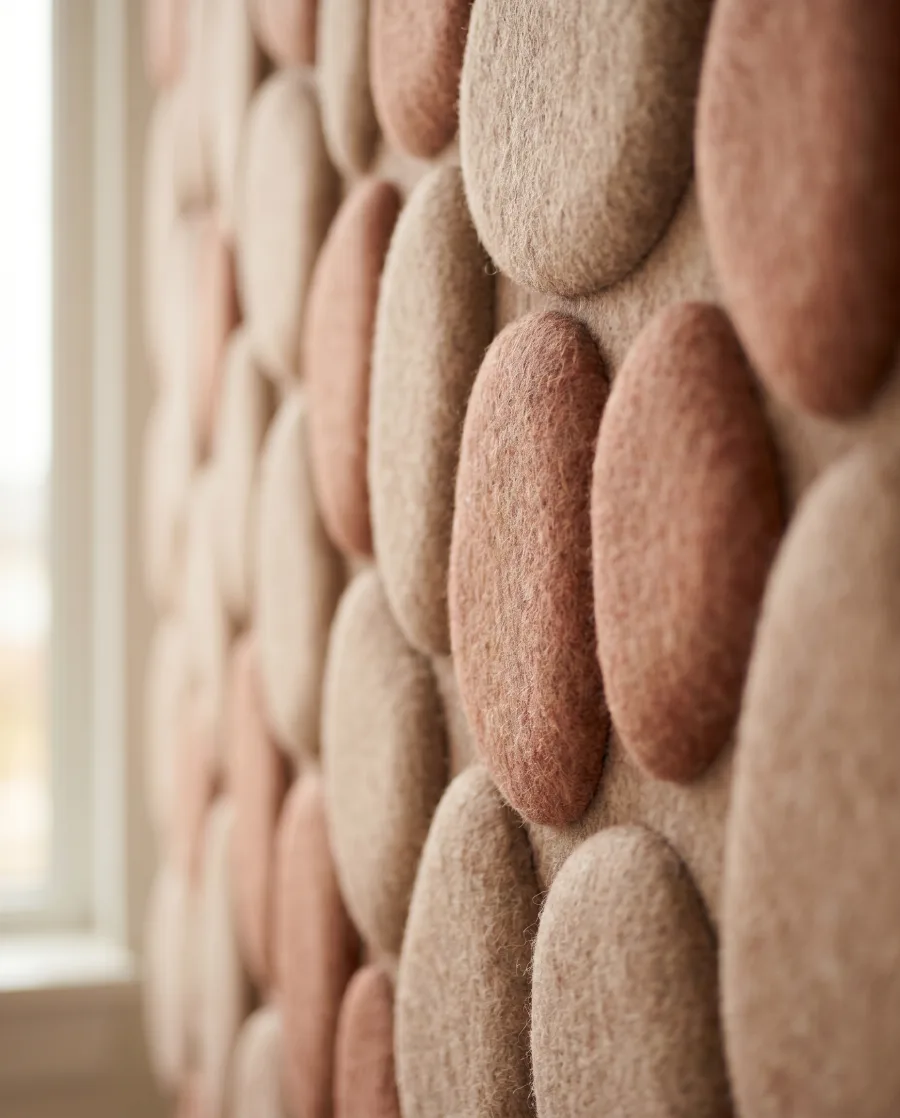
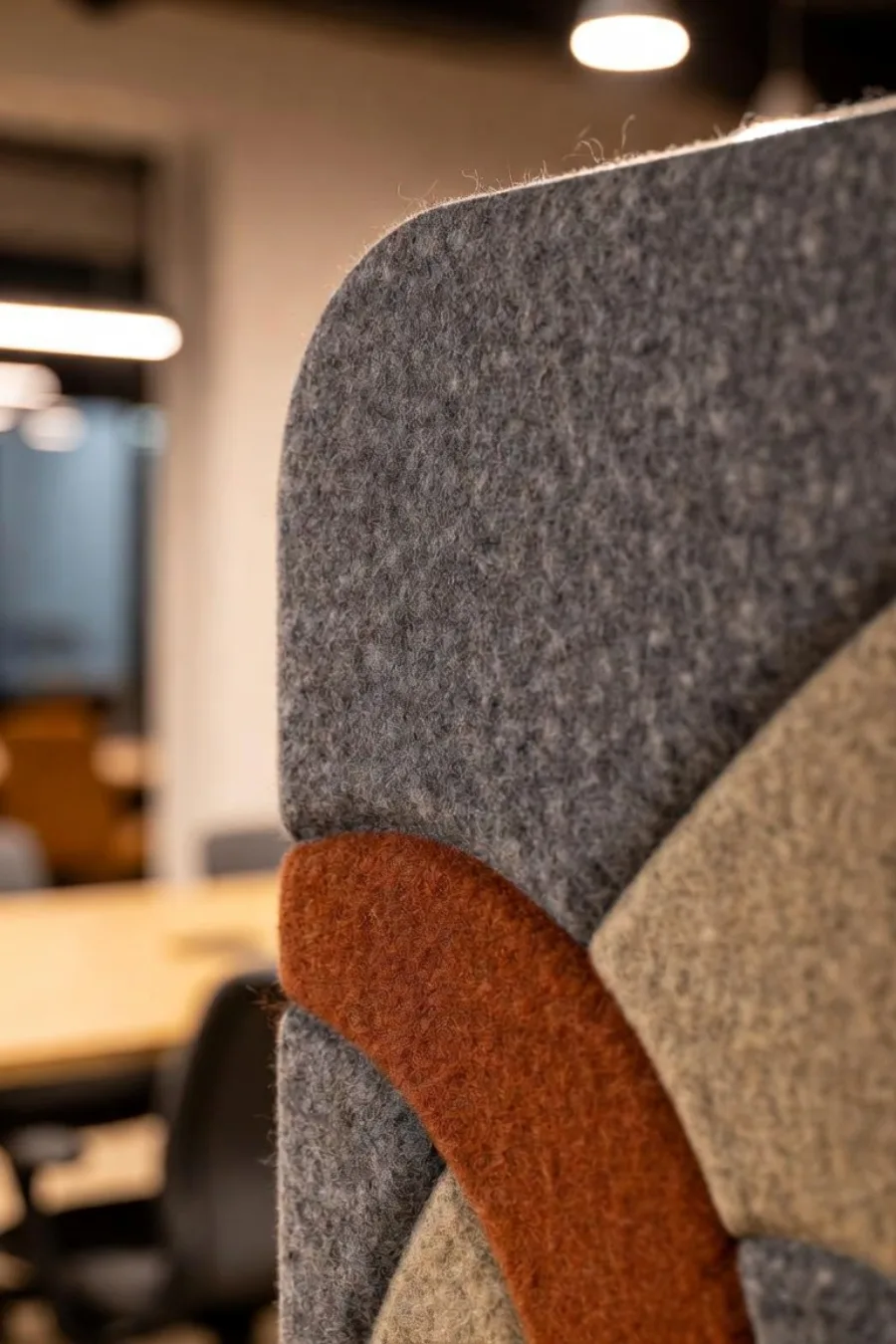
Every photo shows a real product from our collections. Everything comes in 55 felt colours, 9 or 12 mm thick, and can be printed with your artwork.
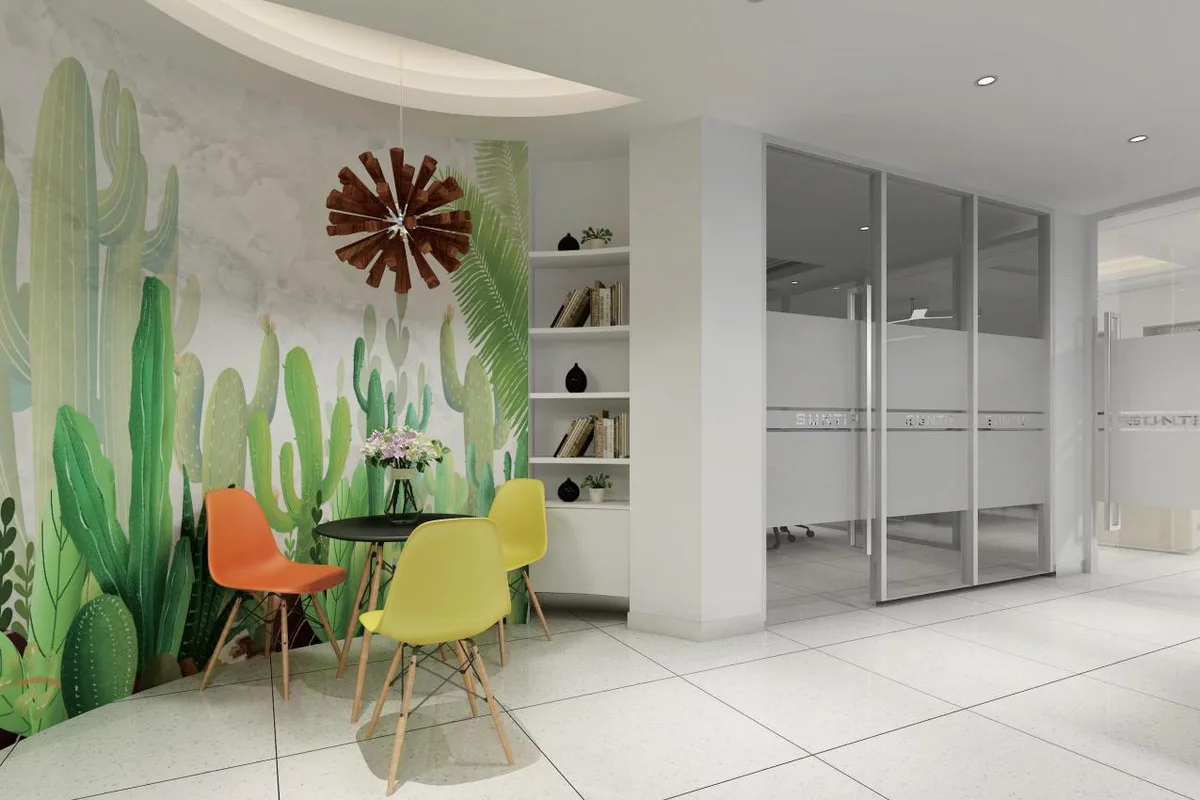
HD printing · any artwork
Our speciality: your artwork (mural, photo, pattern, logo) printed in high definition on the felt.
Explore the collection →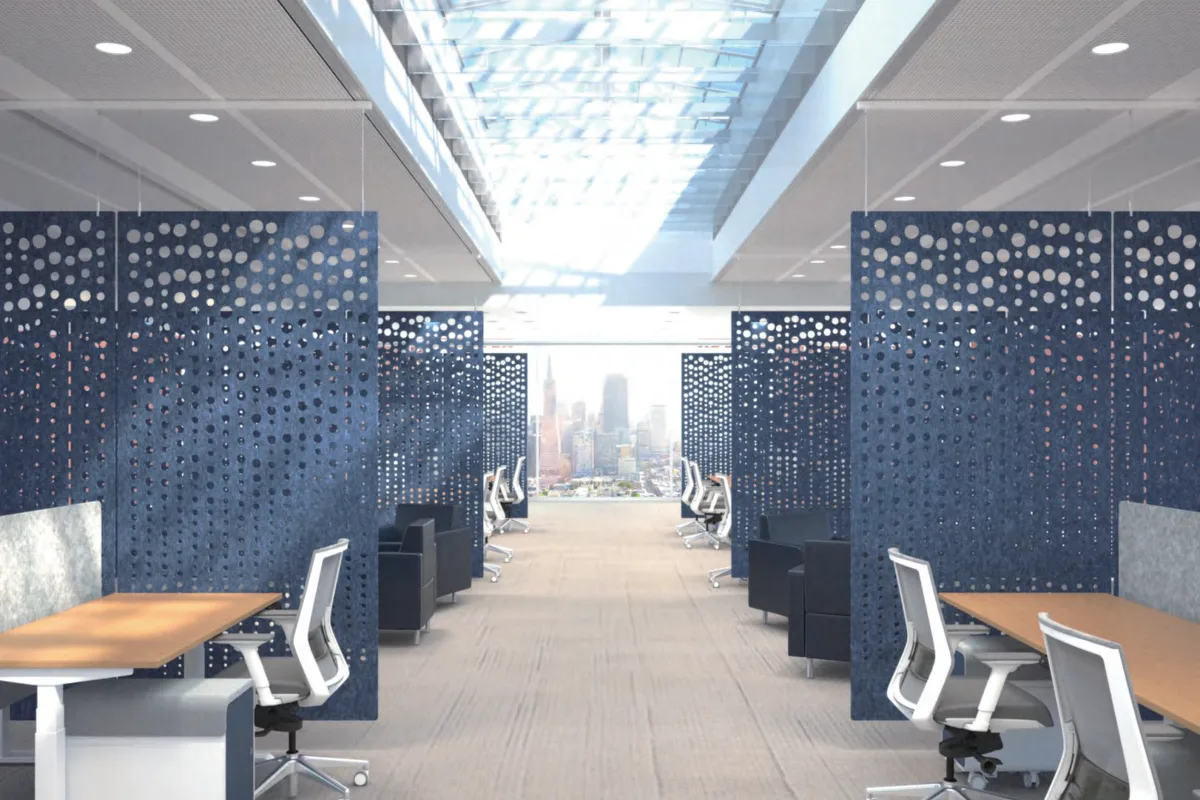
20+ cut-out patterns · suspended
Openwork cut screens (foliage, geometric patterns) hung from the ceiling to zone a space without closing it.
Explore the collection →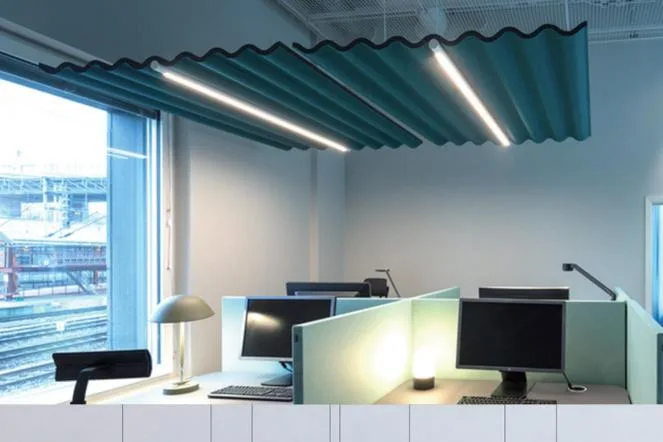
Baffles, grids, islands · ref. CE
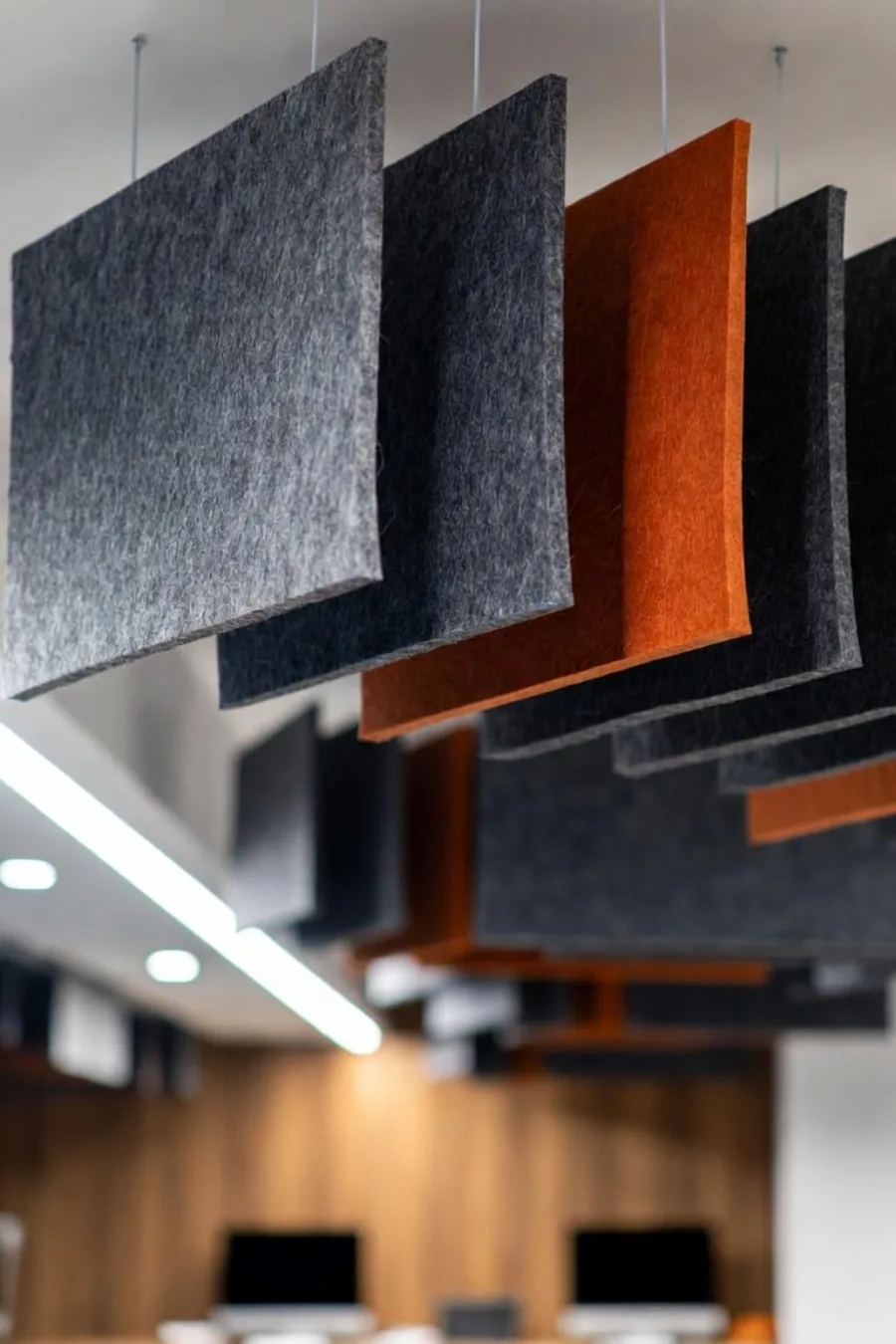
Vertical baffles, grids, waves and suspended rafts (CE-001 to CE-014) to treat the ceiling.
Explore the collection →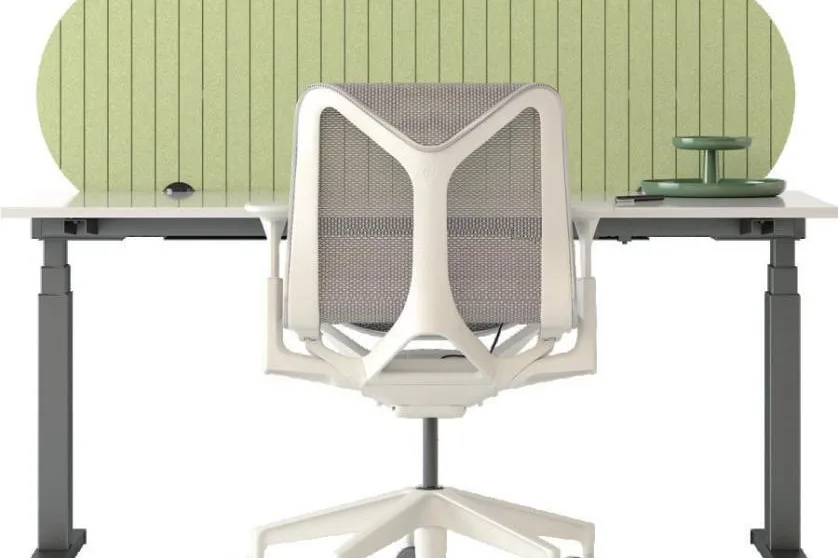
13 models · 580 to 1800 mm
Embossed or engraved desk dividers, from 580 to 1800 mm, with five desktop mounting systems.
Explore the collection →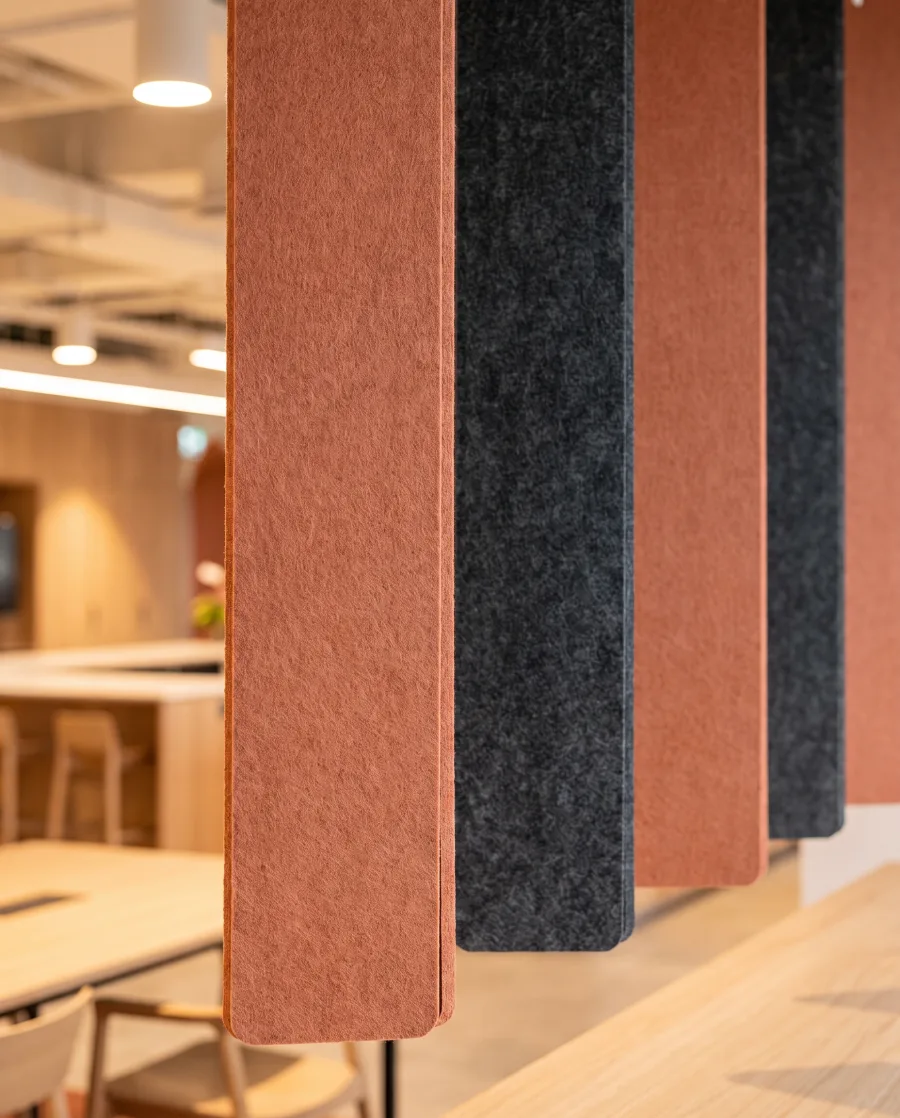
The method
Placing panels at random is spending with no guarantee of results. We prefer to start from a numeric goal. The key indicator is called the reverberation time, or RT: how long a sound takes to decay once the source stops. The longer it is, the more the room "rings". In an open-plan office, we generally aim for an RT of around 0.5 to 0.8 second. Beyond that, voices drag on and blur together.
This benchmark is not something we made up. The French standard NF S 31-080 frames office acoustics and defines three levels: standard, high, very high. It sets measurable criteria on RT, the decay of sound across the space and the background noise. Aiming for the "high" level gives a clear target to size the absorbing area, rather than a vague "we want less noise".
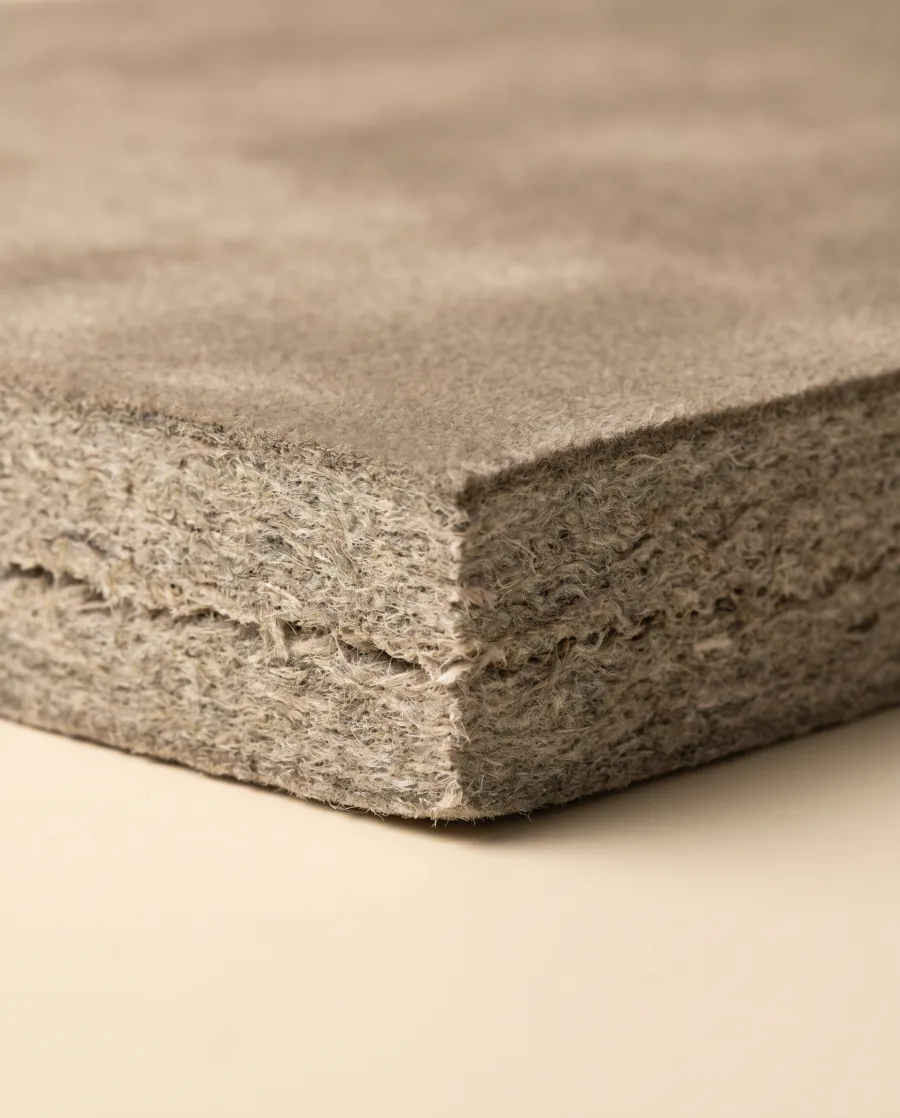
One last technical point that changes everything: PET felt works mainly between 250 and 4000 Hz, the band of the human voice. That is exactly where office comfort is decided. So we choose the thickness, the layout and the air gap based on that target, not a one-size-fits-all recipe.
Treat or soundproof?
Two answers to two different problems. Nine times out of ten, an open-plan office calls for treatment, not soundproofing.
Our solutions
We combine several panel families to suit your floor and your budget.
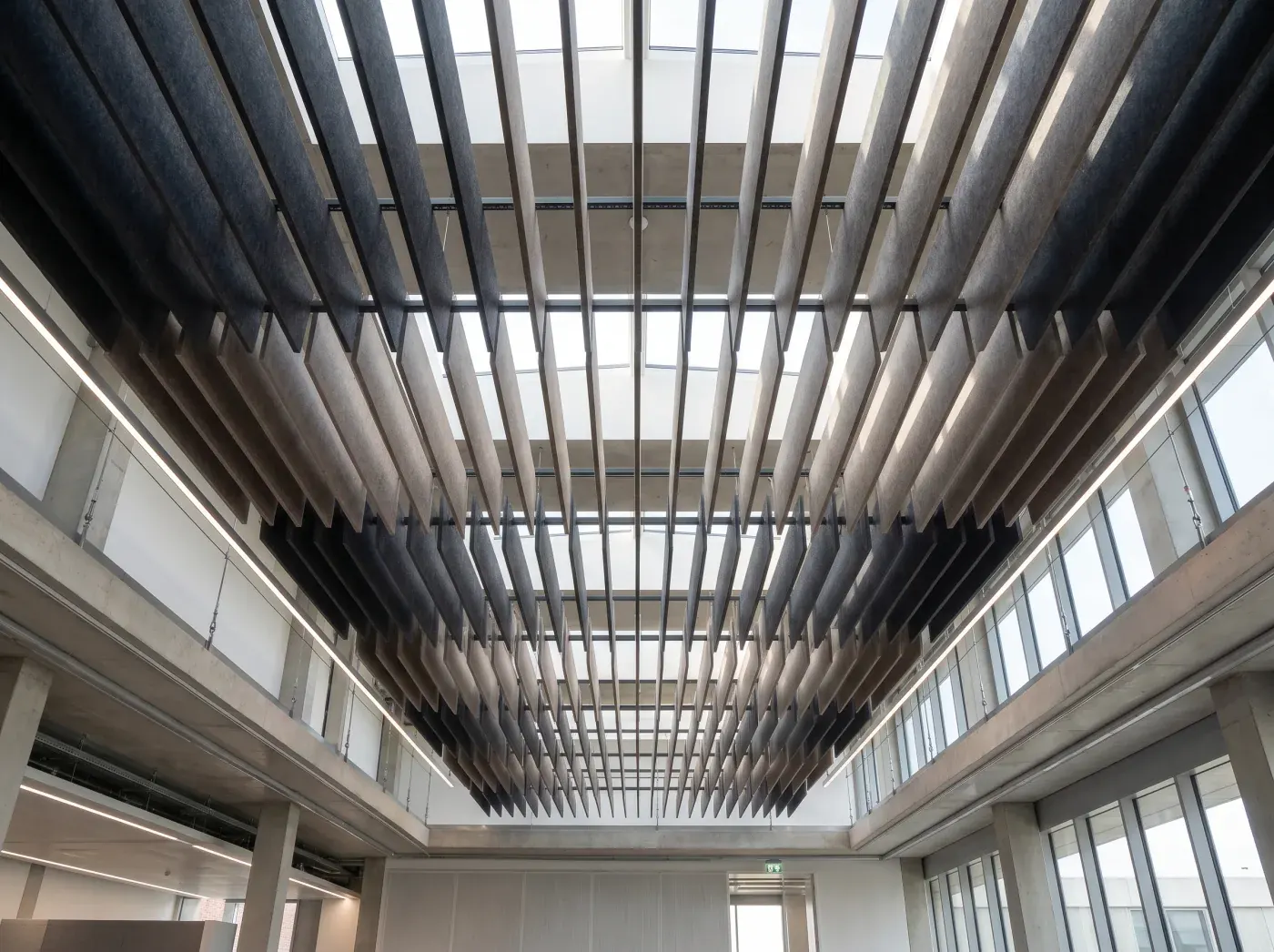
The largest available surface, the most powerful lever on large volumes.
See ceiling & baffles →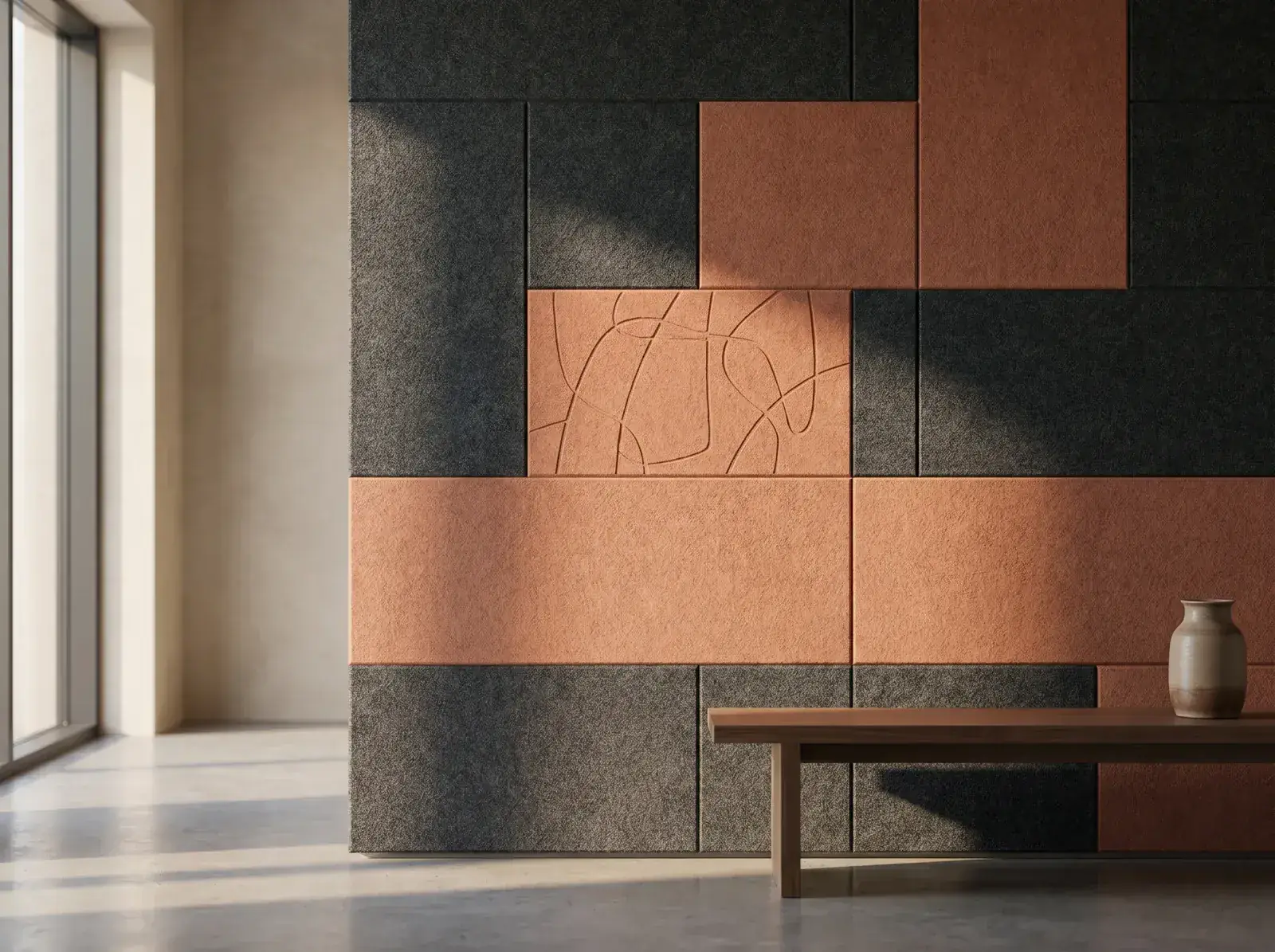
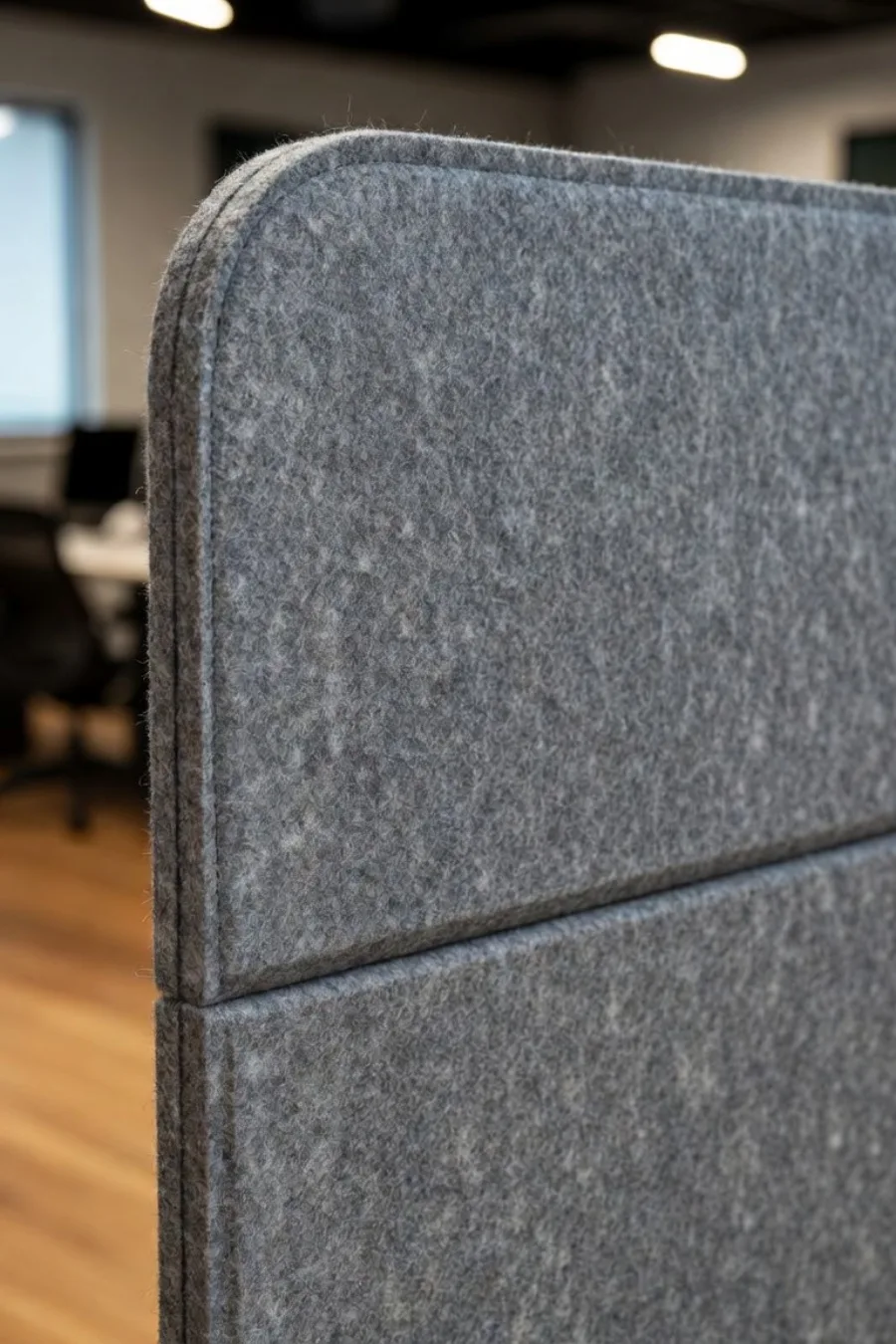
Between workstations (bench) or free-standing, they cut the direct voice between neighbours.
See partitions & screens →The guide
Not every office is treated the same way. The logic, though, is the same everywhere: spot the hard surfaces that bounce sound back, then set against them just enough absorption, in the right place. Here is how we reason, room by room.
Open-plan office. The classic playing field. We load the ceiling with baffles or tiles for the mass of absorption, add screens between rows of workstations, and a few wall surfaces on the large glazed or concrete spans. Goal: break both the overall din and the direct voice between neighbours.
Meeting room. Small volume, hard surfaces, often a large table and a screen wall. Sound bounces and the video call becomes painful. A few well-placed wall panels at the reflection points are enough to make speech clear, on both sides of the camera.
Private offices and call booths. Here the need leans towards a bit of privacy. An absorbent wall panel and a partition or screen reduce the echo and the boxed-in feeling, especially in glazed phone booths that ring.
Acoustic booth, phone booth, alcove: do you need furniture? Acoustic furniture has its logic: a booth isolates a confidential call, an alcove offers a refuge for two. But a phone booth treats about 1 m² and costs several thousand euros apiece. Panels and absorbent partitions cost far less and treat the whole room, not a bubble. The two approaches complement each other: furniture for occasional privacy, acoustic treatment for the whole floor. And if you are unsure where to start, the meeting or video-call room remains the first project for most of our clients: small volume, big stakes, immediate effect.
Reception, cafeteria, circulation zones. Large volumes, sometimes high ceilings, plenty of hard surfaces. Ceiling baffles work wonders here, and a printed signature wall sets the tone from the entrance. We combine sound comfort and brand image in the same place.
The ACOUSTELIO difference
Most office acoustic solutions come down to neutral tiles you try to forget. We take the problem the other way round. Your logo, your brand guidelines, a mural or a mood visual print directly onto the felt, without losing any absorption. The space gains in quiet and identity, in a single move.
Ideal for a head office, a filmed room or a client area. See how printed made-to-measure works.
The budget
A fair question, and too often drowned in vagueness. Let's be concrete. The budget depends on the format, finishes and printing: every project is priced precisely in a free, no-obligation quote. A project's budget depends mainly on the absorbing area to install, so on the volume to treat and the level of comfort you aim for.
To set an order of magnitude: a meeting room is often treated for a few hundred euros, a full open-plan office for a few thousand. Rather than a per-square-metre rate disconnected from the result, we price a layout that targets a specific acoustic goal (the famous RT). You pay for the effect, not a pile of panels.
The quote is free and arrives within 48 h. It details the treated area, the formats, the printing and the lead time. No hidden cost on delivery either: everything ships DDP, duties and taxes included.
How it works
Volume, hard surfaces, comfort and reverberation goals.
Layout plan, approved printed visual, clear quote within 48 h.
Made-to-measure, fire-classified and documented for absorption.
Delivered DDP, ready to install, within 10 to 15 days.
Frequently asked questions
Office noise is not solved by lowering your voice. It is solved by absorbing reverberation, where it is born: on the hard surfaces.
The principle we apply on every floor, from a twenty-desk studio to the executive level.
Send us your floor plan or a few photos, and we come back with a priced layout and a quote within 48 h.
Request my free quote