
Plain felt
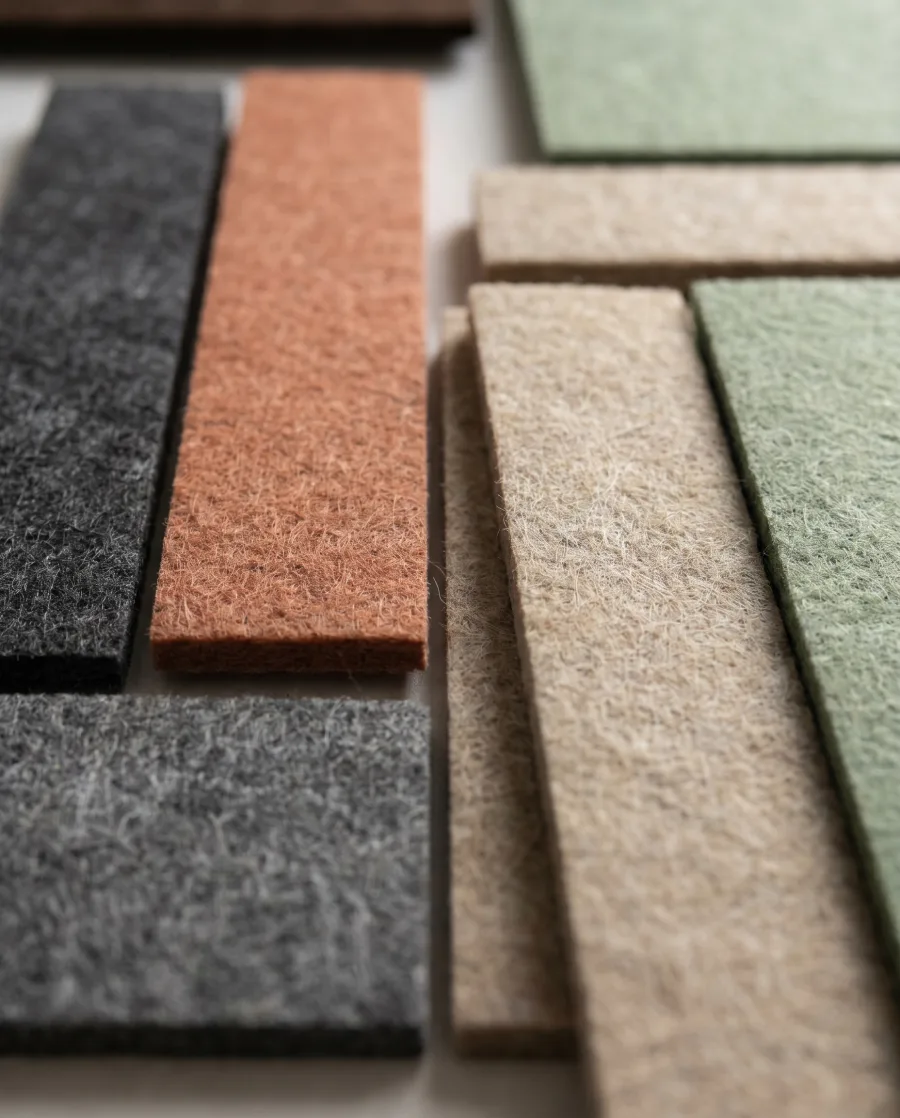
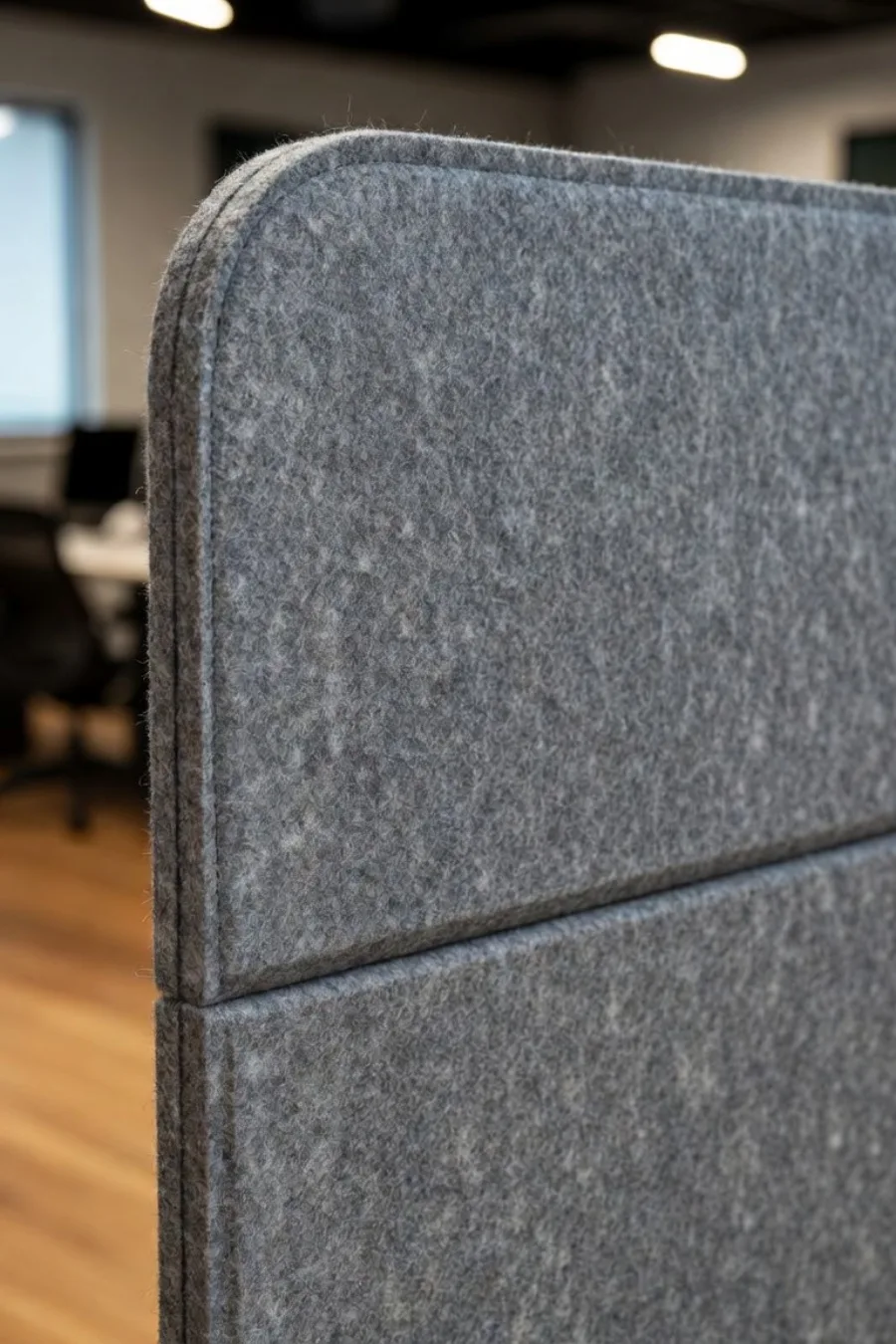
55 colours · 9 / 12 mm
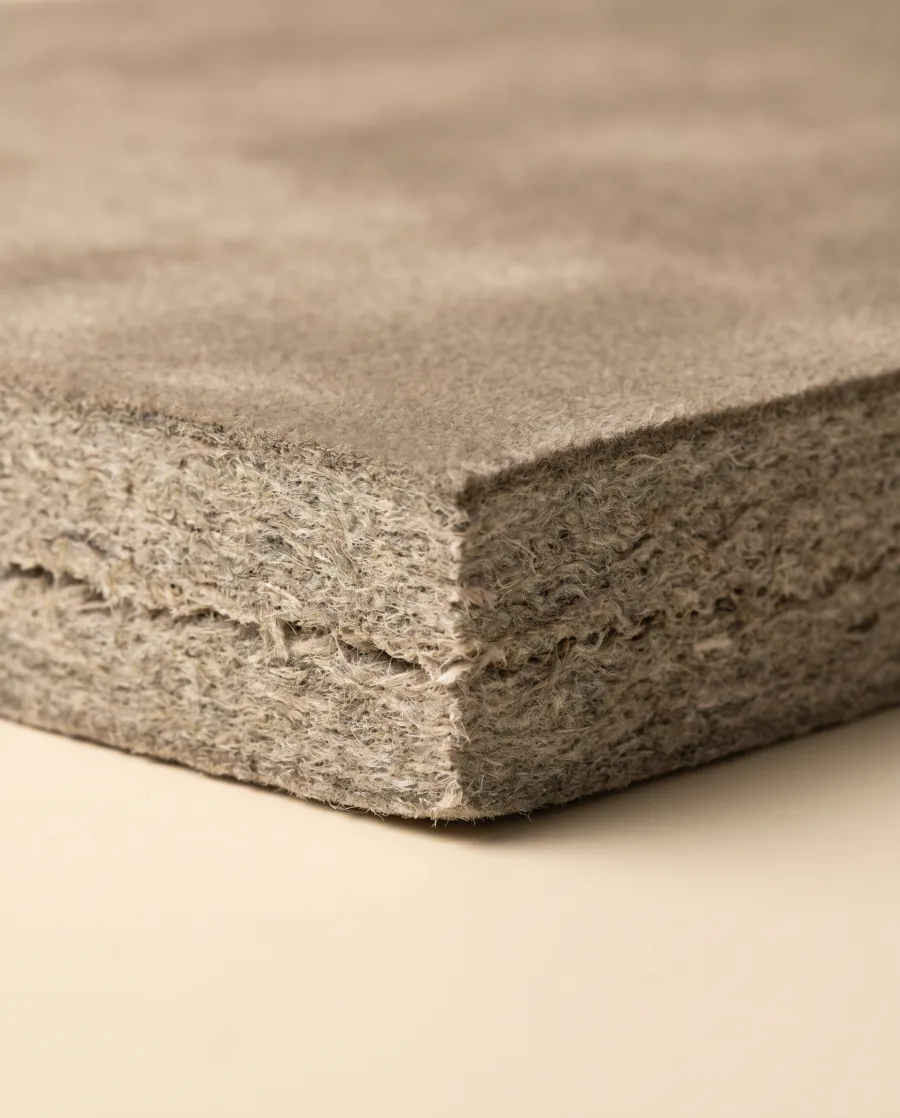
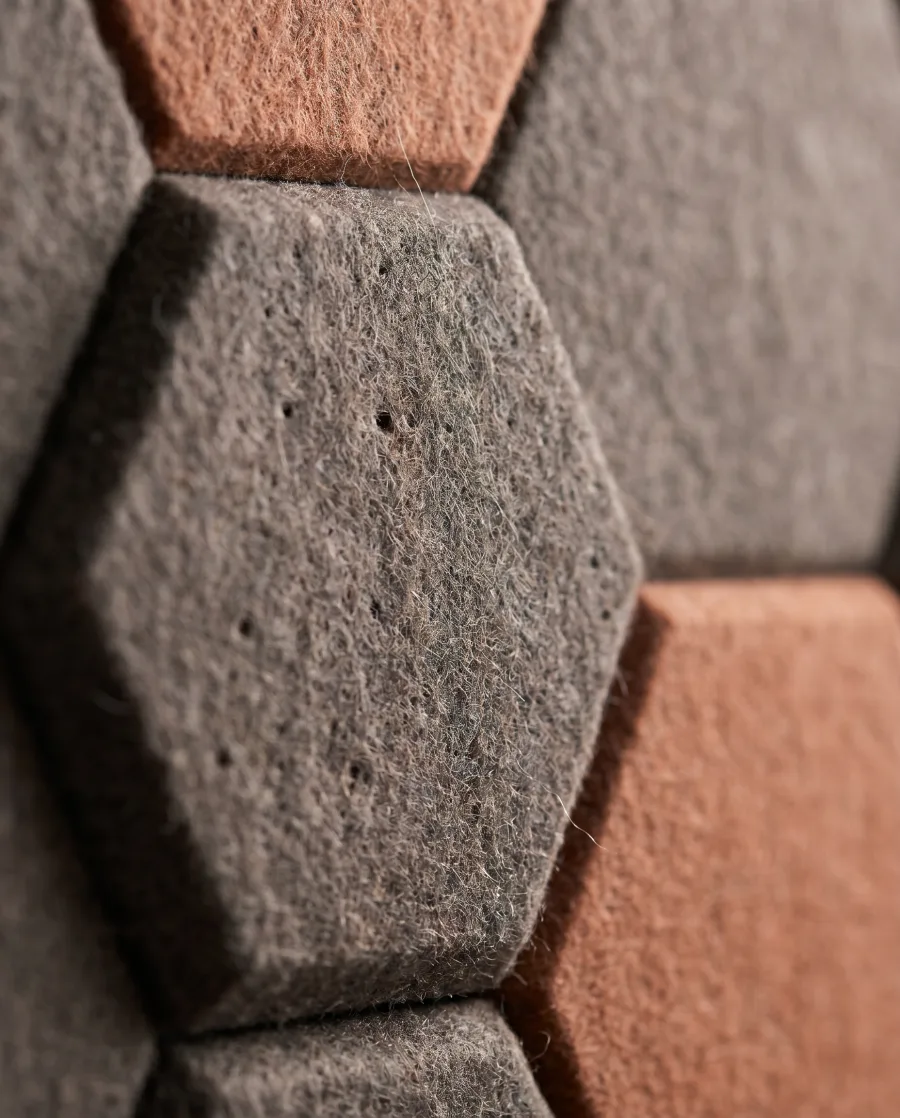
55 PET felt colours on the swatch card, from mineral neutrals to bold tones, in 9 or 12 mm.
Explore the collection →Public buildings, schools & local authorities solution
Canteens, classrooms, multipurpose halls, gyms, nurseries: these places echo and make speech hard to understand. In a school, it weighs on learning; in a canteen, the level climbs beyond 80 dB(A) and tires children and staff. Fire-certified acoustic panels absorb reverberation, restore intelligibility and bring the background sound level down. ACOUSTELIO designs these made-to-measure panels for your public-access buildings, with the technical file ready for your safety commission.
The problem
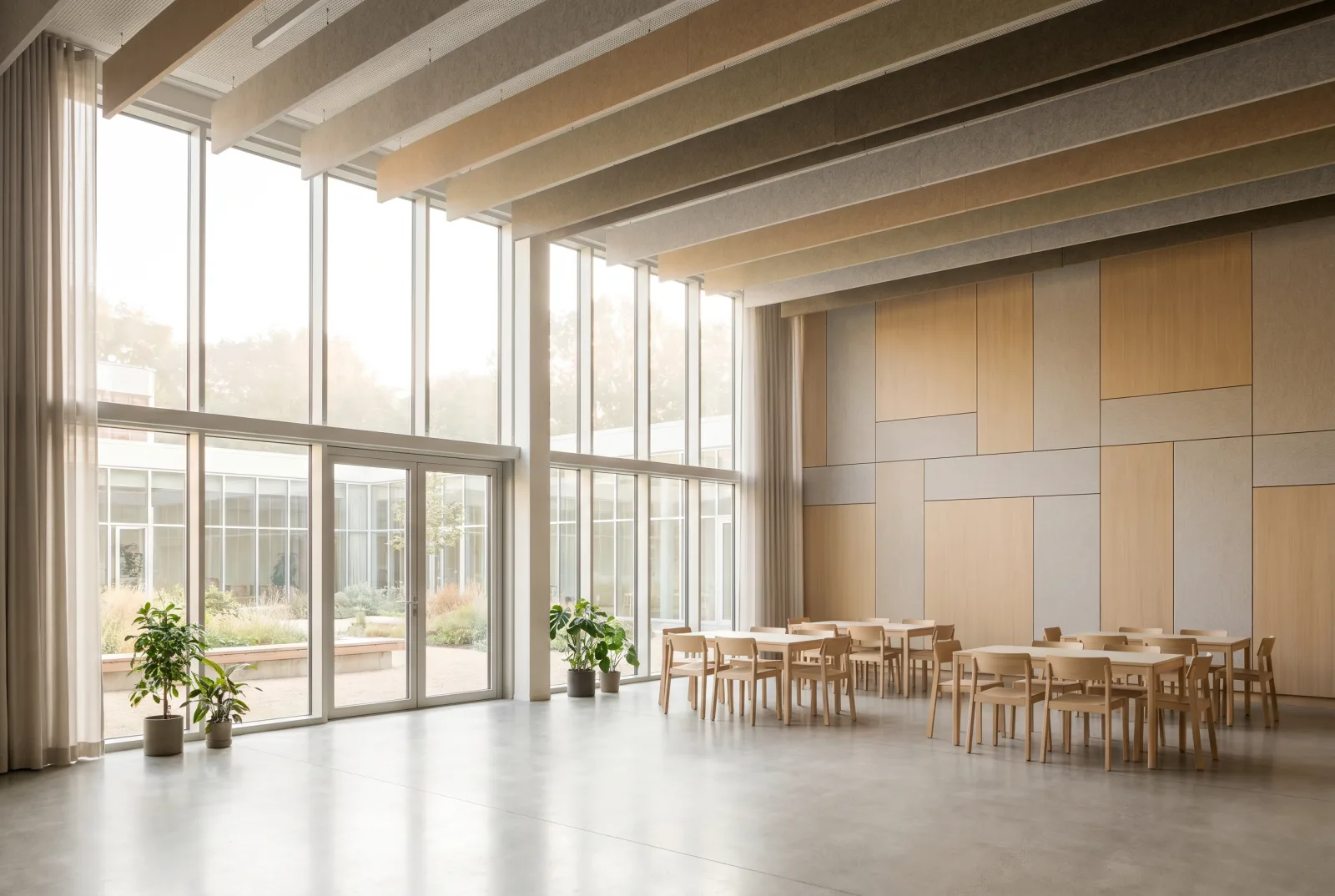
Public buildings combine two factors that worsen acoustics: large volumes and hard surfaces, often washable for hygiene reasons. Tiling, stainless steel, glazing, concrete, smooth floors. Nothing absorbs the sound, everything reflects it. Noise does not escape, it bounces from wall to wall and accumulates. That is reverberation, and it turns the slightest din into continuous racket.
Add a mechanism every parent knows without naming it: the Lombard effect. In noise, everyone spontaneously raises their voice to be heard. The neighbour does the same, and the level climbs step after step. In a school canteen full of children, the result often tops 80 dB(A), the equivalent of dense road traffic endured throughout the service. Canteen staff spend the day there, every day of the week.
In a classroom, the problem takes another form: the teacher's voice drowns in its own sound tail. At the back of the room, a pupil no longer makes out the words, only a mush. The right answer is not to shout louder, it is acoustic treatment: fitting absorbent surfaces to reduce the reverberation time and make speech clear.
What's at stake
In a public building, sound comfort is not an extra of wellbeing, it is a condition for the place to work. In a school, speech intelligibility directly conditions learning: a child who cannot clearly hear instructions loses focus, tires, or struggles more than another if they have an attention disorder or mild hearing loss. In a multipurpose hall or a gym, a safety instruction must be understood the first time, without repetition. Noise is therefore not just a nuisance, it touches the very mission of the establishment.
Sound comfort is also a regulatory matter. Certain rooms, classrooms, school canteens, reception areas, are subject to reverberation-time targets, with the NF S 31-080 standard as the quality reference. Treating acoustics means meeting these expectations while protecting the hearing health of occupants, children and staff exposed over long periods alike.
Our panels absorb up to 85% of incident noise (NRC 0,85) and are fire-certified B-s1,d0, the level expected in public-access buildings. The classification report and the absorption sheet are supplied with every order. See the guarantees & proof.
What it costs you
Four concrete effects of a poorly treated public building, which acoustic treatment reverses.
When speech drowns in the echo, pupils at the back miss part of the instructions. Comprehension drops, fatigue rises, especially for the youngest and children with an attention disorder.
A teacher forces their voice all day to cover the ambient noise. In the canteen, staff endure a level beyond 80 dB(A) on every service, a source of exhaustion and sick leave.
In a gym or a multipurpose hall that echoes, a safety announcement comes across poorly. You repeat, you shout, and the message stays fuzzy at the very moment it should be crystal clear.
A panel not fire-classified is rejected by the safety commission. The budget is lost, the project starts from scratch. Fire compliance is not optional in a public building.
The collections
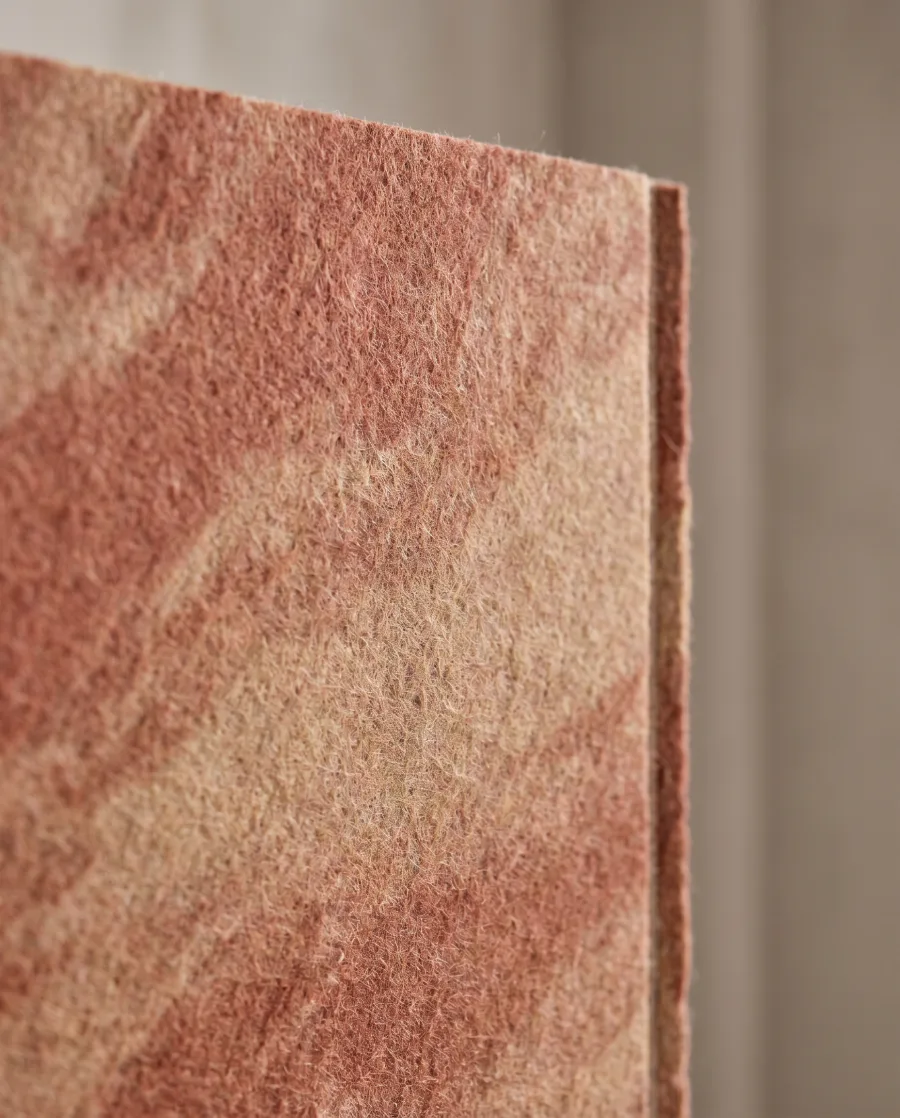
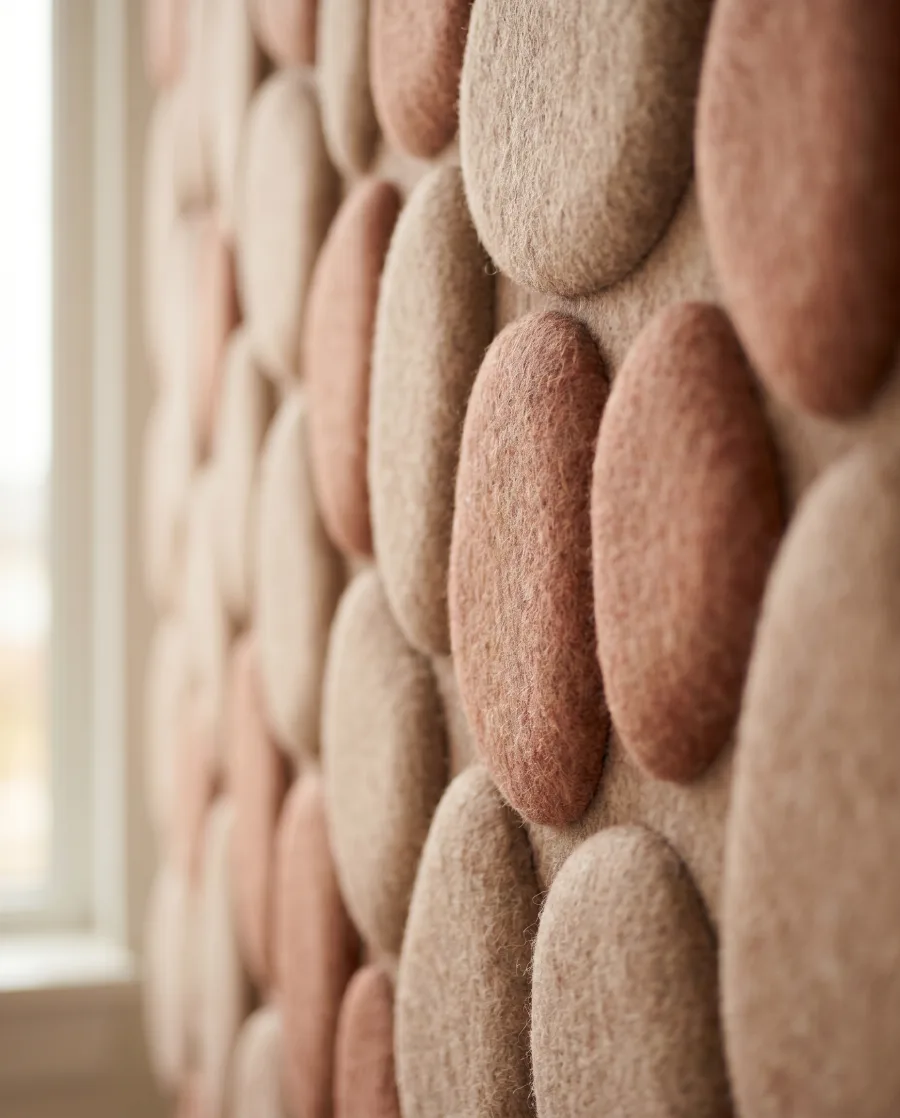
Every photo shows a real product from our collections. Everything comes in 55 felt colours, 9 or 12 mm thick, and can be printed with your artwork.
55 colours · 9 / 12 mm
55 PET felt colours on the swatch card, from mineral neutrals to bold tones, in 9 or 12 mm.
Explore the collection →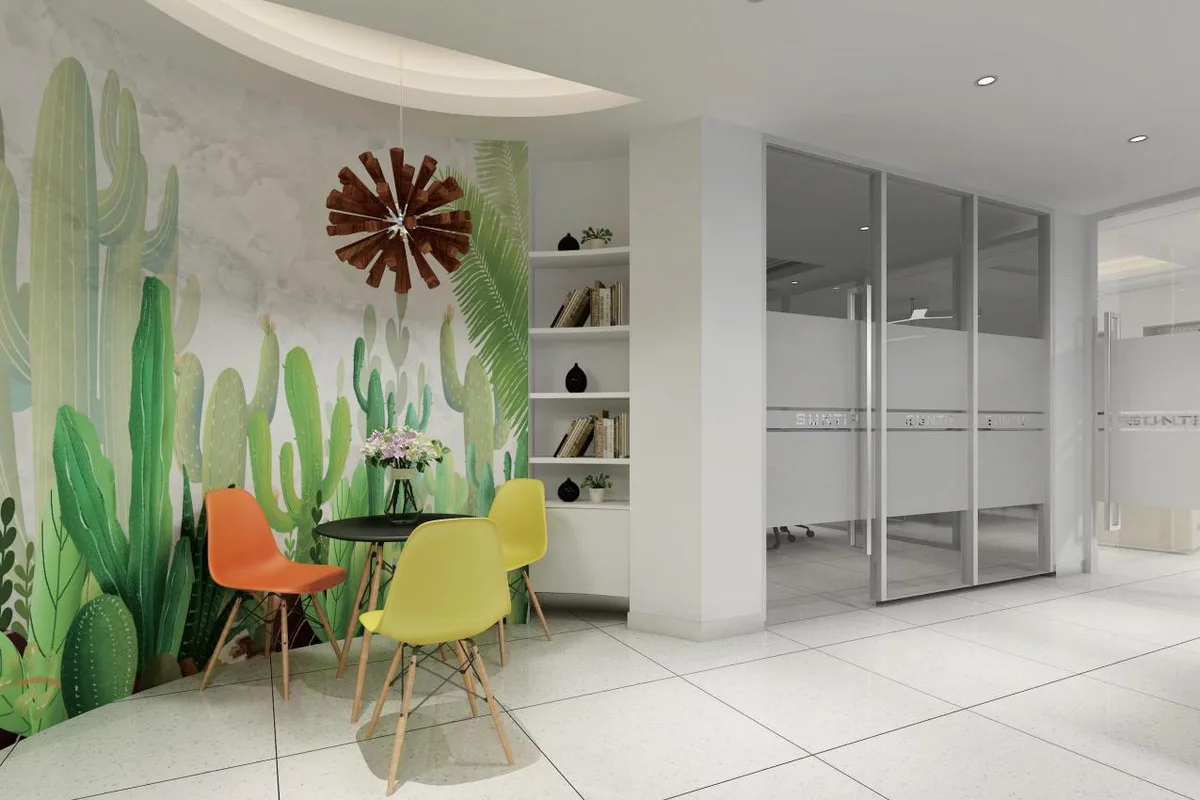
HD printing · any artwork
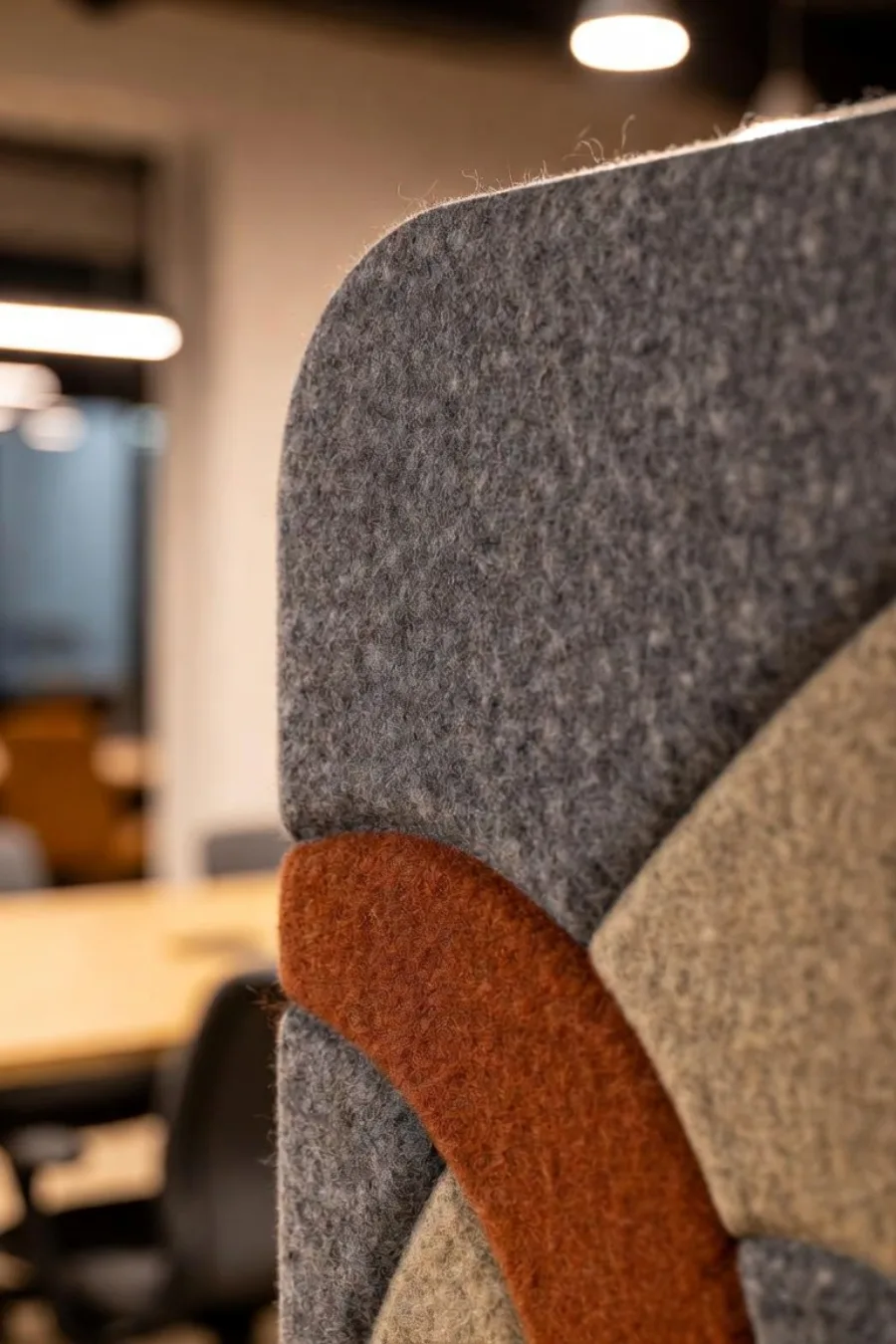
Our speciality: your artwork (mural, photo, pattern, logo) printed in high definition on the felt.
Explore the collection →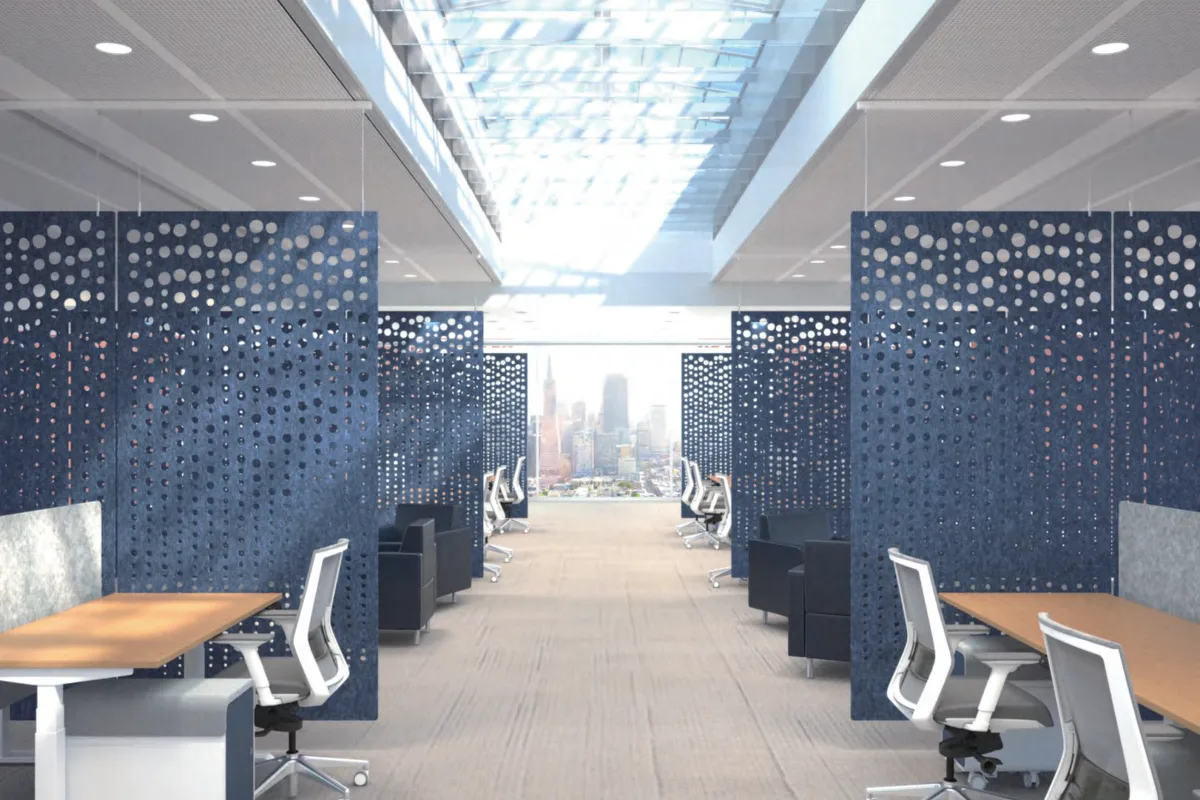
20+ cut-out patterns · suspended
Openwork cut screens (foliage, geometric patterns) hung from the ceiling to zone a space without closing it.
Explore the collection →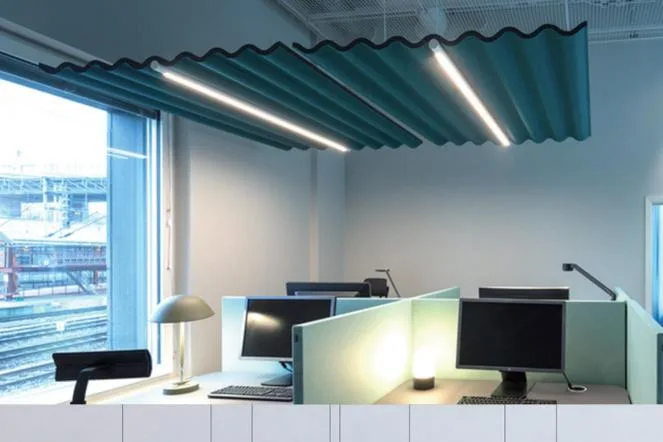
Baffles, grids, islands · ref. CE
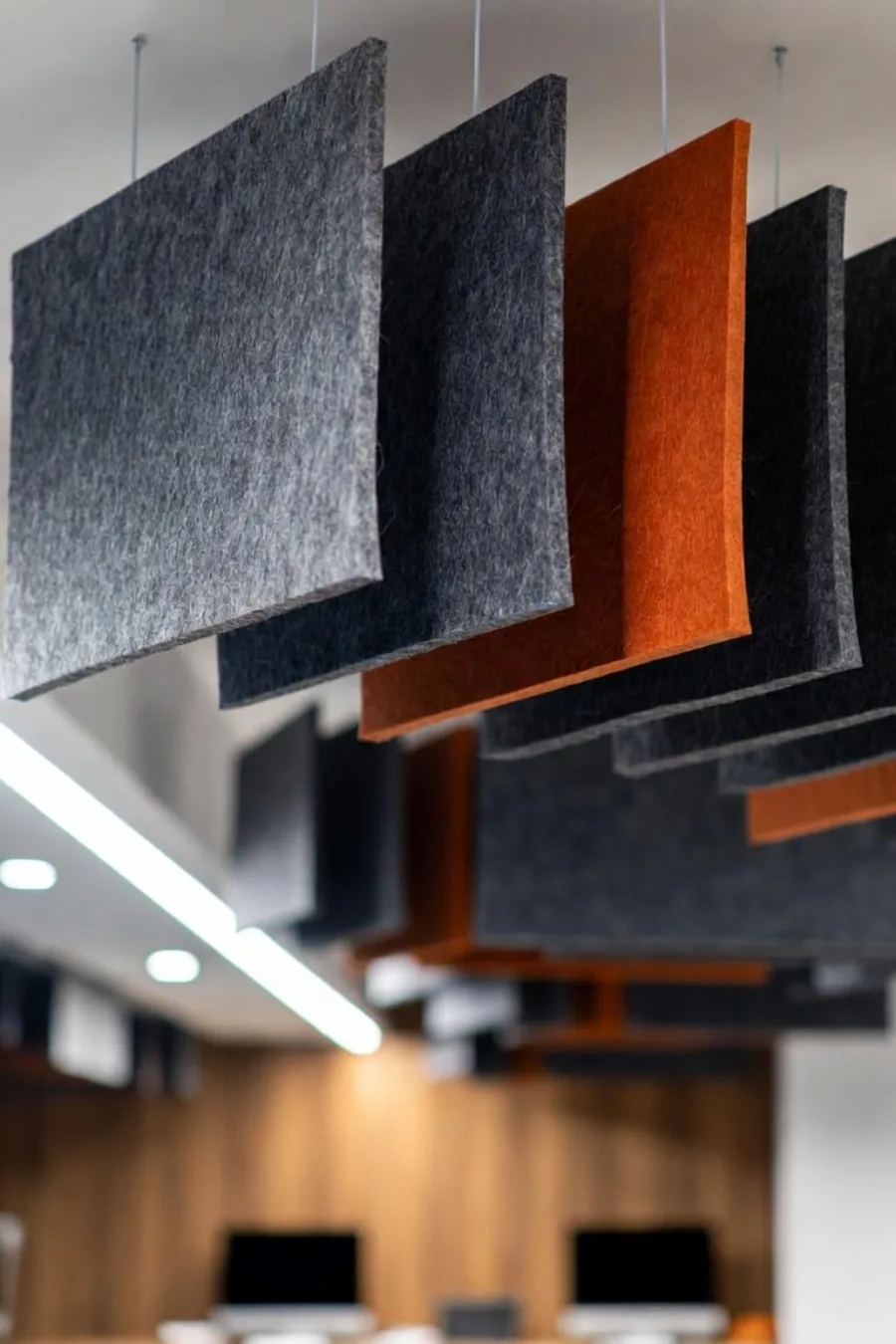
Vertical baffles, grids, waves and suspended rafts (CE-001 to CE-014) to treat the ceiling.
Explore the collection →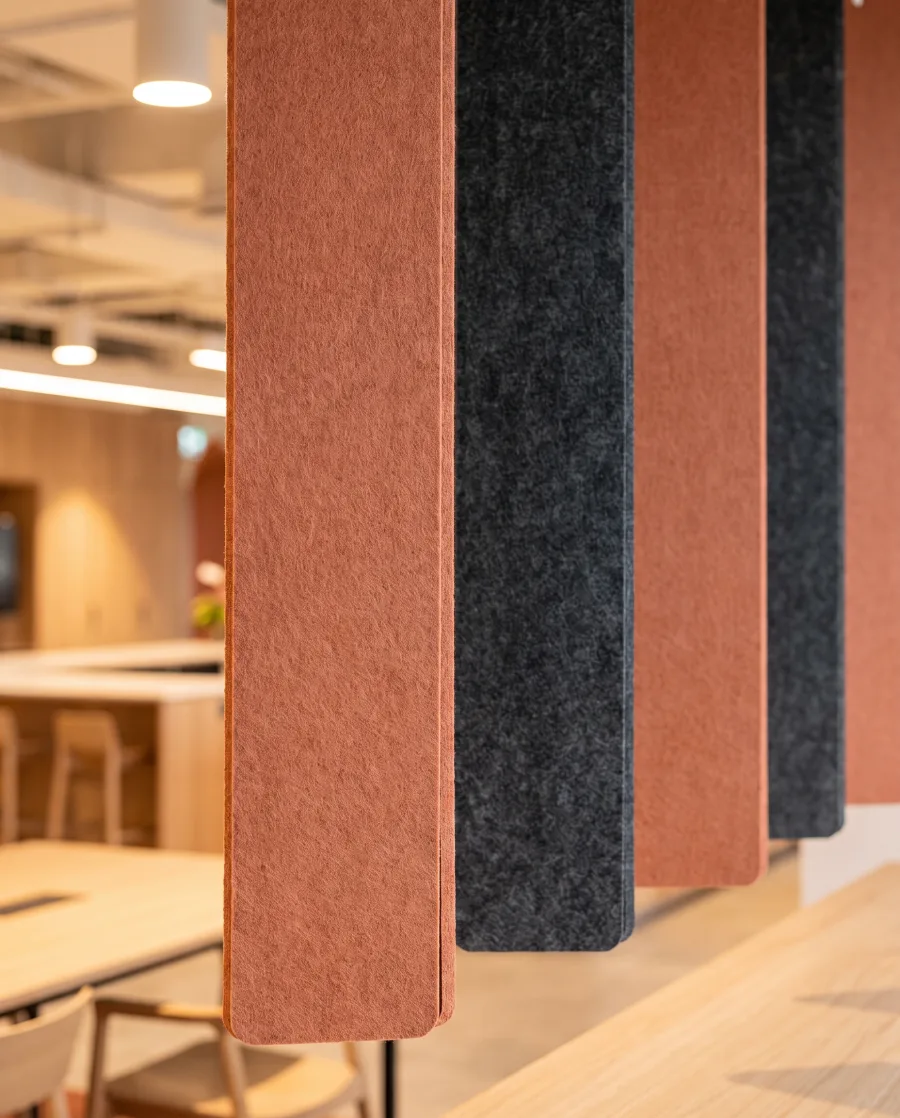
The method
Placing panels by guesswork means spending public money with no guarantee of results. We always start from a numeric goal. The key indicator is called the reverberation time, or RT: how long a sound takes to decay once the source stops. The longer it is, the more the room rings and the more confused speech becomes. That is exactly what makes a canteen deafening and a classroom painful to follow.
This benchmark is not something we made up. The NF S 31-080 standard serves as an acoustic-quality reference and sets targets according to the room's use. For a classroom, a common aim is an RT of around 0.4 to 0.6 second. For a canteen or a large volume, the target is adapted to the type of space and its ceiling height. Setting that goal at the outset gives a measurable heading to size the amount of absorbing area, instead of a vague "we want it to be less noisy".
One last technical point that weighs in public spaces: PET felt works mainly between 250 and 4000 Hz, the band of the human voice. That is precisely where the intelligibility of an instruction or a lesson is decided. So we choose the panel thickness, their layout and the air gap behind them based on that target and the room's real volume, never on a single recipe applied to everything.
Treat or soundproof?
Two answers to two different problems. In a public building, the issue is almost always the internal echo, so treatment, not soundproofing.
Our solutions
Schools, nurseries, canteens, multipurpose halls, gyms, reception areas.
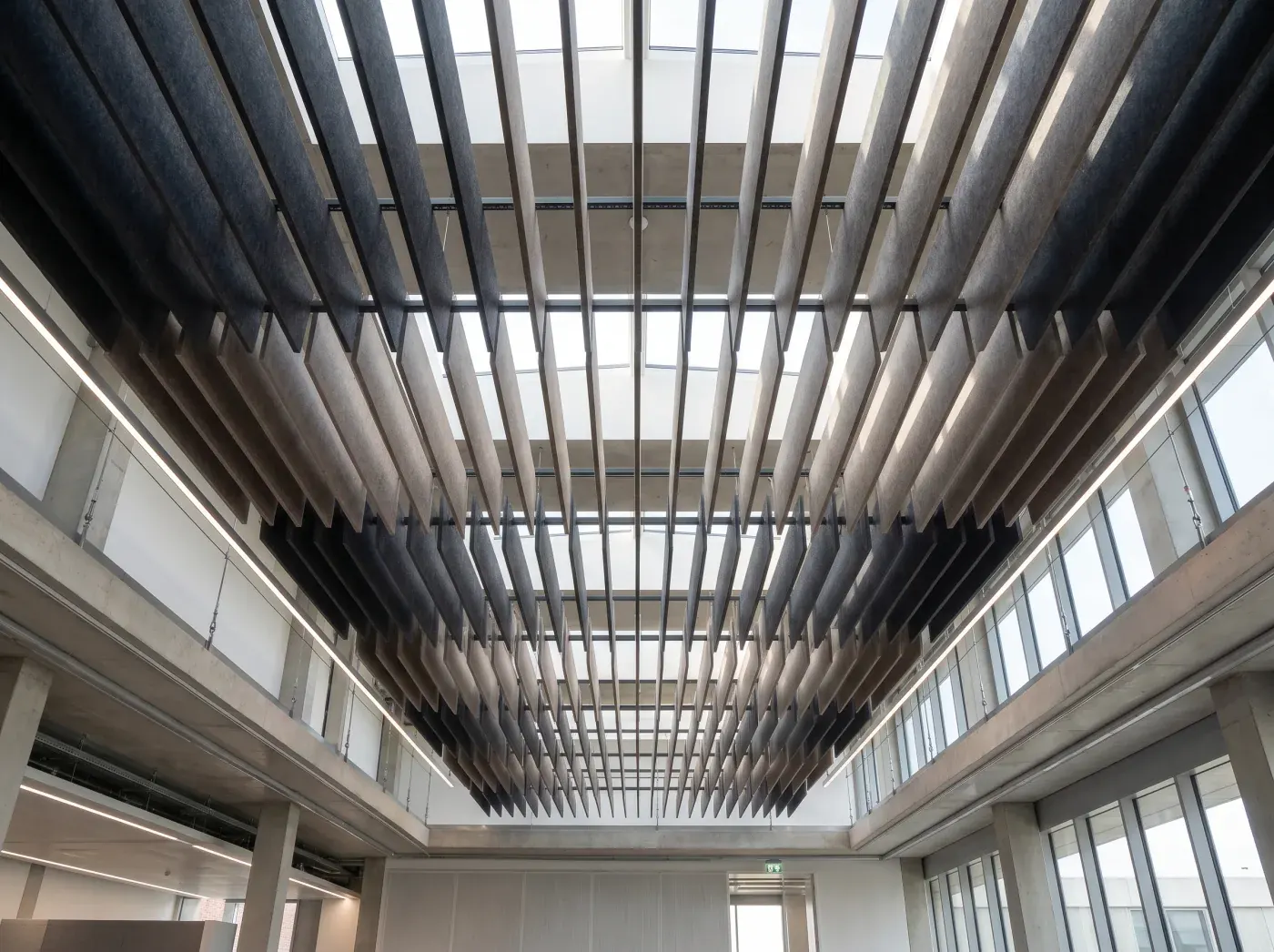
The largest available surface: essential in canteens, gyms and large-volume halls.
See ceiling & baffles →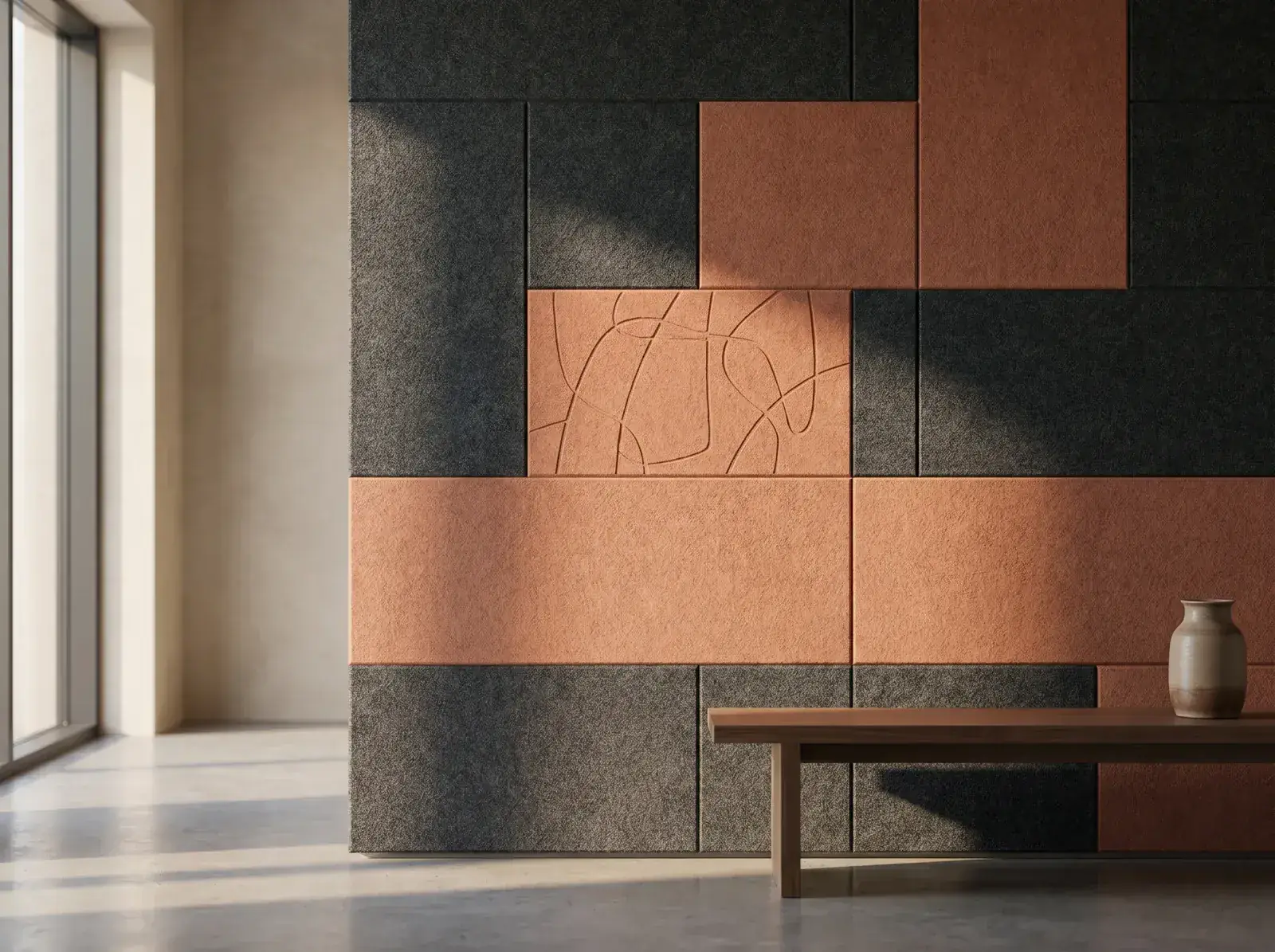
In classrooms and activity rooms: they improve speech intelligibility where it counts.
See wall panels →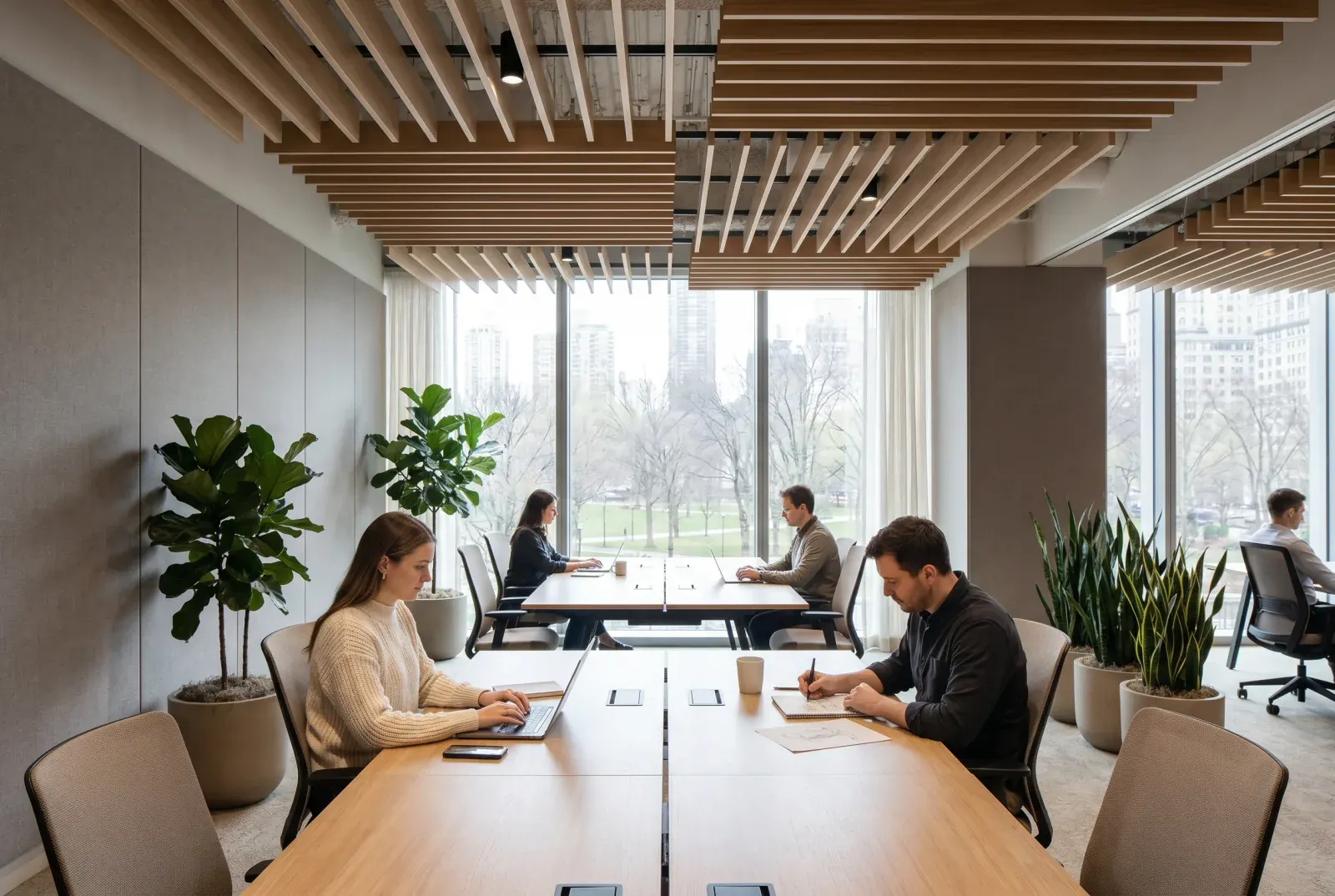
To structure multipurpose halls and reception areas, in your colours and your image.
Discover made-to-measure →The guide
Every establishment has its own constraint: the giant volume of a gym, the hygiene of a canteen, the intelligibility need of a classroom. The logic, though, is the same everywhere: spot the hard surfaces that bounce sound back, then set against them just enough absorption, in the right place. Here is how we reason, room by room.
Classroom. Moderate volume but hard surfaces and constant speech. We treat the ceiling first with tiles or high wall panels, completed by a few wall surfaces. Goal: aim for an RT around 0.4 to 0.6 second so the teacher's voice carries clearly to the back, without forcing it.
Canteen and dining hall. The hardest case. Large volume, tiling, stainless steel, glass, and a noise peak at every service. We load the ceiling with suspended baffles, the most cost-effective surface, then add wall panels on the large spans. Bringing the level down a few decibels radically changes the atmosphere and relieves the staff.
Multipurpose hall and gym. Enormous volumes, considerable heights, multiple uses. Ceiling baffles and large high wall panels break the sound tail so announcements and instructions stay understandable. We take impact resistance into account for a gym.
Nursery and activity room. Small, very lively volumes, where noise quickly tires the little ones and the teams. A few wall panels and ceiling elements, coloured or printed, are enough to soften the atmosphere while becoming decor.
Town hall, library, care home, reception. Spaces of passage and exchange where privacy and calm matter. Ceiling baffles in the halls, wall panels at the reflection points, and a printed signature wall that sets the tone from the entrance. In a care home, reducing the echo also helps residents with hearing loss follow a conversation.
The ACOUSTELIO difference
Beyond acoustic performance, we supply the documents that secure your project: fire classification report and absorption sheet. And since our panels print onto the felt without losing absorption, a canteen, a covered playground or a corridor can become an educational medium, a mural or a colourful wall, at no technical extra cost. Sound comfort and decor arrive in the same move.
Suited to public tenders and local authorities. Request a study.

The budget
A fair question, all the more when the money is public. Let's be concrete. The budget depends on the format, finishes and printing: every project is priced precisely in a free, no-obligation quote. A project's budget depends mainly on the absorbing area to install, so on the volume to treat and the level of comfort you aim for. A classroom is often treated for a few hundred euros, a dining hall or a multipurpose hall for a few thousand, depending on size.
Rather than a per-square-metre rate disconnected from the result, we price a layout that targets a specific acoustic goal, the famous RT. You pay for the effect obtained, not a pile of panels. The quote details the treated area, the formats, any printing and the lead time, which makes it easier to weigh internally or in council.
For a public tender or a call for bids, we supply the administrative documents useful for your tender file: detailed quote, product sheets, fire report, absorption sheet, and a technical memorandum if needed. Delivery ships DDP, duties and taxes included, with no hidden cost on receipt. For a school group or several sites, we align deliveries and installations with your holiday or works calendar.
How it works
Volume, materials, reverberation goal: we assess the need.
Plan, quantities, quote and technical documents within 48 h.
Made-to-measure, fire report and absorption sheet supplied.
Delivered DDP, installed outside occupied hours, within 10 to 15 days.
Send the plan of your room, study and technical documents within 48 h.
Request my free quoteFrequently asked questions
In a classroom or a canteen, noise is not solved by calling for silence. It is solved by absorbing reverberation, where it is born: on the hard surfaces.
The principle we apply in every room open to the public, from the nursery to the gym.
Send us the plan of your room, and we come back with a study, a quote and the technical documents within 48 h.
Request a free study