The material of our panels
Recycled PET felt: why this material, and not another.
Behind every ACOUSTELIO panel, a single core material: PET felt, partly made from recycled plastic bottles. Light, free of irritating fibres, fire-rated and printable without losing its absorbing power, it has good reasons for becoming the go-to in acoustic treatment. We explain what this felt is, why it absorbs sound, how it stacks up against mineral wool and melamine foam, and what it becomes at end of life. An honest comparison, without glossing over its limits.
The material
PET, from bottles to panel.
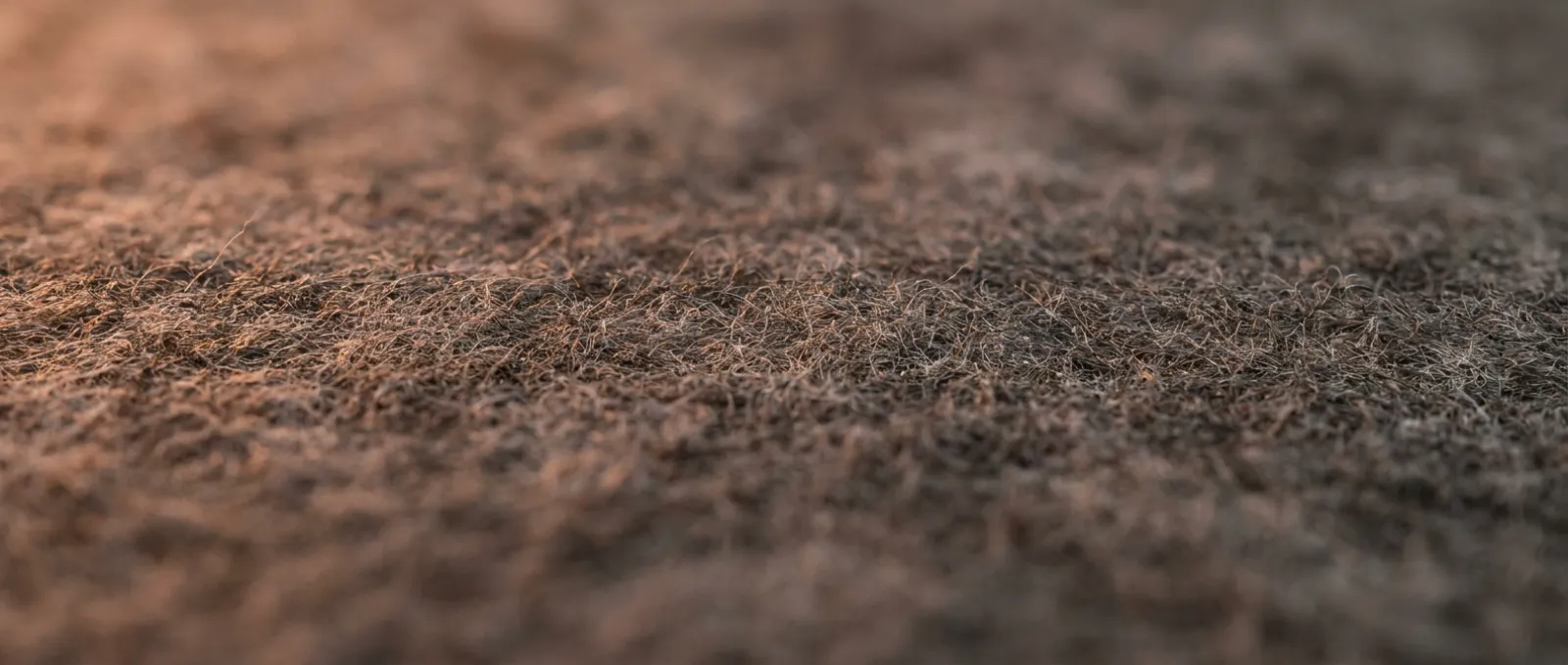
PET is the abbreviation for polyethylene terephthalate. It is one of the most widespread plastics in the world, the one used for water and soda bottles. Its great quality for our use: it spins easily into fibres. So we start from PET, part of which comes from recycled bottles, reduce it to fibres, then bond those fibres into a dense felt.
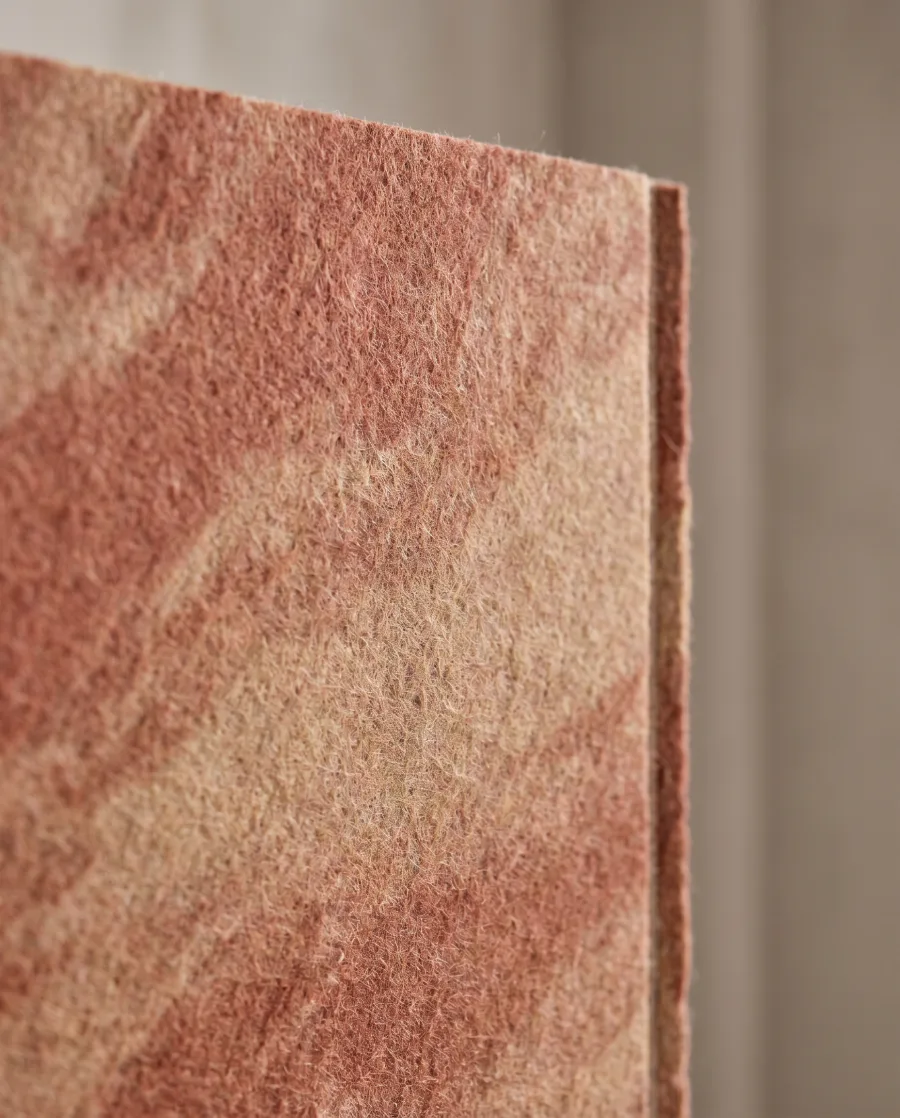
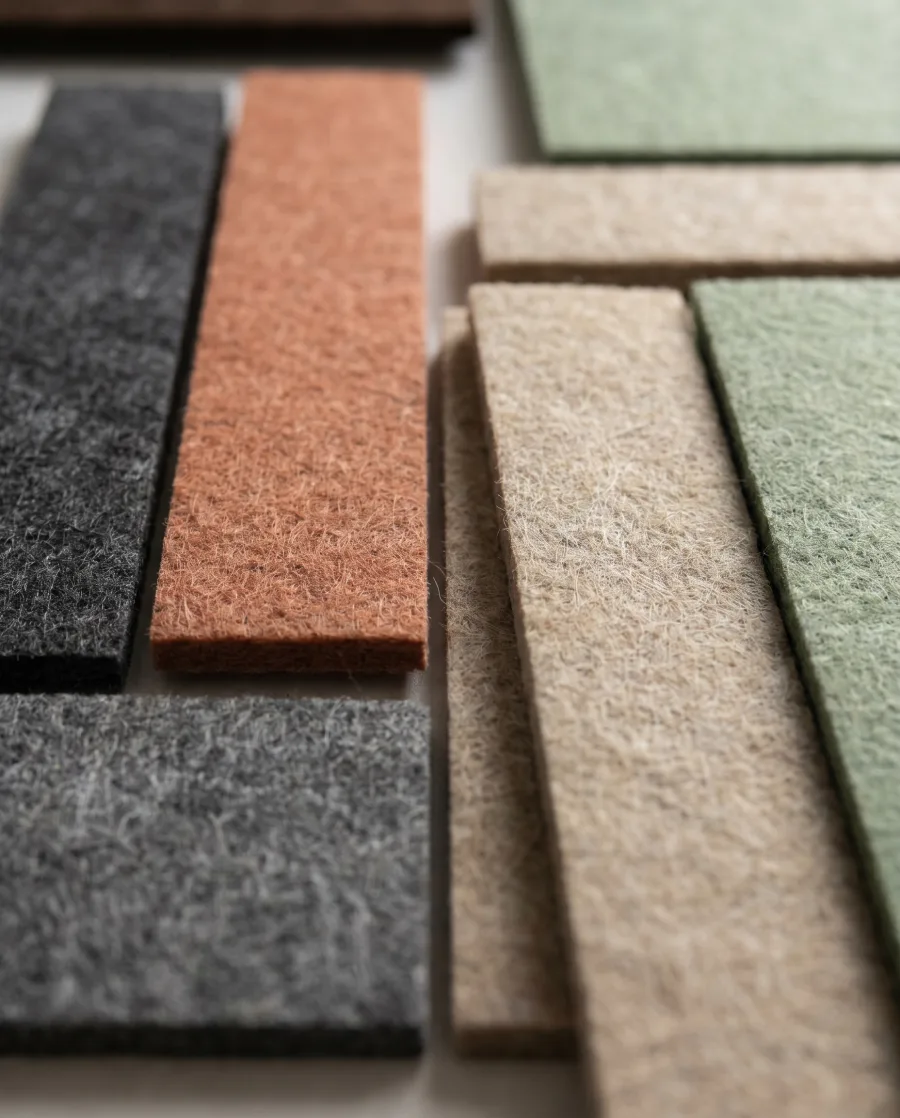
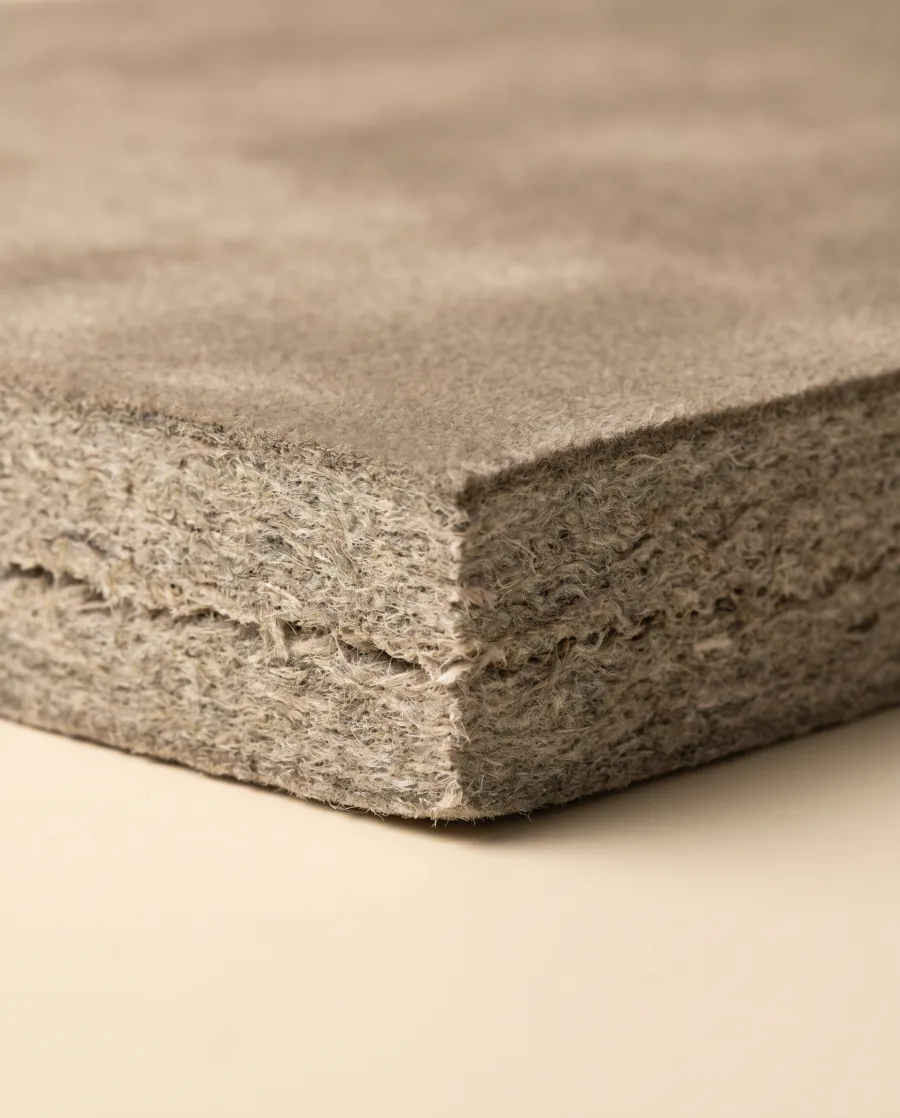
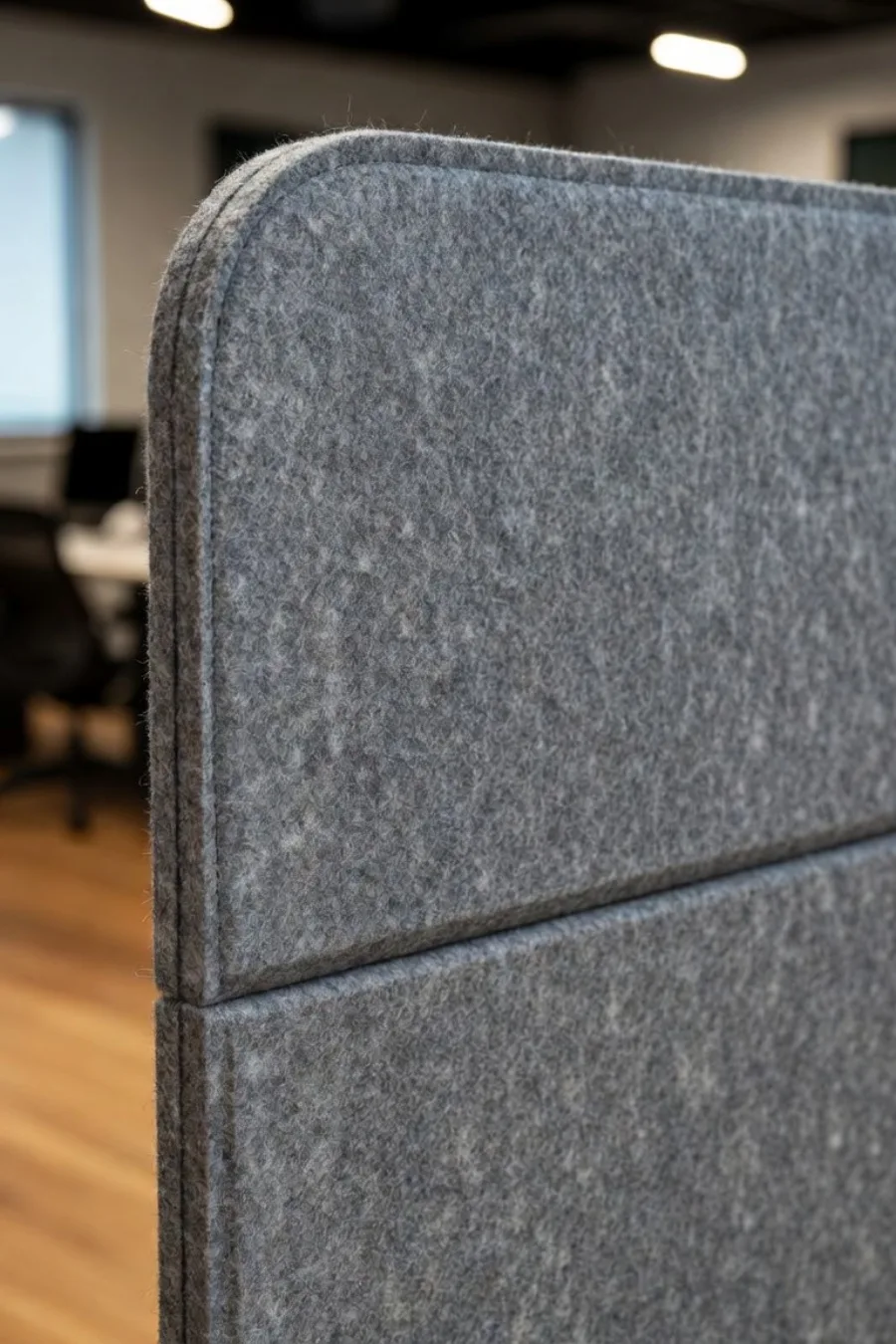
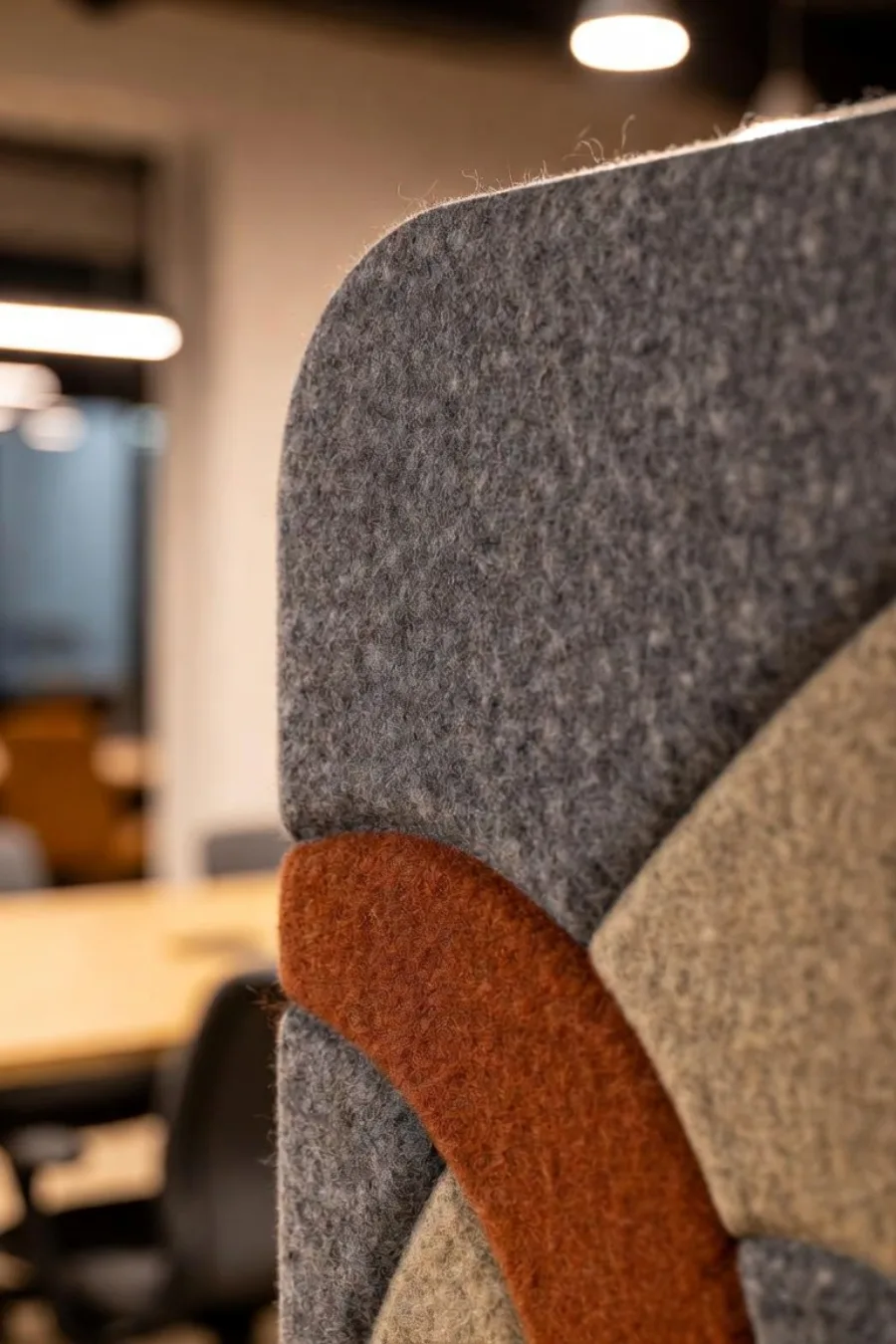
The bonding is done through a thermal process. Heat welds the fibres together, with no added glue or chemical binder. The resulting panel stands on its own, keeps its shape, cuts cleanly and does not crumble. To the touch, nothing like a hard plastic: it is a matte felt, close to a thick textile, pleasant to the eye and to the hand.
This recycled origin is not a surface argument. Giving bottles a second life means diverting material from the waste stream to make a durable fit-out product. And since PET remains a thermoplastic, the loop can close at end of life, more on that below.
The mechanism
Why a porous felt absorbs noise.
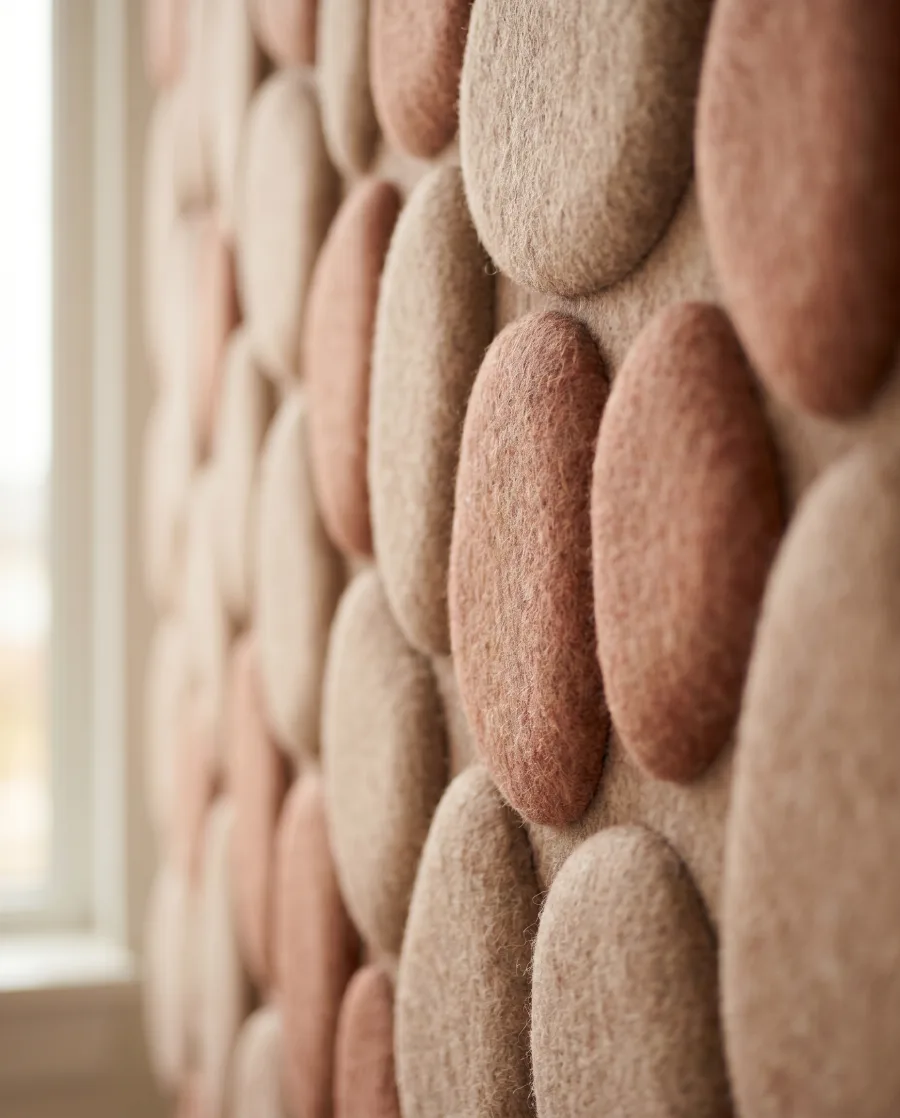
An acoustic panel does not stop sound like a wall. It absorbs it, which is different. PET felt belongs to the family of porous absorbers, and its principle is simple to grasp. When a sound wave reaches the panel, it does not bounce back: it enters the network of fibres.
Inside, the wave sets the air in motion between the fibres. This motion creates friction, and this friction turns part of the sound energy into a tiny amount of heat. The sound thus loses strength with each pass, until it fades out, instead of returning into the room and feeding the reverberation. That is the whole magic of a material both dense enough to slow the air and open enough to let it in.
PET felt is calibrated to work well across the mids and highs, between 250 and 4000 Hz roughly. That is exactly the band of the human voice, so of the noise that really disturbs in an office or a restaurant. To go further on measuring this performance, see our page on the NRC absorption coefficient.
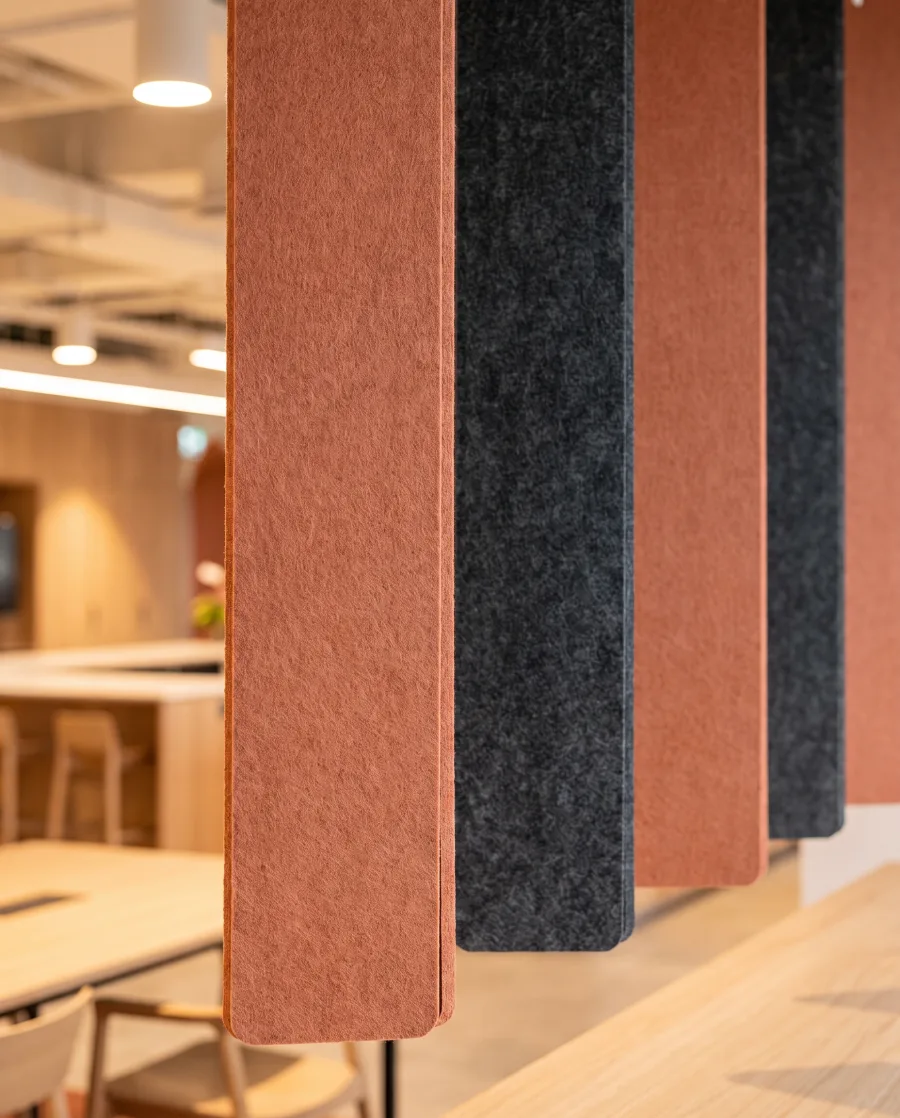
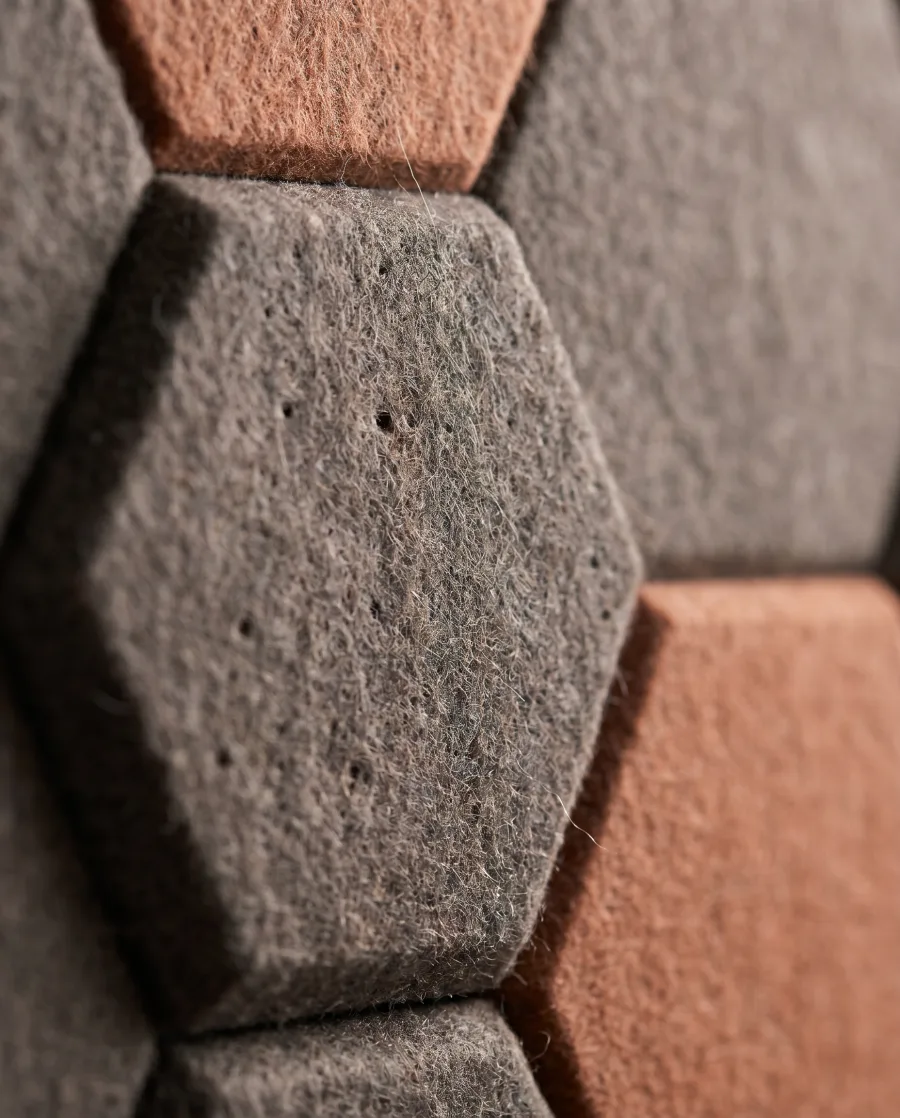
The strengths
What PET felt does well.
Four concrete reasons that make it the reference material for panels exposed to the eye, in occupied spaces.
Light and non-irritating
Handled and installed bare-handed, with no itchy fibres or stinging dust. Ideal in occupied spaces.
Fire-rated
Compliant with EN 13501-1 B-s1,d0, the level expected in public buildings. The test report comes with the order.
Printable
Takes a logo, brand identity or visual in high definition without clogging the pores, so without losing any absorption.
Sustainable
Part of the material sourced from recycled bottles at the input, and a recyclable thermoplastic at the output.
A panel that absorbs, secures and carries your brand.
PET felt brings together acoustics, fire compliance and printing in a single product. Let's talk about your project.
Request my free quoteAn honest comparison
PET, rock wool or melamine foam?
Three common absorbers, three trade-offs. Here is where each shines and where it falls short, without embellishing.
And melamine foam? Light and high-performing, but fragile: it crumbles, marks at knocks, ages badly in the light and takes printing poorly. Fine for a technical room, less so for a wall exposed to the eye. PET felt holds up better over time and presents itself far more nicely.
Safety
No irritating fibres, unlike wool.
It is one of the most telling gaps with mineral wool. Rock wool and glass wool absorb sound very well, no one disputes it. But their installation gives off microfibres that itch the skin and irritate the airways. Hence the gloves, the mask and the long sleeves recommended at installation, and the caution for spaces where people work right next door.
PET felt does not raise this issue. You handle it bare-handed, cut it without a cloud of stinging dust, and once in place it stays stable, without releasing fibres into the ambient air. For an open-plan office, a classroom, a practice or a restaurant, that is an on-site comfort and a peace of mind in use that count.
To be fair: mineral wool keeps a real edge on resistance to very high temperatures, which makes it valuable for thermal insulation. But that is a different job from acoustic treatment. To treat the echo of an occupied space, PET felt ticks the right boxes without the handling drawbacks.
The signature advantage
A material you can print, without sacrificing sound.
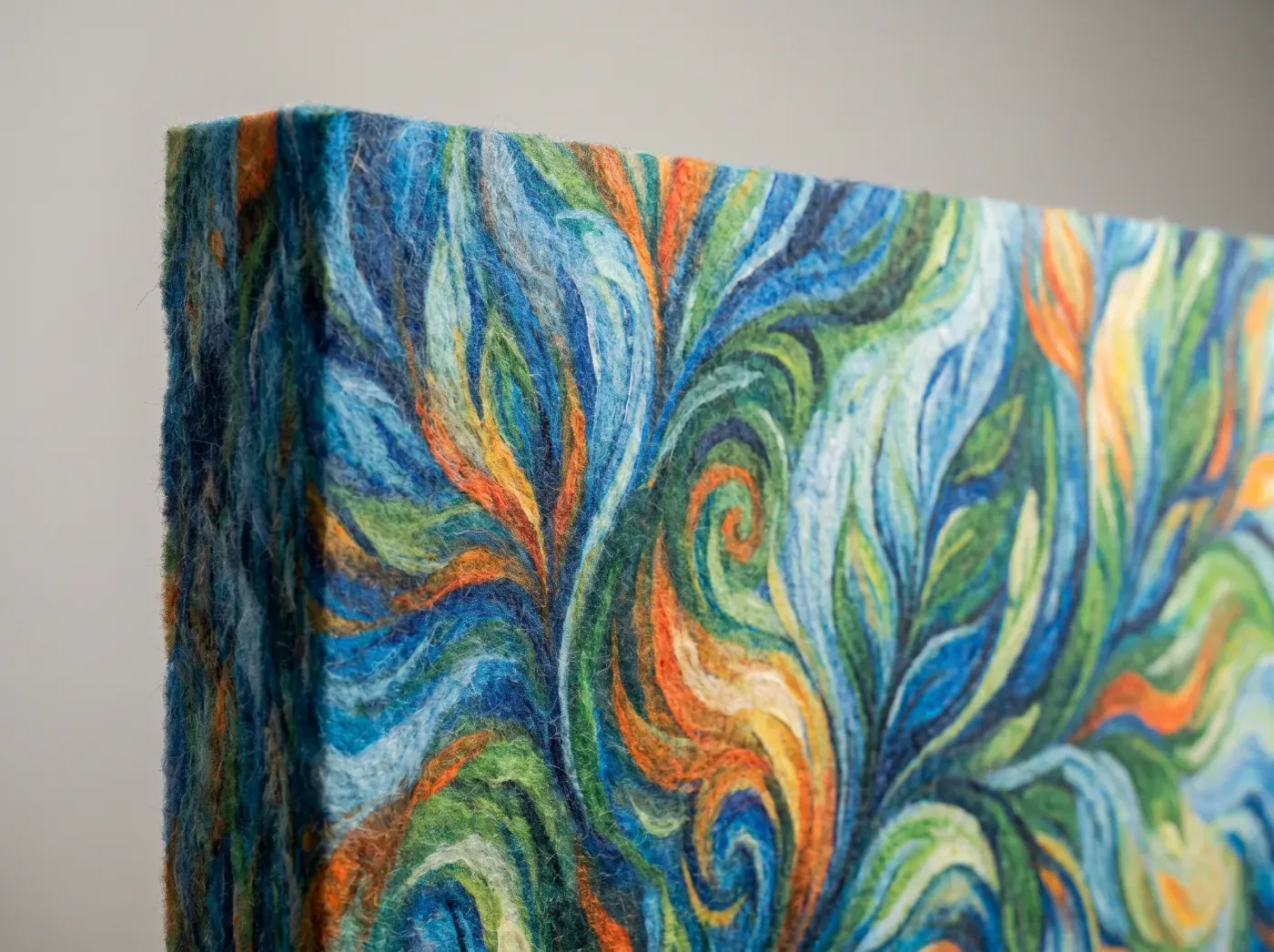
The matte surface of the felt takes high-definition printing. Logo, brand identity, mural or photo go directly onto the panel. The trick: the ink stays on the surface and does not clog the porous network that does the absorbing. Sound keeps entering and dissipating in the fibres, so acoustic performance is preserved. You get a panel that corrects noise and carries your identity in the same object.
A real asset for a head office, a client space or a signature wall. See how printed made-to-measure works.
The footprint
End of life: the loop can close.
Choosing a sustainable material only makes sense if you look at its whole life, not just its origin. PET felt holds up on both ends. At the input, part of its material comes from recycled plastic bottles, so from diverted waste. At the output, it is a thermoplastic, a material that can be remelted and reused.
A panel whose absorbing part is single-material sorts more easily than a composite mixing several layers that are hard to separate. That is a clear advantage for recycling in the plastic stream. The logic of responsible purchasing thus extends all the way to dismantling, instead of stopping at the recycled-material argument.
The best possible end of life remains a long first life. PET felt does not compress, does not crumble and keeps its look for years indoors. A panel that lasts means less replacement, so less footprint. Durability is also a matter of ecology, not just robustness.
Frequently asked questions
Recycled PET felt: your questions.
What is acoustic PET felt?
Why does PET absorb sound?
Is PET healthier than mineral wool?
How does PET compare to melamine foam?
Can you print on PET felt without losing absorption?
What happens to a PET panel at end of life?
Certified measurements
The exact figures, measured in the lab.
Absorption measured by SGS in a reverberation room (ISO 354, type E mounting with a 200 mm air cavity). Test reports are supplied with every quote.
Fire Europe: B-s1,d0
EN 13501-1:2018 (SBI EN 13823 + EN ISO 11925-2 tests): low contribution to fire, s1 smoke, no flaming droplets. Valid for walls, ceilings and free-standing partitions.
Fire USA: Class A
ASTM E84-2024: flame spread index 5 (Class A is 0 to 25), smoke developed index 300. The level required for interior walls and ceilings.
Indoor air: A+
VOC emissions tested to ISO 16000: formaldehyde and TVOC not detected on day 7. French A+ label (decree 2011-321), certificate valid until 04/2029.
Recycled PET, certified
Felt made from recycled PET bottles, spun then heat-pressed. Production audited to FSC and GRS (Global Recycled Standard), tested by SGS, Intertek and TÜV.
A good acoustic panel does not just absorb noise. It installs without irritating, proves itself against fire and recycles at end of life. PET felt does all three.
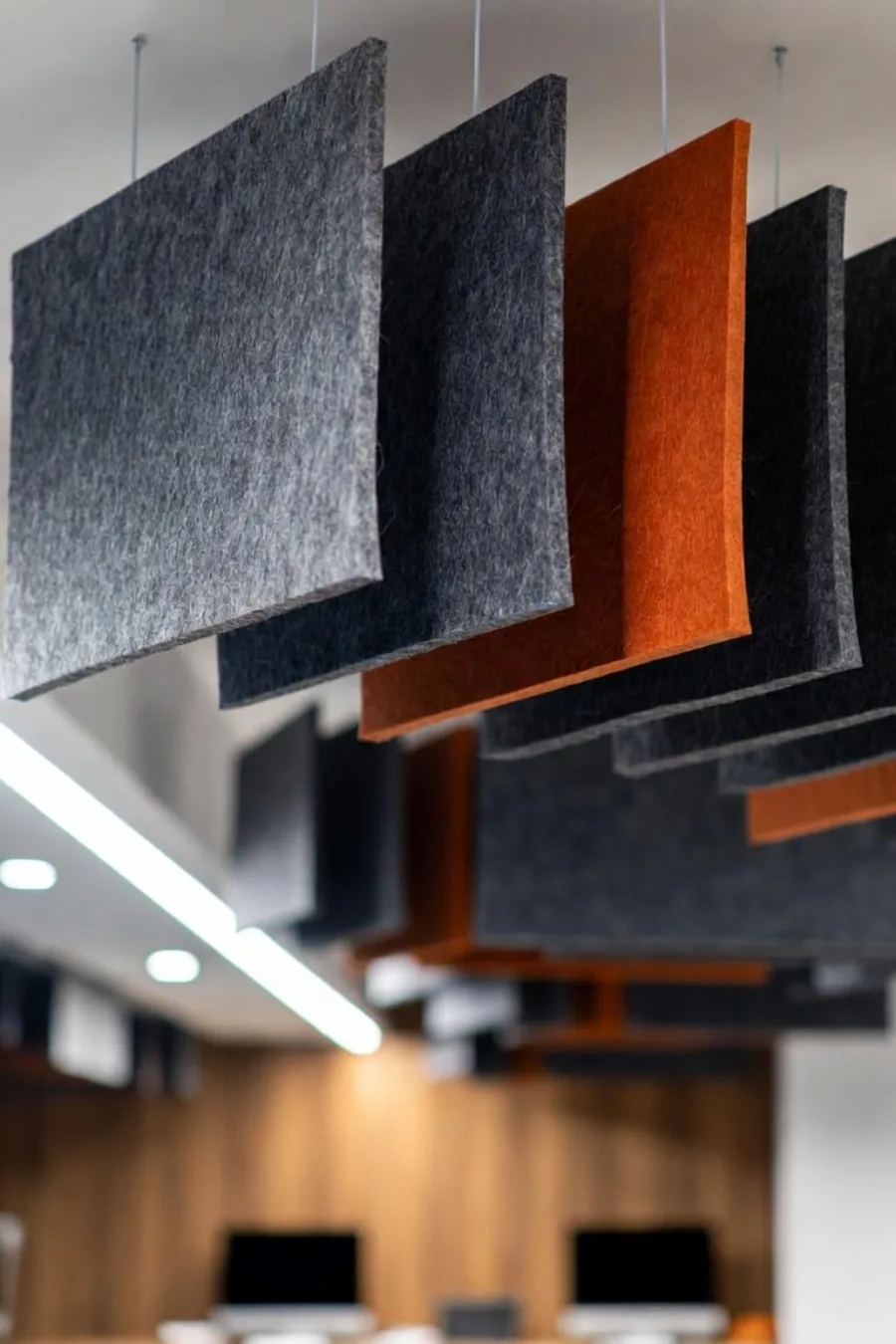
The material we chose for every panel, from the printed wall to the ceiling baffle.
A material that keeps its promises, from sound to the planet.
Send us your project: we choose the thickness and layout of the PET felt to suit your space, and price everything within 48 h.
Request my free quote