Hearing fatigue is a temporary drop in hearing ability after prolonged exposure to noise. It shows up as passing tinnitus, a muffled or cotton-wool feeling in the ears, irritability and difficulty following conversations. It is reversible with rest, but repeated episodes gradually weaken the inner ear.
According to the IFOP-JNA barometer on noise at work, 60 % of working people report fatigue, weariness or irritability caused by their sound environment, and 33 % struggle to understand speech at the office.
At ACOUSTELIO, we manufacture made-to-measure acoustic panels in PET felt that absorb up to 85 % of noise (NRC 0,85), fire-rated EN 13501-1 for public-access buildings, with a custom quote within 48 h. Treating a room’s acoustics means tackling the problem at its root.
Hearing fatigue affects far more people than you might think, and not only musicians or construction workers. A lively open-plan office, a restaurant dining room at lunchtime or a call-centre floor is enough to saturate the ear over a single day. At ACOUSTELIO we manufacture made-to-measure acoustic panels, and week after week our projects show us how much an untreated room keeps this discomfort going.
The phenomenon remains widely underestimated because it is invisible and disappears after a night’s sleep. Yet when it repeats week after week, it weighs on concentration, mood and, in time, on your hearing capital. This article covers the whole question: the mechanism in the inner ear, the difference from hearing loss, the symptoms to watch for, the workplace-specific causes and the levers for prevention. One useful clarification: this content is general information only, it does not replace the advice of an ENT doctor, the only professional qualified to make a diagnosis.
What exactly is hearing fatigue?
Hearing fatigue refers to a temporary reduction in hearing acuity after intense or prolonged exposure to sound. Audiologists also call it a temporary threshold shift, in other words a sound has to be louder than usual for you to hear it properly.
The mechanism plays out in the cochlea, the small spiral structure of the inner ear. It houses hair cells that turn sound vibrations into electrical signals sent to the brain. When the sound level rises and lasts, these cells work in overdrive and momentarily lose efficiency. It is like an overworked muscle that needs to recover.
- Hair cells: around 15,000 per ear, and in humans they do not regenerate once destroyed
- Temporary threshold shift: the drop in hearing that follows exposure, reversible with rest
- Cognitive effort: the brain spends energy filtering and interpreting sounds against the noise, which worsens the feeling of tiredness
In practical terms, this phenomenon is not just an ear problem. It is a load shared between the cochlear mechanics and the brain’s workload. That is why a day in a noisy room is so draining, even without loud music.
Hearing fatigue or hearing loss: what is the difference?
The difference comes down to one word: reversibility. Ear fatigue disappears after a few hours or a few days of rest, whereas hearing loss is lasting, sometimes permanent. One is a warning signal, the other an established consequence.
When your ears recover fully after a quiet evening or a good night’s sleep, it is very likely fatigue. If, on the other hand, the drop in hearing persists beyond a few days, or the tinnitus does not fade, caution demands a consultation. Repeated episodes of fatigue without sufficient recovery can gradually slide toward permanent damage, because the hair cells eventually give out.
- Hearing fatigue: temporary, reversible, linked to a one-off exposure or a heavy day
- Hearing loss: lasting, cumulative, it does not recover with rest
- Grey zone: repeated fatigue is the ground on which loss takes hold, hence the value of acting early
Keep this simple benchmark in mind. Fatigue is a free warning your body sends you. Ignoring it leaves the door open to damage that, unlike fatigue, cannot be repaired.
What are the symptoms of hearing fatigue?
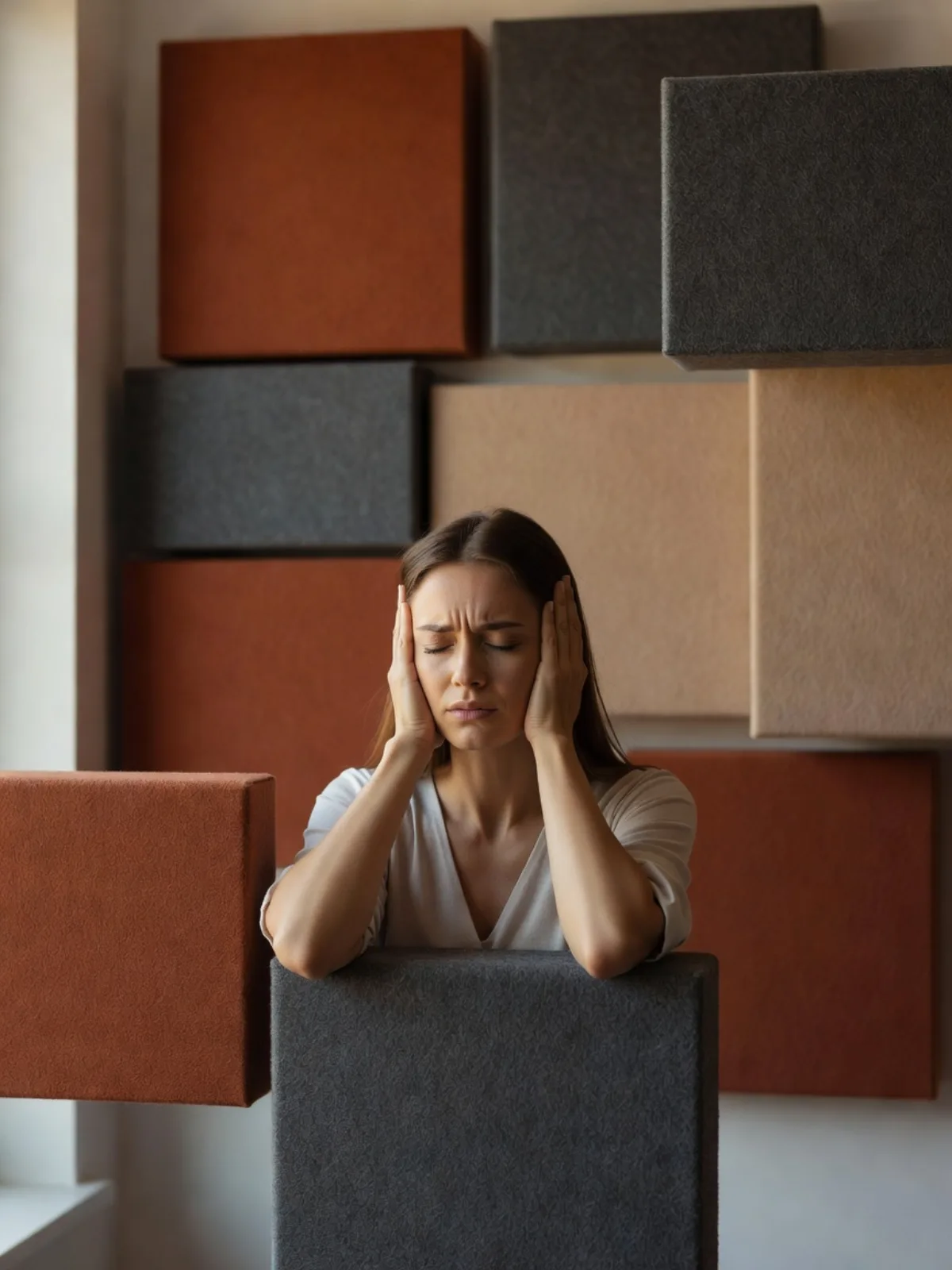
Symptoms vary with the intensity and duration of exposure. They mix hearing-related signs with general ones, which explains why the link with noise is not always made.
On the ear side, the first sign is the muffled or blocked-ear feeling, as if cotton wool were smothering the sounds. Then come temporary tinnitus, the whistling or buzzing that appears in the evening after a noisy day. Many people also describe dulled perception and a clear difficulty following a conversation as soon as there is background noise.
- Muffled-ear sensation: sounds feel padded, as if heard through a window
- Temporary tinnitus: whistling or buzzing that subsides with rest
- Difficulty following a conversation: words blur together, especially in groups or at a restaurant
- Hypersensitivity to sound: ordinary noises become aggressive
The general signs matter just as much. Headaches at the end of the day, irritability, reduced concentration and deep weariness often accompany ear fatigue. The IFOP-JNA barometer reports that 30 % of working people mention tinnitus linked to noise at their job. If these symptoms become daily or persist, see an ENT doctor.
Which signals should you trust, and what should you do in each case?
Recognising a signal, understanding what it means, then acting accordingly: that is the best way to stop the discomfort from settling in. The table below links each common symptom to its likely meaning and a concrete action.
This guide is in no way a diagnosis, it simply helps you know when to take a break, when to adjust your environment and when to consult. When in doubt, a health professional decides.
| Symptom | What it means | Recommended action |
|---|---|---|
| Muffled ears at the end of the day | Auditory system overload, reversible | Hearing rest somewhere quiet, a silent environment in the evening |
| Passing tinnitus after work | Hair cells under heavy strain | 24 to 48 h without intense exposure; consult if it persists |
| Constant effort to follow a conversation | Too much background noise, poor room acoustics | Treat the room's reverberation, lower the ambient noise |
| Irritability and reduced concentration | Noise-related cognitive load, stress | Quiet breaks, silent zones, better layout of the spaces |
| Drop in hearing lasting several days | Warning signal, possible damage | See an ENT doctor without delay |
Why does work generate hearing fatigue?
The workplace is ideal ground for hearing fatigue, and not only in industry. Noise there often operates below the legal action thresholds, which keeps it invisible to inspections while wearing ears down over time. According to the Fondation pour l’audition, nearly 10 million French workers are affected by noise at work.
The threshold for physical damage sits around 85 dB(A) over 8 hours. Yet an open-plan office commonly runs between 55 and 65 dB(A), and a full restaurant climbs to 75 to 80 dB(A). The levels stay under the legal bar, but the ear and the brain pick up the bill. One phenomenon amplifies everything: the Lombard effect, the reflex that pushes everyone to speak louder when the room is noisy. As a result, the sound level of a packed room feeds on itself.
- Open-plan offices: overlapping conversations, ringtones, reverberation off hard surfaces, constant attention effort
- Restaurants: kitchen, crockery, music and voices rising together, the famous cocktail-party effect
- Call centres and retail: sustained speaking all day against a high background level
- Lombard effect: the noisier the room, the louder everyone speaks, the noisier the room becomes
What do these places have in common? Poor room acoustics. When surfaces reflect sound instead of absorbing it, reverberation sets in and the din climbs. For offices, we detail this mechanism in our dedicated article on open-plan office noise, and for dining rooms our solutions for a noisy restaurant start from the same principle: act on the room, not only on the people.
What are the consequences for concentration and health?
Ear fatigue does not stop at the eardrum, it degrades performance and wellbeing at work. The brain devotes so many resources to decoding speech against the noise that fewer are left for the task itself. That is why a day in a noisy room leaves that feeling of having given a lot for little progress.
The figures from the IFOP-JNA survey speak for themselves. 50 % of working people link noise to their stress, 60 % to their fatigue and irritability, and 31 % mention psychological distress. On the ground, this translates into reduced concentration, more errors, deteriorating communication and tension between colleagues. Indeed, the irritability caused by the sound load spills over into the team atmosphere.
- Concentration: attention fragments, long tasks become a grind
- Errors: cognitive overload multiplies oversights and misunderstandings
- Stress and mood: continuous noise keeps the body under tension, irritability climbs
- Incomplete recovery: without hearing rest, fatigue accumulates from one day to the next
In other words, this fatigue is expensive, even when it causes no measurable hearing loss. A calmer environment is not a nice-to-have comfort, it is a direct lever for concentration and peace of mind.
How long does it take to recover from hearing fatigue?
Recovery depends on the intensity and duration of the exposure. For a moderately noisy day, a few hours of quiet are enough. After intense exposure, allow 24 to 48 hours of hearing rest for the hair cells to regain full efficiency.
Audiological studies show that a large majority of mild episodes clear within 16 hours of the exposure ending, often the length of a good night in a silent environment. Real hearing rest means relative silence: no earphones, no television in the background, no new noisy room. Quality sleep plays a central role because it allows the auditory structures to regenerate.
- Moderate exposure: 2 to 8 hours of quiet are generally enough
- Intense exposure: 24 to 48 hours of hearing rest recommended
- Repeated exposure: several days, and the risk of lasting damage rises
One signal should alert you: if the blocked-ear feeling, the tinnitus or the drop in hearing lasts beyond a few days, natural recovery is no longer enough. See an ENT doctor, because more serious damage must be ruled out.
How can you prevent hearing fatigue at work?

Effective prevention works on two levels: individual and collective. The first protects each person, the second acts at the source by cutting noise for everyone. The second is by far the most cost-effective, because it does not rely on each person’s discipline.
At the individual level, a few reflexes limit the damage. Take quiet breaks during the day, apply the 60/60 rule with headphones (no more than 60 % of the volume for 60 minutes), and wear filtered earplugs in very noisy environments. These habits reduce the sound dose received without cutting you off from others.
- Hearing breaks: a few minutes of quiet reset the ear and the brain
- The 60/60 rule: with headphones, limit both the volume and the continuous listening time
- Filtered protection: earplugs that attenuate without muffling, useful at a concert as in a workshop
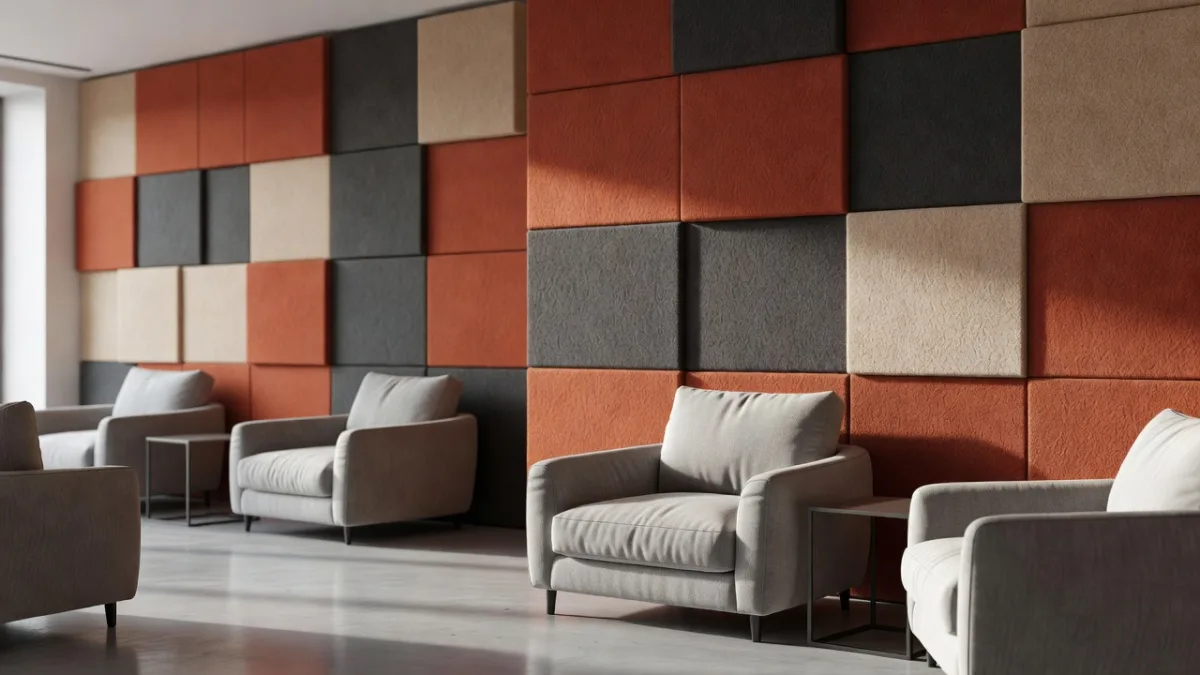
At the collective level, it is the room’s acoustics that make the difference. When a room reflects sound, reverberation stretches the sound tail, the din rises and the Lombard effect runs away. Treating the walls and ceiling with absorbent materials breaks that cycle. On our projects at ACOUSTELIO, we see an average 50 % drop in reverberation, which clearly lowers both the ambient level and the listening effort. We explain the logic in our guide on how to reduce reverberation, and our office acoustics solutions always start from the same principle: treating 15 to 30 % of the wall and ceiling surface is generally enough. To frame a complete approach, the INRS sets out the key benchmarks on noise at work.
Frequently asked questions about hearing fatigue
Is hearing fatigue dangerous?
Isolated and occasional, hearing fatigue is not dangerous: hearing returns to normal after a period of rest. The danger comes from repetition. Frequent exposure without sufficient recovery permanently weakens the hair cells of the inner ear, which do not regenerate. In the long run, this raises the risk of permanent hearing disorders such as chronic tinnitus or hearing loss. In other words, an occasional episode repairs itself, but daily fatigue calls for action on your sound environment and a conversation with a health professional.
What is the difference between hearing fatigue and tinnitus?
Tinnitus is a symptom, hearing fatigue is an overall state. Tinnitus refers to the whistling or buzzing perceived without any external source, and it is often one of the signs of hearing fatigue. When it appears in the evening after a noisy day and then disappears with rest, it is temporary and linked to overload. On the other hand, tinnitus that persists, settles in or keeps coming back is no longer simple fatigue. It warrants a consultation with an ENT doctor, because it can signal inner-ear damage that requires proper care.
Can your ears get fatigued without loud music?
Yes, absolutely. Loud music is only one cause among others. Hearing fatigue sets in perfectly well in an open-plan office at 60 dB(A) or a restaurant dining room at 75 dB(A), well below the regulatory thresholds. What tires the ear is not just the volume, it is also the duration of exposure and the constant effort of understanding speech against the noise. The brain wears itself out filtering competing conversations and reverberation. That is why a day at the office or on restaurant service can be as exhausting as a concert, without the sound level ever being spectacular.
How long does hearing fatigue last?
In most cases, hearing fatigue clears within a few hours to two days. After moderate exposure, 2 to 8 hours of quiet are enough. After intense exposure, allow 24 to 48 hours of hearing rest. Most mild episodes resolve within 16 hours, often the length of a quiet night’s sleep. The key factor is genuine sound rest: avoid stringing noisy environments together and let the ear recover. If the blocked-ear feeling, the drop in hearing or the tinnitus lasts more than a few days, natural recovery is no longer enough and a consultation is needed.
How can an employer reduce their teams’ hearing fatigue?
The most effective action is to treat the acoustics of the premises, because it protects everyone without depending on individual behaviour. Installing absorbent acoustic panels on the walls and ceiling reduces reverberation and lowers the ambient noise level. It also breaks the Lombard effect, the reflex that pushes people to speak louder. As a complement, creating quiet zones, laying out the spaces to separate noisy activities and encouraging quiet breaks reinforce the approach. Treating 15 to 30 % of the surface is generally enough to improve comfort markedly. It is an investment you feel in concentration and in the team atmosphere.
When should you see an ENT doctor?
Consult as soon as symptoms persist beyond a few days of rest. A blocked-ear feeling that does not pass, a lasting drop in hearing or recurring tinnitus should take you to an ENT doctor or a hearing-care professional. A hearing assessment measures your hearing threshold, evaluates your speech comprehension and rules out more serious damage. Early diagnosis is essential, because it allows action before the disorders take hold. This article offers general information as a guide, but it never replaces the advice of a qualified health professional for your personal situation.
Hearing fatigue is the signal that your sound environment is asking you to react, at the office as in the dining room. You can act at the source by treating the acoustics of your premises with high-performance absorbent panels compliant for public-access buildings. To assess your situation and receive a tailored proposal, request your custom quote within 48 h and bring calm back to your spaces.